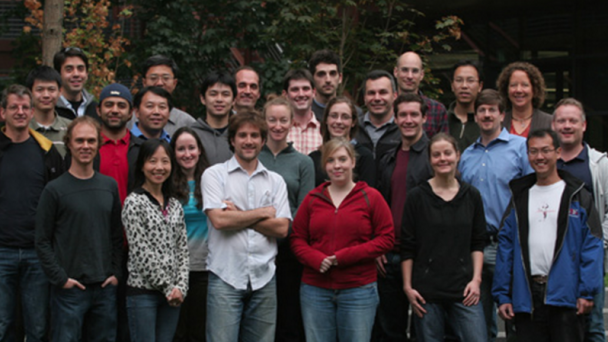
Principal Investigator: Mark J Schnitzer Stanford Neurosciencs Institute
The Schnitzer Group has three major research efforts: Development and application of fiber-optic, micro-optic, and nanophotonic imaging techniques for studies of learning and memory in behaving mice and for clinical uses in humans; In vivo fluorescence imaging and behavioral studies of hippocampal-dependent cognition and learning; and Development of high-throughput, massively parallel imaging techniques for studying brain function in large numbers of Drosophila concurrently.
Web Information
Website: http://pyramidal.stanford.edu/index.html Brain Initiative Grant
Contact Information
Email: schnizerlab@gmail.com Address: James H. Clark Center – Room W080 318 Campus Drive Stanford, CA 94305
Research
Dr. Schnitzer has longstanding interests in neural circuit dynamics and optical imaging, and his laboratory has three major research efforts:
In vivo fluorescence imaging and behavioral studies of cerebellar-dependent motor control and motor learning. Development and application of fiber-optic fluorescence microendoscopy imaging techniques for studies of learning and memory in behaving mice and for clinical uses in humans. Development of high-throughput, massively parallel imaging techniques for studying brain function in large numbers of Drosophila concurrently.The long-term goal of our research is to advance experimental paradigms for understanding normal cognitive and disease processes at the level of neural circuits, with emphasis on learning and memory processes. By contrast, much current research on learning and memory concentrates on ...
OnAir Post: Schnitzer Group – Stanford