Multiplexed Nanoscale In Situ Proteomics

Edwards S. Boyden Massachusetts Institute of Technology Title: “Ultra-Multiplexed Nanoscale In Situ Proteomics for Understanding Synapse Types” BRAIN category: Tools for Cells and Circuits (RFA MH-14-216)

Dr. Boyden’s team will simultaneously image both the identities and locations of multiple proteins within individual synapses – made possible by a new technique called DNA-PAINT.

NIH Webpages

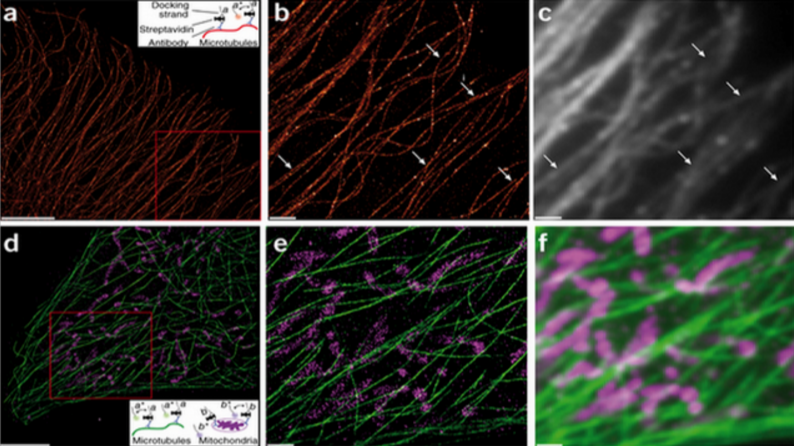
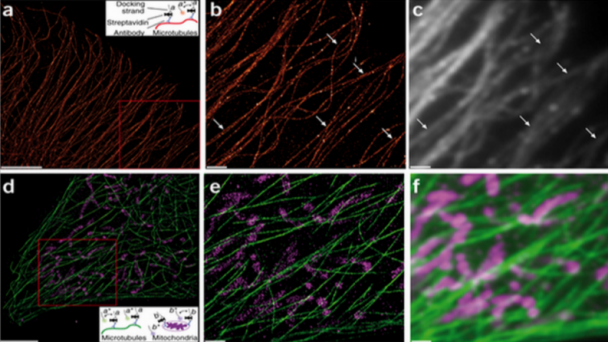
DNA-PAINT super-resolution image of microtubules inside a fixed HeLa cell using Atto 655–labeled imager strands (10,000 frames, 10-Hz frame rate). Inset, labeling and imaging schematic for DNA-PAINT in a cellular environment. From Neuron doi:10.1038/nmeth.2835

Project Description

Significant work is ongoing to reveal how different cell types in the brain contribute to behavior and pathology, and how they change in plasticity and disease, empowered by new genetic, optical, and physiological tools. However, the functional activity and dysregulation of neuronal circuits relies critically on the in situ molecular composition of neuronal synapses. Although it is clear that the properties of a given synapse are determined by, amongst other things, the specific types of cells that are thus connected, far less is known about the diversity of synapse types in the brain than cell types, perhaps because this is an intrinsically proteomic problem: a given neuron might make many ...

OnAir Post: Multiplexed Nanoscale In Situ Proteomics
Enhancers define cortical interneuron types

Principal Investigator: John L. R. Rubenstein UCSF Neuroscience Title: “Identification of enhancers whose activity defines cortical interneuron types” BRAIN Category: Tools for Cells and Circuits (RFA MH-14-216)

Dr. Rubenstein and colleagues plan to identify enhancer molecules specific to particular types of interneurons – that relay neural signals – and use this information to profile distinct cell types and new ways to manipulate genes.

NIH Webpages

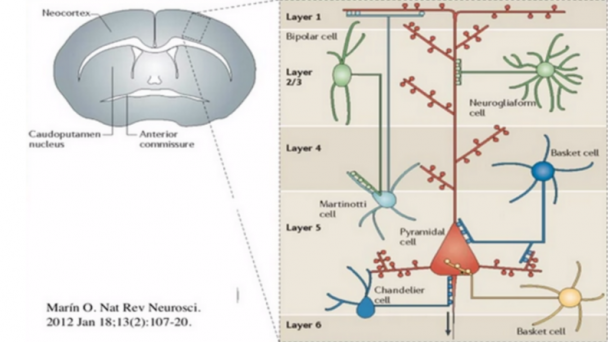
Cortical Circuits: Projection Neurons and Interneurons

Project Description

Molecular definitions of neural cell types largely depend on the expression of RNAs or proteins as assessed by in situ hybridization, RNA array and sequencing, and immunohistochemistry. However, recent studies are demonstrating that gene regulatory elements, such as enhancers, can have highly specific spatial and temporal activity patterns in the developing brain. Thus, enhancer activity can be used to define neural cell types, and importantly, also have other broad applications. First, they can be used as tools to drive gene expression in specific cell types, which can then be used to visualize and/or purify the cells (GFP), modify gene expression in the cells (Cre), modify electrical activity (channel rhodopsin), and visualize electrical activity in the cells (GCaMP). Secondly, knowledge about the nature and position of enhancers enables geneticists ...

OnAir Post: Enhancers define cortical interneuron types

Remote regulation of neural activity

The Stanley team will focus on the development of tools to instantly and precisely target cell activity deep in the brain using radio waves, nanoparticles and genetically modified viruses.

NIH Webpages

OnAir Post: Remote regulation of neural activity

Nontoxic transsynaptic tracing

Principal Investigator: Ian Wickersham MIT Neuroscience Title: “Novel technologies for nontoxic transsynaptic tracing” BRAIN Category: Tools for Cells and Circuits (RFA MH-14-216)

Dr. Wickersham and colleagues will develop nontoxic viral tracers to assist in the study of neural circuitry underlying complex behaviors.

NIH Webpages

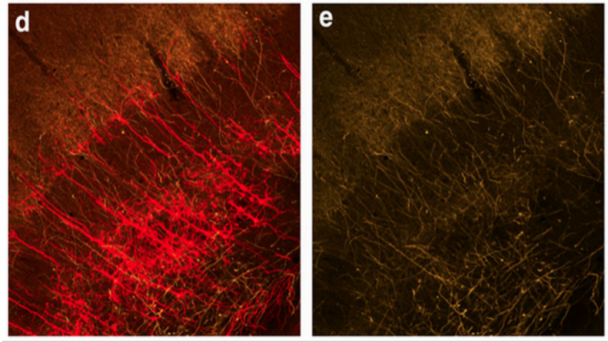
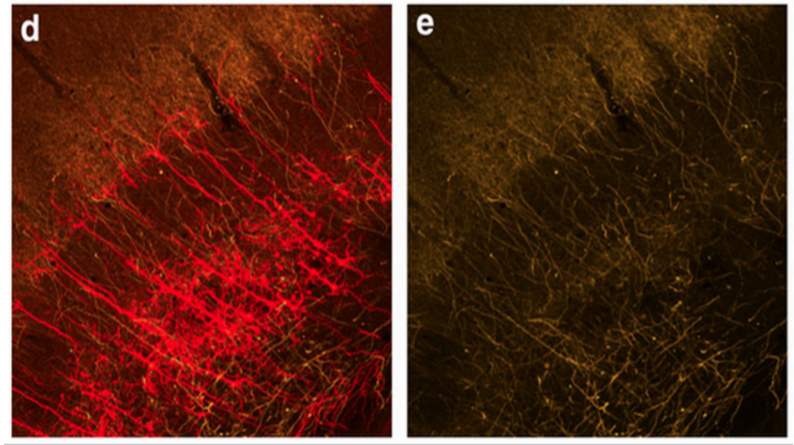
(a–c) Injection site in mouse somatosensory thalamus of an equal mixture of two deletion-mutant rabies viral vectors: VSVG-enveloped vector encoding mOrange2 (yellow), and an RVG-enveloped vector encoding mCherry (red). The VSVG-enveloped vector prolifically infects thalamic neurons at the injection site, whereas the RVG-enveloped one infects far fewer cells locally. (d–f) In the somatosensory cortex of the same mouse, mOrange2-filled thalamocortical axons ascend to layer 4 and densely ramify among the apical dendrites of mCherry-filled layer 6 corticothalamic cells retrogradely infected by the co-injected retrograde virus. Scale bar, 200 μm, applies to all panels.

Project Description

Genetic tools have dramatically increased the power and resolution of neuroscientific experiments, allowing monitoring and perturbation of specific neuronal populations within the brain, often in the context of complex cognitive and behavioral paradigms. However, the usefulness of these tools is limited by the available means of delivering them in circuit-specific ways, a major drawback in view of the critical importance of specific connectivity ...

OnAir Post: Nontoxic transsynaptic tracing

Optogenetic toolkit for control of cells

PI: Gregory Hannon,  Hannon Lab Institution: Cold Spring Harbor Laboratory Title: “An optogenetic toolkit for the interrogation and control of single cells.” BRAIN Category: Tools for Cells and Circuits (RFA MH-14-216)

Dr. Hannon’s group will develop optogenetic techniques that use pulses of light to control genes and isolate proteins in specific cell types in the brain for molecular studies.

Project Description

Our understanding of brain function at the cellular and circuit level is critically dependent on the ability to interrogate and alter neural cells withhigh specificity. The use of light, either through single-photon or multi- photon excitation, is the onl method that provides sufficient resolution to probe the brain at the cellular and subcellular levels. While light-activated molecules, like optogenetic proteins or photocaged compounds, have allowed many key insights in neuroscience, their use is still limited to those processes that can be affected by membrane channels. We propose to develop a toolkit allowing the interrogation, regulation, and modification of genetic information in brain cells using light. We wll build on a technology we have recently developed, “LaserTag”, based on the light-dependent interaction between protein tags (i.e. SNAP-tag or HALO-tag) and caged chemical ligands. Such interaction can be either use to recover molecules through affinity purification or to force the ...

OnAir Post: Optogenetic toolkit for control of cells

Activity measurement at single cell

Principal Investigator: Craig Forest Georgia Institute of Technology Title: “In-vivo circuit activity measurement at single cell, sub-threshold resolution” BRAIN Category: Tools for Cells and Circuits (RFA MH-14-216)

Dr. Forest’s team will use a newly developed robot guided technique to measure precise changes in electrical activity from individual neurons that are connected over long distances across the brain, to understand how these connections change when our brains go into different states, such as sleeping and waking.

NIH Webpages


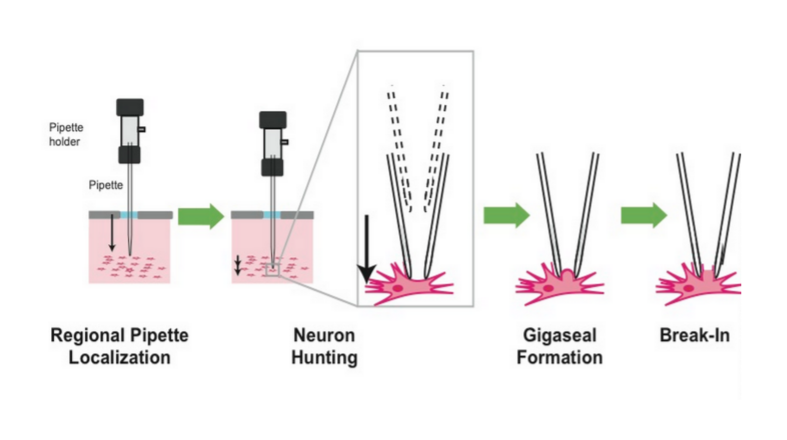
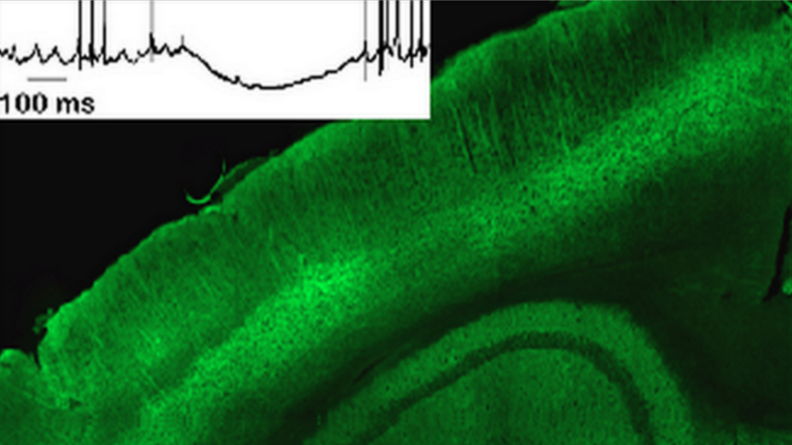
Whole-cell patch clamp electrophysiology of neurons, although a gold standard technique for high-fidelity analysis of the biophysical mechanisms of neural computation and pathology, requires great skill to perform. We have developed a simple robot that automatically performs patch clamping in vivo, algorithmically detecting cells by analyzing the temporal sequence of electrode impedance changes. We demonstrate good yield, throughput, and quality of recording in mouse cortex and hippocampus..

Project Description

Neurons communicate information through fluctuations in the electrical potentials across their cellular membranes. Whole-cell patch clamping, the gold standard technique for measuring these fluctuations, is something of an art form, requiring great skill to perform on only a few cells per day. Thus, it has been primarily limited to in vitro experiments, a few in ...

OnAir Post: Activity measurement at single cell

Dreadd2.0: A Chemogenetic Toolkit

Principal Investigator: Bryan L Roth UNC Neuroscience Title: ” Dreadd2.0: An Enhanced Chemogenetic Toolkit” BRAIN Category: Tools for Cells and Circuits (RFA MH-14-216)

Dr. Roth and colleagues will build second generation technology that uses artificial neurotransmitters and receptors to manipulate brain activity simultaneously across select cells and pathways to understand their functions and potentially treat brain disorders.

NIH Webpages

Roth’s Lab has pioneered the use of directed molecular evolution to create GPCRs which are suitable for remotely controlling cellular signaling. Using a variety of mouse genetic approaches (e.g. Cre-mediated recombination. they are able to control neuronal firing and non-neuronal signaling in real-time in awake, freely moving animals.Ongoing projects are to use this technology to deconstruct the neuronal requirements for simple and complex behaviors, particularly as they relate to schizophrenia and drug abuse

Project Description

The Brain Research through Advancing Innovative Neurotechnologies (BRAIN) Initiative has the ambitious goal of elucidating how neuronal ensembles interactively encode higher brain processes. To accomplish this goal, new and improved methods for both recording and manipulating neuronal activity will be needed. In this application, we focus on technologies for manipulating neuronal activity. The major significance of this application is that we will provide an enhanced chemogenetic toolbox that ...

OnAir Post: Dreadd2.0: A Chemogenetic Toolkit

Drivers for neuron gene expression

Principal Investigator: Oliver Hobert Columbia Neurosciencez Title: “Developing drivers for neuron type-specific gene expression” BRAIN Category: (RFA MH-14-216) 

Dr. Hobert and colleagues will create a highly selective technology for experimentally manipulating genes in neurons, by tapping into the regulatory machinery of individual cell types.

NIH Webpages


Project Description

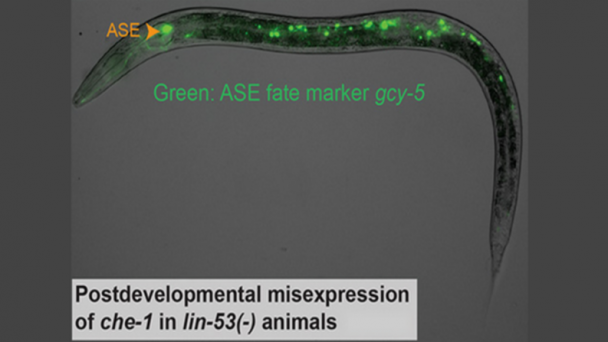
Driver lines that direct Cre protein to specific neuron types have proven to be invaluable tools to not only visualize specific neuron types but also to manipulate their activity through the Cre- mediated activation of optogenetic probes or to assess gene function by Cre-mediated gene knockout. Most Cre driver lines, such as BAC-based Cre drivers or knock-ins of Cre into specific loci, monitor the complete expression pattern of entire genetic loci. However, very few genes are exclusively expressed in very small populations of specific neuron types and this lack of cellular specificity limits the use of these driver lines. W propose here to develop transgenic mouse driver lines that direct Cre expression to very restricted numbers of neuronal cell types in different regions of the mouse brain, thereby providing tools to precisely map their function and molecular composition. To achieve this aim, we aim to test the hypothesis – built from our past work in the nematode C.elegans – that ...

OnAir Post: Drivers for neuron gene expression

Mapping neuronal chloride microdomains

Principal Investigator: Kevin J. Staley Neuroscience@Harvard, Massachusetts General Hospital Title: “Mapping neuronal chloride microdomains” BRAIN Category: Tools for Cells and Circuits (RFA MH-14-216)

Using protein engineering technology to monitor the movement of chloride through inhibitory neurotransmitter receptor channels, Dr. Staley’s group aims to understand the role of chloride microdomains in memory.

NIH Webpages

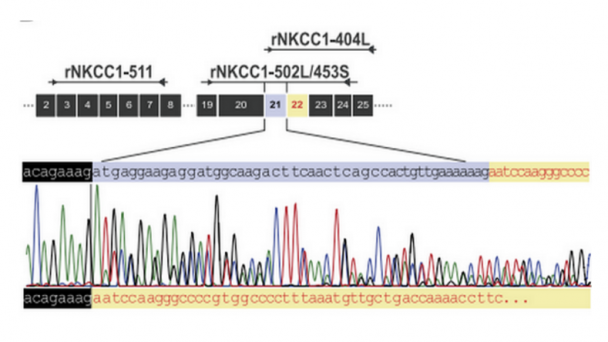
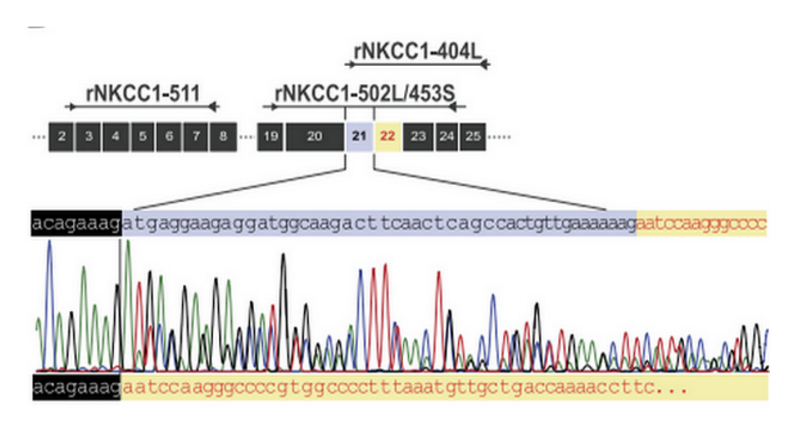
Expression of NKCC1 transcripts in rat and mouse dorsal root ganglion (DRG) by RT-PCR and in situ hybridization (ISH).

Project Description

Dramatic new insights into the functioning of neural networks have been made possible by our ability to visualize neural function with calcium-sensitive fluorophores, and biology has been revolutionized by the ability to sequence and manipulate DNA, RNA, and proteins. Both of these tremendous advances have unexplored “flip sides”. Our understanding of neural network function remains limited by our inability see GABA-mediated synaptic activity: we can’t measure the output of the remarkable diversity of interneuron structure and function. Similarly, the methods for studying templated biopolymers such as DNA, RNA, and protein are not applicable to untemplated biopolymers such as polyglutamylated intracellular tubulin, and the variably sulfated glycosaminoglycans (GAGs) that comprise the extracellular matrix. The glutamate and sulfate moieties displace chloride, thereby defining chloride microdomains. These microdomains thus provide a ...

OnAir Post: Mapping neuronal chloride microdomains

Genetic Sparse Labeling Mammalian Neuron

Principal Investigator: X. William Yang UCLA Neuroscience Title: “Novel Genetic Strategy for Sparse Labeling and Manipulation of Mammalian Neurons” BRAIN Category: Tools for Cells and Circuits (RFA MH-14-216)

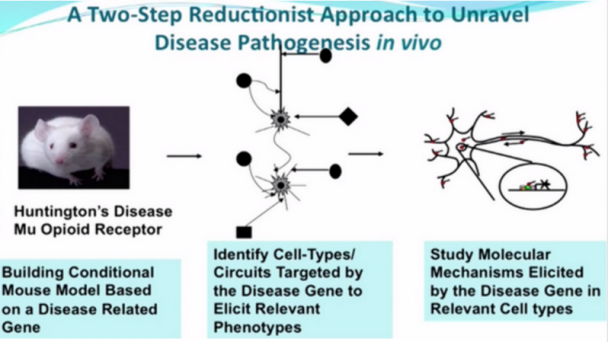
Dr. Yang’s team will develop a new way to genetically target specific neurons, incorporating streamlined imaging and mapping methods that will enable the detection of sparse populations of cells that often elude existing methods.


NIH Webpages

Project Description

Cajal revolutionized the study of the brain through the use of the Golgi stain to label cells sparsely and stochastically in a fashion that revealed a neuron’s morphology in its entirety. Although genetic tools for sparse and stochastic labeling and manipulation of single neurons in Drosophila have been used extensively over the past 15 years, they have only recently become available for mammalian systems, but the latter tools are limited to only a few systems for which cell-type specific reagents (e.g. enhancers) are available or otherwise involve cumbersome manipulations. Thus, there is an important need in the field to develop robust reagents for analysis of neurons at the level of single cells. Indeed, analysis of neurons at the single identified cellular level provides critical information on the control of neuronal morphology, connectivity, physiology and plasticity. This application is in response to BRAIN ...

OnAir Post: Genetic Sparse Labeling Mammalian Neuron

Skip to toolbar