Kanold Lab – UMD

Principal Investigator: Patrick Kanold UMD Neuroscience and Cognitive Science

The major focus in the lab is to understand how information about the world is represented/encoded in the brain, the circuits present in the adult and developing brain and their influence of brain development and plasticity. One focus is on probing the response of the brain to sensory stimuli and the other is to record from small sub-circuits and study their responses and circuit behavior in great detail. 


Web Information

Website:  clfs.umd.edu/biology/kanold BRAIN Initiative Grant – “Crowd coding in the brain: 3D imaging and control of collective neuronal dynamics”

Contact Information

Emailpkanold@umd.edu Phone: 301.405.5741 Address: 1116 Bioscience Research Building College Park, MD 2074

Research

How do our brains work, wire up, and change?

      The human brain is a tremendously complex neuronal circuit that we don’t really understand. For example we do not know how sensory information about the world is encoded in neuronal population activity and transformed into a percept.

    Moreover, somehow during development all the highly specific connections in the brain are made so that we can function normally. It is clear now that we do not come hard-wired but that interaction with the environment plays a major role in shaping our brain. In particular during

OnAir Post: Kanold Lab – UMD

Grossman Institute – Chicago

Principal Investigator: John Maunsell Neuroscience at University of Chicago

Grossman Institute for Neuroscience, Quantitative Biology and Human Behavior is a new Institute designed to establish a group of scholars working at the intersection of quantitative biology, neuroscience, and the study of social and individual behaviors. The Institute will build upon existing strengths in these fields to address fundamental questions about the biological, social, and environmental factors that shape social behaviors and inter-individual variation in model organisms and humans.


Web Information

Website: uchicago.edu/grossman_institute_for_neuroscience_quantitative_biology_and_human_behavior BRAIN Initiative Grant – “The role of patterned activity in neuronal codes for behavior”

Contact Information

Phone: 773.702.1234

Address: The University of Chicago Edward H. Levi Hall 5801 South Ellis Avenue Chicago, Illinois 60637

Research

The Grossman Institute for Neuroscience, Quantitative Biology, and Human Behavior is the intellectual home for a diverse group of scholars and scientists working together to advance our understanding of the brain. By utilizing a multidisciplinary approach, the Institute will recruit faculty members from such areas as Chemistry, Cognitive Sciences, Computer Science, Genetics, Molecular Biology, Statistics and many more to reveal how the human brain and our social and physical environments interact.

Articles

Inquiring minds

University of Chicago Magazine Nov-Dec. 2014 by Kevin Jiang

Neuroscientist John Maunsell leads a new institute’s research into ...

OnAir Post: Grossman Institute – Chicago

David Kleinfeld Laboratory – UCSD

Principal Investigator: David Kleinfeld UCSD Neuroscience;  Neurophysics Research

Active sensation: how orofacial behaviors, with emphasis on the vibrissa sensorimotor system, encode a stable world view through actively moving sensors. Microcirculation in the Brain: the structure and control of cortical blood flow, and variations in that flow, at the level of vascular networks down to that of individual microvessels. CNiFERs: uses of cell-based sensors of signaling molecules to study volume transmission and neuromodulation in behaving animals.


Web Information

Website:  physics.ucsd.edu/neurophysics/index.php BRAIN Initiative Grant – “Revealing the connectivity and functionality of brain stem circuits”

Contact Information

Email: dk@physics.ucsd.edu Phone: 858-822-0342 Address: Physics Department UC San Diego

Research

Active sensation:

This program addresses how orofacial behaviors, with emphasis on the vibrissa sensorimotor system, encode a stable world view through actively moving sensors.

Microcirculation in the Brain:

This program explores the structure and control of cortical blood flow, and variations in that flow, at the level of vascular networks down to that of individual microvessels.

CNiFERs:

This program creates cell-based sensors of signaling molecules to study volume transmission and neuromodulation in the brains of behaving animals.

Publications

OnAir Post: David Kleinfeld Laboratory – UCSD

Soltesz Lab – UCIrvine

The Soltesz Lab is interested in how brain cells communicate with each other and how the communication changes after fever-induced seizures in early childhood and after head injury. Our general goal is to understand how neuronal networks function and dysfunction, in order to discover new therapies to prevent epilepsy.

OnAir Post: Soltesz Lab – UCIrvine

Rinsberg Lab – NYU

Rinsberg's lab has been focused on temporal aspects of olfactory coding. They recently discovered that a) olfactory neuronal code at the level of olfactory bulb is temporally very precise (~10 ms) [Shusterman-2011], and b) the mammalian olfactory system can read and interpret temporal patterns at this time scales [Smear-2011]. The lab's efforts are directed towards establishing causal connection between neuronal coding and animal behavior.

OnAir Post: Rinsberg Lab – NYU

Engert Lab – Harvard

Director: Florian Engert Program in Neuroscience @Harvard 

The general goal of the laboratory is the comprehensive identification and examination of neural circuits controlling behavior using the larval zebrafish as a model system. To that end, we have established and quantified a series of visually induced behaviors and analyzed the individual resulting motor components.  An extended goal is the study of how changes or variations in the behavior are reflected in changes in the underlying neuronal activity.

Web Information

Website:  labs.mcb.harvard.edu/engert/ Brain Initiative Grant

Contact Information

Emaillorian@mcb.harvard.edu Phone: 617-495-4382 Address: Harvard University BioLabs 16 Divinity Avenue Cambridge, MA 2138

Research

Introduction

The general goal of the laboratory is the comprehensive identification and examination of neural circuits controlling behavior using the larval zebrafish as a model system. To that end, we have established and quantified a series of visually induced behaviors and analyzed the individual resulting motor components. Using these assays in combination with various calcium indicators and two-photon microscopy we have monitored neuronal activity throughout the fish brain in an awake and intact preparation. An extended goal is the study of how changes or variations in the behavior are reflected in changes in the underlying neuronal activity. To that end, we have developed several quantitative learning assays and tools ...

OnAir Post: Engert Lab – Harvard

Dickinson Lab – Caltech

Principal Investigator, Michael Dickinson Caltech Neuroscience 

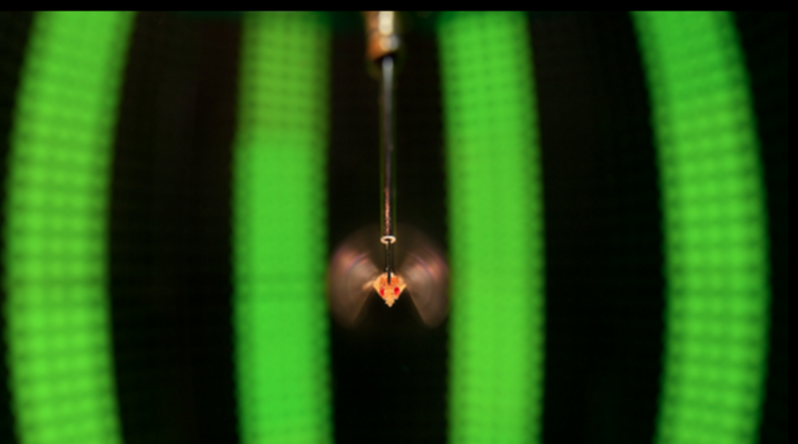
The Dickinson Lab studies the neural and biomechanical basis of behavior in the fruit fly, Drosophila. We strive to build an integrated model of behavior that incorporates an understanding of morphology, neurobiology, muscle physiology, physics, and ecology. Although our research focuses primarily on flight control, we are interested in how animals transform sensory information into a code that controls motor output and behavior.

Fly in flight simulator. Dickinson Lab

Web Information

Website:   http://depts.washington.edu/flyarama/ (unavailable 7/29/15) Brain Initiative Grant

Contact Information

Email: flyman@caltech.edu Phone: (626)395-5775 Address: The California Institute of Technology Mail Code 216-76 Pasadena, CA 91125

Research

Michael Dickinson received a Ph. D. in the Dept. of Zoology at UW in 1989. His dissertation project focused on the physiology of sensory cells on the wings of flies. It was this study of wing sensors that led to an interest in insect aerodynamics and flight control circuitry. He worked briefly at the Max Planck Institute for Biological Cybernetics in Tübingen, Germany, and served as an Assistant Professor in the Dept. of Anatomy at the University of Chicago in 1991. He moved to the University of California, Berkeley in 1996 and was appointed as the Williams Professor in the Department of Integrative ...

OnAir Post: Dickinson Lab – Caltech

Laboratory of Mriganka Sur – MIT

The goal of the Sur Lab is to understand long-term plasticity and short-term dynamics in networks of the developing and adult cortex, and how disruption of any of these network properties leads to brain disorders. Development of real time, high-speed imaging, activity-sensitive dyes, and light-sensitive ion channels are currently fueling the Lab's exploration of the varied and plastic networks these cells form.

OnAir Post: Laboratory of Mriganka Sur – MIT

Seung Lab – Princeton

Principal Investigator: Sebastian Seung Princeton Neuroscience Institute

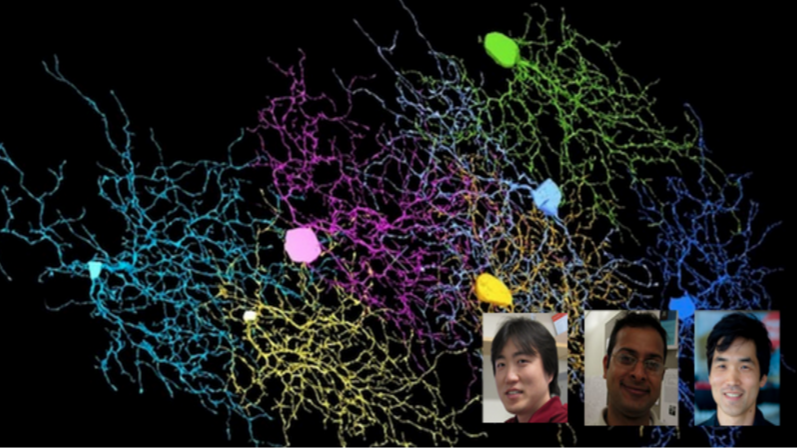
The Seung Lab uses techniques from machine learning and social computing to extract brain structure from light and electron microscopic images. EyeWire showcases our approach by mobilizing gamers from around the world to create 3D reconstructions of neurons by interacting with a deep convolutional network. The Seung Lab also develops computational methods for relating brain structure to function. Seung Lab is best known for our work on the reconstruction of neural circuits using serial electron microscopy.

EyeWire is a game that helps scientists map the brain. Image: EyeWire

Web Information

Website: http://seunglab.org/

Contact Information

E-mail: sseung@princeton.edu

Address: 153 Princeton Neuroscience Institute Washington Road Princeton, NJ 08544

Research

The Seung Lab uses techniques from machine learning and social computing to extract brain structure from light and electron microscopic images.  EyeWire showcases our approach by mobilizing gamers from around the world to create 3D reconstructions of neurons by interacting with a deep convolutional network.

The Seung Lab also develops computational methods for relating brain structure to function. To establish this relationship, we often reconstruct the connectivity of the same neurons after observation of their activity via two-photon imaging. We also classify neurons into cell types that have characteristic structural and functional properties. The latter approach was used to create a new model for how ...

OnAir Post: Seung Lab – Princeton

Brodylab – Princeton

Principal Investigator: Carlos D  Brody Princeton Neuroscience Institute

Brodylab’s focus is on novel quantitative behaviors that allow exploring high-level cognitive questions using powerful emerging tools for studying neural mechanisms in rats. The lab now uses rats to investigate the neural bases of decision making, working memory and executive control using a combination of high-throughput semiautomated behavior as well as computational, electrophysiological, pharmacological and optogenetic methods.


Web Information

Website:  brodylab.org/ Brain Initiative Grant

Contact Information

Email: brody@princeton.edu Phone: (609) 258-7645 Address: Princeton University 119 Lewis Thomas Laboratory Washington Road Princeton, NJ 08544-1014

Research

What are we interested in?  Here’s an example: you’re browsing DVDs in a video store. You pick one up– you like it, perhaps you might buy it. But you’re not sure yet. You put it back down, and stroll down the aisle. You compare them; perhaps today you decide to buy the first DVD. What happened in your brain as you went through all this? What are the neural mechanisms that allow you to remember, for a few seconds, how much you liked the first DVD; to compare the two DVDs; to make a decision; to apply the rules of behavior appropriate for the context you’re in (here, a video store)? In other words, what are the neural mechanisms underlying our cognitive abilities? What ...

OnAir Post: Brodylab – Princeton

Skip to toolbar