NSF 2015 BRAIN Initiative awards

To support potentially transformative research in neural and cognitive systems, the National Science Foundation (NSF) has awarded 16 grants to multidisciplinary teams from across the United States.

Each award brings together scientists and engineers from diverse fields to investigate brain-related mysteries. The awards fall within two themes: neuroengineering and brain-inspired concepts and designs, and individuality and variation. Each provides up to $1 million over two to four years.

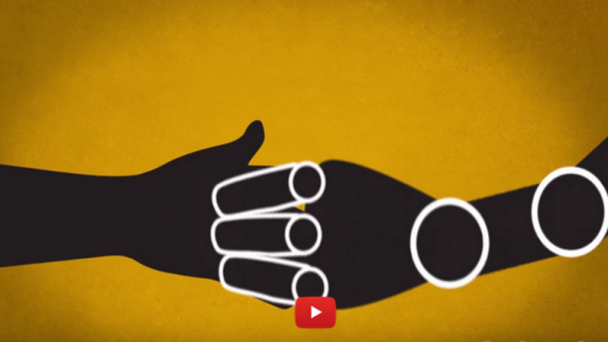
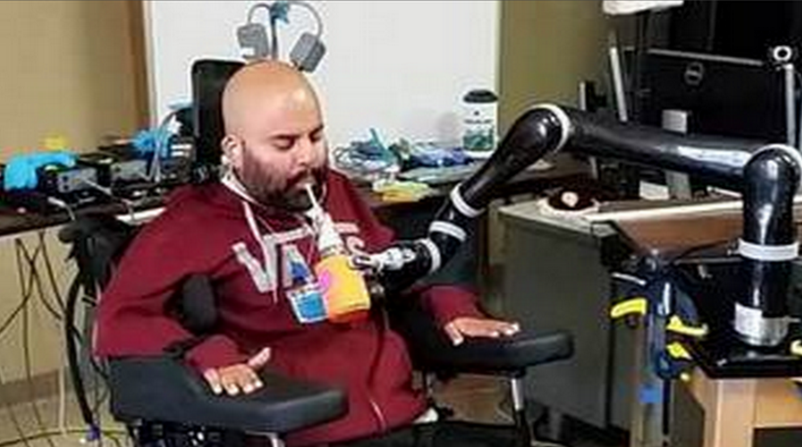
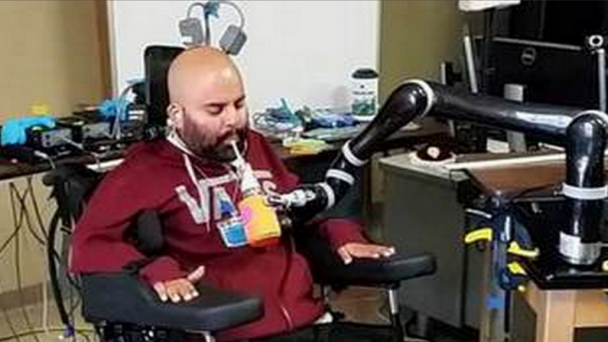
Brain-machine interfaces read signals directly from the brain to control external devices such as robotic limbs. While this technology has great potential to benefit people who are paralyzed, the interfaces often have poor performance because they use low-level signals to simultaneously control many aspects of the robotic limb’s movements. New NSF-funded research will leverage expertise across diverse fields to generate significant improvements in brain-machine interface technology. Shown here is Erik Sorto using a brain-controlled robotic arm to take a drink.Credit: Spencer Kellis and Christian Klaes

NSF Press Release

Bold new brain research in neuroengineering, brain-inspired design, and individuality

August 12, 2015

$13.1 million for 16 new awards part of NSF’s support for integrative, fundamental brain research and the BRAIN Initiative

One project will develop a theory of how single ...

OnAir Post: NSF 2015 BRAIN Initiative awards
Individual variability in human brain


Principal Investigators: Hava Siegelmann, University of Massachusetts Amherst and Lilianne Mujica-Parodi, SUNY Stony Brook Title:   Individual variability in human brain connectivity, modeled using multi-scale dynamics under energy constraint BRAIN Category: Individuality and Variation

Clinical neuroscience currently lacks the tools for probing how biological constraints imposed upon synapses impact functional connectivity patterns.  Our long-range goal is to develop these tools, focusing first upon energy constraints across synaptic-hemodynamic scales.

Abstract

Award Number: #1533693

Recent years have witnessed an explosion of interest in human brain connectivity and its relationship to brain-based disease. Functional connectivity analyses in neuroimaging have taken three general forms: cross-correlations, weighting of directed connections, and graph-theoretic approaches. Graph-theoretic measures, in particular, provide valuable insights into network features at the time of imaging. Yet, they cannot identify how the brain came to have those features, nor can they inform estimation of future network evolution. Neurological and psychiatric illnesses tend to have degenerative or oscillatory time-courses that range over decades; thus, network evolution will be critical to understanding why two individuals with the same diagnosis show markedly distinct developmental onsets and prognoses.

At the most fundamental level, clinical neuroscience currently lacks the tools for probing how biological constraints imposed upon synapses impact functional connectivity patterns. These constraints include, among others: limited energy resources as per ...

OnAir Post: Individual variability in human brain

Understanding individual differences in cognitive performance

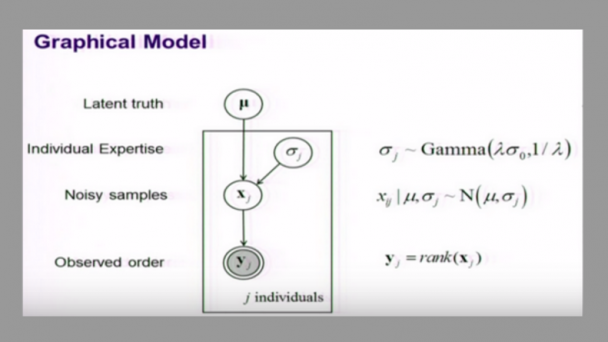
Principal Investigator: Zhong-Lin Lu, Ohio State and Mark Steyvers, UC Irvine Title:   Understanding individual differences in cognitive performance: Joint hierarchical Bayesian modeling of behavioral and neuroimaging data BRAIN Category: Individuality and Variation

This project explores a mathematical and computational framework for investigating a large-sample neuroimaging and behavioral dataset in order to improve our understanding of individual differences in cognitive performance.


Abstract

Understanding the complex determinants of individual health and wellbeing is critical for the promotion and maintenance of a healthy world population. Wellbeing may be understood not only as the absence of physical and mental illness but also as the quality of life and optimal functioning of individuals. It is well known that individuals vary tremendously in terms of cognitive abilities and dispositions, as seen from performance on high-order cognitive tasks, decision-making preferences, and emotional competencies. However, the neural underpinnings of much of this variability are poorly understood: It is unclear how individual differences in brain structure and function across tasks and processes are linked to abilities and competencies. This project explores a mathematical and computational framework for investigating a large-sample neuroimaging and behavioral dataset in order to improve our understanding of individual differences in cognitive performance. An ultimate goal of the project is to predict individual cognitive performance ...

OnAir Post: Understanding individual differences in cognitive performance

Recording and Stimulating Arm Nerves

Principal Investigator: David Warren, University of Utah Title:Sensory-Motor Integration via Recording and Stimulating Arm Nerves NSF BRAIN Category: Individuality and Variation

This project’s goal is to create movement and sensation abilities in individuals with amputation that are more similar to that in normally enabled individuals.

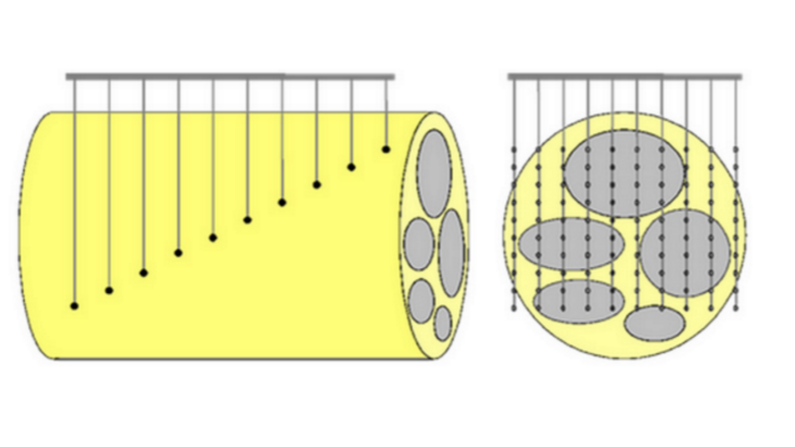
Diagram displaying how a USEA can interact with a peripheral nerve. from Center for Neural Interfaces website.

Abstract

Award Number: #1533649

Most ongoing research to develop advanced hand and arm prostheses that allow an individual with amputation to perform highly dexterous movements and to sense features of objects in the world has separated the performance of movements from the sensing of objects. However, in individuals with normal ability, sensory and motor information are integrated. This project’s goal is to create movement and sensation abilities in individuals with amputation that are more similar to that in normally enabled individuals. In particular, the goal is to understand how to best utilize all of the available motor and sensory information in the design of accurate neural controllers for future generations of forearm prostheses. This integrated approach to creating sensory percepts and interpreting motor intent will recreate the natural, minimally monitored use of an artificial hand in volunteers as ...

OnAir Post: Recording and Stimulating Arm Nerves

Focus – Sleep & Memory

Principal Investigators: Kenneth Norman, Princeton University and Ken Paller, Northwestern University Title:  Sleep’s role in determining the fate of individual memories. BRAIN Category: Individuality and Variation

This project will integrate multiple independent lines of work in cognitive neuroscience, cognitive psychology, and computer science in order to investigate the precise mechanisms undergone by recently-formed memory representations as a person sleeps.

Abstract

Identifying the cognitive, computational and neural mechanisms responsible for determining why some memories survive when others fade is one of the many grand challenges facing researchers of the human mind and brain. It is widely understood that sleep plays a critical role in long-term remembering, yet what exactly happens during sleep to affect the persistence of memories remains largely unknown. This project brings together a team of researchers who will integrate multiple independent lines of work in cognitive neuroscience, cognitive psychology, and computer science in order to investigate the precise mechanisms undergone by recently-formed memory representations as a person sleeps and how these mechanisms determine which memories survive and which fade. The proposed integration of cutting-edge neural data analysis methods for EEG and neuroimaging data, basic human memory theory, and neural network modeling make possible the ability to non-invasively track individual memories in the human brain as they compete ...

OnAir Post: Focus – Sleep & Memory

Decoding and Modulation of Human Language

Principal Investigators: Behnaam Aazhang, PhD – Rice and Nitin Tandon, MD – UT Health Title: Micro-scale Real-time Decoding and Closed-loop Modulation of Human Language BRAIN Category: Neuroengineering and Brain-inspired concepts and design

The engineering objective is to develop biocompatible microchips to vastly enhance our insight into language and other cognitive processes and learning. Miniaturized microchips in silicon technology will be developed that can record neural signals, digitize them, and transmit the signals to an in vitro receiver wirelessly.

Abstract

Award Number: #1533688

Humans produce language, which is a defining characteristic of our species and our civilization. We can select words precisely out of a large lexicon with remarkably low error rates. It is perhaps not surprising that this complex speech production system is easily affected by disease. Brain damage induced language disorders affect millions of Americans, and there is little hope of remediation. Research on the anatomical, physiological, and computational bases of speech production has made important strides in recent years but this has been limited by a glaring lack of information on the dynamics of the process. This limitation results from the low spatio-temporal resolution of the available tools to collect data and the effectiveness of the current tools for analysis. Our driving vision ...

OnAir Post: Decoding and Modulation of Human Language

Understanding Science Text

The overall goal of this project is to understand the neurocognitive mechanisms underlying reading comprehension of expository scientific texts by school-aged children, adult first language readers, and adult second language readers. It combines methods from functional magnetic resonance imaging and advanced data-analytic techniques in cognitive modeling and brain networks.

OnAir Post: Understanding Science Text

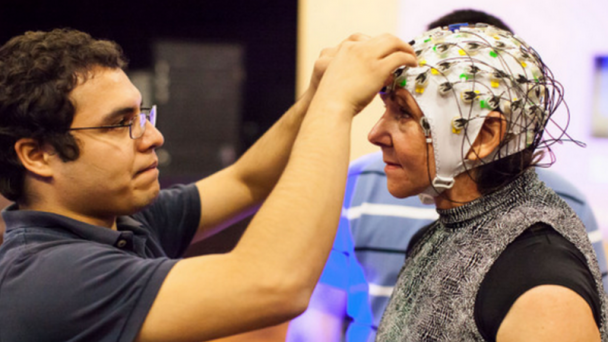
qEEG in freely behaving people

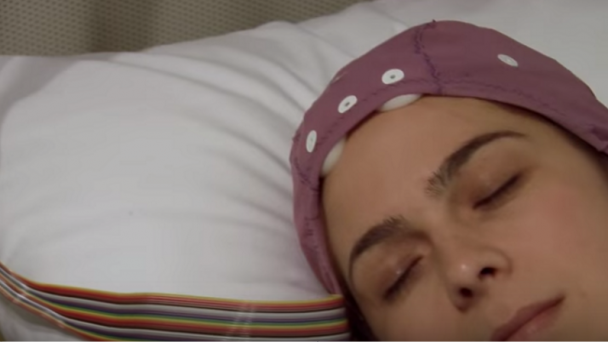
Principal Investigator: Jose Luis Contreras-Vidal, University of Houston Neuroscience Title:  Assaying neural individuality and variation in freely behaving people based on qEEG BRAIN Category: Individuality and Variation

The goals of this research are to uncover neural signals associated with the passive and interactive perception/production of art and to assess the long-term stability of neural activity acquired via quantitative electroencephalography (or qEEG).

Abstract

Award Number:#1533691

This project will deploy noninvasive Mobile Brain-body Imaging devices (MoBI) in a public museum with the goal of assaying individuality and variation in neural activity as it occurs (e.g., “in action and context”) in a large and diverse group of people, including children, experiencing fixed and interactive art exhibits. A natural setting such as an art museum attracts thousands of people with rich demographic factors such as age, sex, education level, occupation, and other factors such as health, medication and neurological status, thereby providing a unique opportunity to study the population distribution, accuracy and stability of neural activity and advance understanding of the dynamics of complex neural and cognitive systems in natural environments. The broader impacts of this research include integrating the arts, science and engineering to advance brain science; advancing the regulatory science of biomedical devices by uncovering biometric neural data ...

OnAir Post: qEEG in freely behaving people

Noise in mental exploration for learning

In our unpredictable world, decision-makers face an inherent trade-off: higher certainty leads to more precise and accurate choices when the world is stable but an inability to adjust to change, whereas less certainty can lead to greater adaptability but also more variable and imprecise decisions. The investigators propose that this trade-off is regulated by interactions between arousal and cortical systems.

OnAir Post: Noise in mental exploration for learning

Nanomagnetic Stimulation Capability

Principal Investigators: Sydney Cash, MD/PhD – Mass General and Nian X. Sun, PhD – Northeastern Title: Nanomagnetic Stimulation Capability for Neural Investigation and Control BRAIN Category: Neuroengineering and Brain-inspired concepts and design

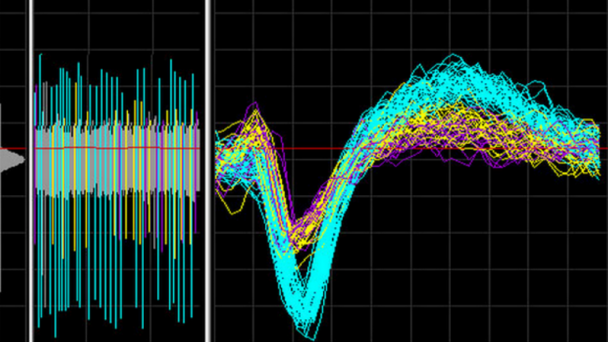
Image from Cortical Physiology Lab – Single Neural Channel

Abstract

Award Number: ##1533484

Abstract not available

NSF Project Information

NSF webpage:  nsf.gov/awardsearch/showAward?AWD_ID=1533484&HistoricalAwards

NSF Org: ECCS   Div Of Electrical, Commun & Cyber Sys

Start Date:  September 1, 2015      End Date: August 31, 2019 (Estimated)

Awarded Amount to Date: $363,640.00

Investigator(s): Nian Sun nian@ece.neu.edu

NSF Program(s): BIOMEDICAL ENGINEERING, IntgStrat Undst Neurl&Cogn Sys

Program Reference Code(s): 8089, 8091, 8551

Sponsor: Northeastern University 360 HUNTINGTON AVE BOSTON, MA 02115-5005 (617)373-2508

NSF Project Information

NSF webpage:  nsf.gov/awardsearch/showAward?AWD_ID=1533484&HistoricalAwards

NSF Org: ECCS   Div Of Electrical, Commun & Cyber Sys

Start Date:  September 1, 2015      End Date: August 31, 2019 (Estimated)

Awarded Amount to Date: $456,364.00

Investigator(s): Sydney Cash SCASH@PARTNERS.ORG

NSF Program(s): BIOMEDICAL ENGINEERING, IntgStrat Undst Neurl&Cogn Sys

Program Reference Code(s): 8089, ...

OnAir Post: Nanomagnetic Stimulation Capability

Integrating neural interfaces & machine intelligence for prosthetics

Principal Investigators: Charles Liu, PhD – USC; Kapil Katyal, PhD – JHU; Richard Andersen, PhD – Caltech Title: Integrating neural interfaces and machine intelligence for advanced neural prosthetics BRAIN Category: Neuroengineering and Brain-inspired concepts and design 

This collaborative project will decode high-level cognitive actions from neural signals recorded in the parietal cortex of a tetraplegic human, then carry out those intents using a smart robotic prosthesis. Experimental results will be used to construct BMI control algorithms optimized to decode these cognitive signals.

Abstract

Brain-machine interfaces (BMI) read signals directly from the brain to control external devices such as robotic limbs. While this technology has great potential to benefit people who are paralyzed, BMIs often have poor performance because they use noisy, low-level signals to simultaneously control many aspects of the robotic limb’s movements. In contrast, this project will address this shortcoming by reading high-level intents from the brain in order to control an intelligent robotic system. These changes reflect cutting-edge advances in neuroscience and machine intelligence and will require close cooperation between scientists, engineers, and physicians. The project aims to leverage expertise across these diverse fields in order to generate significant improvements in BMI technology to advance the national health, increase scientific understanding of the brain, and lead to dramatic ...

OnAir Post: Integrating neural interfaces & machine intelligence for prosthetics

Identifying Design Principles of Neural Cells

This proposal seeks to develop a robust theory of how single neural cells form electrically active networks. The project integrates emerging methods in computer science, systems biology, neuroengineering and developmental biology to offer insight into the brain's organization.

OnAir Post: Identifying Design Principles of Neural Cells

A circuit theory of cortical function

This project aims to develop and test a new conceptual framework for understanding brain function, and informing biologically based artificial intelligence systems. The underlying theory holds that the properties of any neuron and any cortical area are not fixed but undergo state changes with changing perceptual task, expectation and attention.

OnAir Post: A circuit theory of cortical function

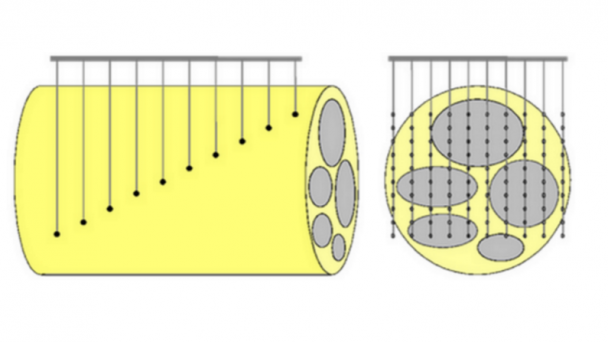
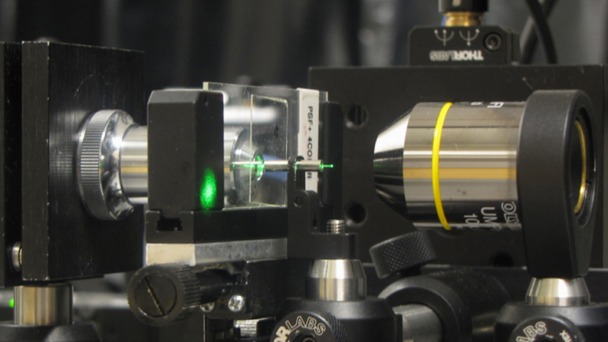
Imaging synaptic activity using super-resolution cannula microscopy

Principal Investigator: Rajesh Menon – Utah Neuroscience Title:Imaging synaptic activity deep in the brain using super-resolution cannula microscopy” BRAIN Category: Neuroengineering and Brain-inspired concepts and design (#1532591)

Objective: This project will develop a tool for high-resolution (<100-nm) imaging of synapses in freely moving animals for neuronal studies. It will accomplish this goal by the development and integration of compact and lightweight cannula microscopy with in vitro fluorescence imaging with accompanying technology and methodologies for imaging synapses.

Abstract

Award Number#1533611

Objective: This project will develop a tool for high-resolution (<100-nm) imaging of synapses in freely moving animals for neuronal studies. It will accomplish this goal by the development and integration of compact and lightweight cannula microscopy with in vitro fluorescence imaging with accompanying technology and methodologies for imaging synapses.

Non-Technical

The long-term vision of this project is to image with high resolution deep inside the brain of freely moving mice using inexpensive technologies so as to elucidate the fundamental basis of information processing and memory. Changes in synaptic strength at specific synapses are thought to underlie memory encoding and storage, yet there is very little experimental evidence for this theory in the intact brain due to technical limitations of visualizing the specific synaptic pattern involved in experience-dependent ...

OnAir Post: Imaging synaptic activity using super-resolution cannula microscopy

Neural representation of visual memory

We propose to combine three technologies to predict what makes an image memorable or forgettable: neuro-imaging technologies recording where encoding happens in the human brain (spatial scale), when it happens (temporal scale), and what types of computation are performed at the different stages of storage (computational scale.

OnAir Post: Neural representation of visual memory

Neural Variability During Motor Learning

Principal Investigator: Steven Chase, CMU Title:  The Structure of Neural Variability During Motor Learning BRAIN Category: Individuality and Variation

This study will investigate the neural correlates of motor variability and establish the connections between neural variability, behavioral performance, and learning.

Abstract

Movements are inherently variable: one never throws a dart or a basketball in exactly the same way twice. On the face of it, this variability in behavior is detrimental to performance, preventing one from consistently hitting the bull’s-eye or making the basket. However, computational theories posit that motor variability may also serve a functional role, enabling exploration and learning of more efficient movements. This creates an intriguing duality: while variability should be minimized for short-term motor performance (to act reliably), it should be maximized for long-term performance (to promote learning). During practice, variability might be useful for developing motor skill. When it’s game time, however, variability should be suppressed to the greatest extent possible. Might the central nervous system set the amount of variability in a context-appropriate fashion? This study will investigate the neural correlates of motor variability and establish the connections between neural variability, behavioral performance, and learning.

Neural variability lies at the heart of several theoretical computational models, from implementations of probabilistic computation to Hebbian ...

OnAir Post: Neural Variability During Motor Learning

Skip to toolbar