Individual variability in human brain


Principal Investigators: Hava Siegelmann, University of Massachusetts Amherst and Lilianne Mujica-Parodi, SUNY Stony Brook Title:   Individual variability in human brain connectivity, modeled using multi-scale dynamics under energy constraint BRAIN Category: Individuality and Variation

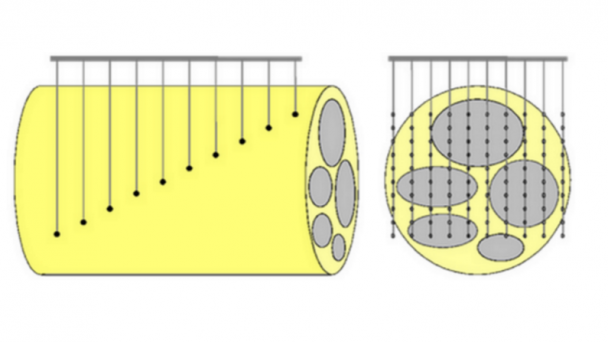
Clinical neuroscience currently lacks the tools for probing how biological constraints imposed upon synapses impact functional connectivity patterns.  Our long-range goal is to develop these tools, focusing first upon energy constraints across synaptic-hemodynamic scales.

Abstract

Award Number: #1533693

Recent years have witnessed an explosion of interest in human brain connectivity and its relationship to brain-based disease. Functional connectivity analyses in neuroimaging have taken three general forms: cross-correlations, weighting of directed connections, and graph-theoretic approaches. Graph-theoretic measures, in particular, provide valuable insights into network features at the time of imaging. Yet, they cannot identify how the brain came to have those features, nor can they inform estimation of future network evolution. Neurological and psychiatric illnesses tend to have degenerative or oscillatory time-courses that range over decades; thus, network evolution will be critical to understanding why two individuals with the same diagnosis show markedly distinct developmental onsets and prognoses.

At the most fundamental level, clinical neuroscience currently lacks the tools for probing how biological constraints imposed upon synapses impact functional connectivity patterns. These constraints include, among others: limited energy resources as per ...

OnAir Post: Individual variability in human brain
Understanding individual differences in cognitive performance

Principal Investigator: Zhong-Lin Lu, Ohio State and Mark Steyvers, UC Irvine Title:   Understanding individual differences in cognitive performance: Joint hierarchical Bayesian modeling of behavioral and neuroimaging data BRAIN Category: Individuality and Variation

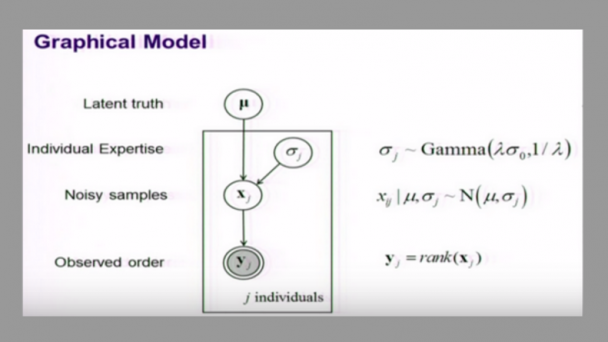
This project explores a mathematical and computational framework for investigating a large-sample neuroimaging and behavioral dataset in order to improve our understanding of individual differences in cognitive performance.


Abstract

Understanding the complex determinants of individual health and wellbeing is critical for the promotion and maintenance of a healthy world population. Wellbeing may be understood not only as the absence of physical and mental illness but also as the quality of life and optimal functioning of individuals. It is well known that individuals vary tremendously in terms of cognitive abilities and dispositions, as seen from performance on high-order cognitive tasks, decision-making preferences, and emotional competencies. However, the neural underpinnings of much of this variability are poorly understood: It is unclear how individual differences in brain structure and function across tasks and processes are linked to abilities and competencies. This project explores a mathematical and computational framework for investigating a large-sample neuroimaging and behavioral dataset in order to improve our understanding of individual differences in cognitive performance. An ultimate goal of the project is to predict individual cognitive performance ...

OnAir Post: Understanding individual differences in cognitive performance

Recording and Stimulating Arm Nerves

Principal Investigator: David Warren, University of Utah Title:Sensory-Motor Integration via Recording and Stimulating Arm Nerves NSF BRAIN Category: Individuality and Variation

This project’s goal is to create movement and sensation abilities in individuals with amputation that are more similar to that in normally enabled individuals.

Diagram displaying how a USEA can interact with a peripheral nerve. from Center for Neural Interfaces website.

Abstract

Award Number: #1533649

Most ongoing research to develop advanced hand and arm prostheses that allow an individual with amputation to perform highly dexterous movements and to sense features of objects in the world has separated the performance of movements from the sensing of objects. However, in individuals with normal ability, sensory and motor information are integrated. This project’s goal is to create movement and sensation abilities in individuals with amputation that are more similar to that in normally enabled individuals. In particular, the goal is to understand how to best utilize all of the available motor and sensory information in the design of accurate neural controllers for future generations of forearm prostheses. This integrated approach to creating sensory percepts and interpreting motor intent will recreate the natural, minimally monitored use of an artificial hand in volunteers as ...

OnAir Post: Recording and Stimulating Arm Nerves

Focus – Sleep & Memory

Principal Investigators: Kenneth Norman, Princeton University and Ken Paller, Northwestern University Title:  Sleep’s role in determining the fate of individual memories. BRAIN Category: Individuality and Variation

This project will integrate multiple independent lines of work in cognitive neuroscience, cognitive psychology, and computer science in order to investigate the precise mechanisms undergone by recently-formed memory representations as a person sleeps.

Abstract

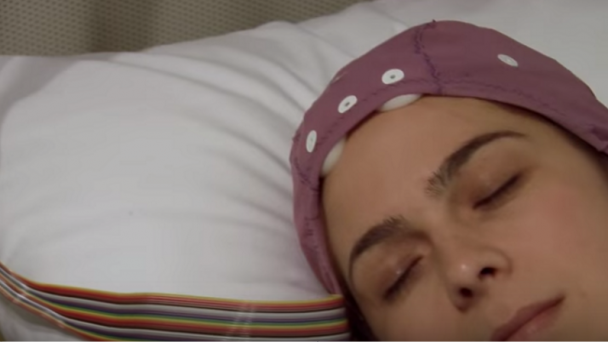
Identifying the cognitive, computational and neural mechanisms responsible for determining why some memories survive when others fade is one of the many grand challenges facing researchers of the human mind and brain. It is widely understood that sleep plays a critical role in long-term remembering, yet what exactly happens during sleep to affect the persistence of memories remains largely unknown. This project brings together a team of researchers who will integrate multiple independent lines of work in cognitive neuroscience, cognitive psychology, and computer science in order to investigate the precise mechanisms undergone by recently-formed memory representations as a person sleeps and how these mechanisms determine which memories survive and which fade. The proposed integration of cutting-edge neural data analysis methods for EEG and neuroimaging data, basic human memory theory, and neural network modeling make possible the ability to non-invasively track individual memories in the human brain as they compete ...

OnAir Post: Focus – Sleep & Memory

Understanding Science Text

The overall goal of this project is to understand the neurocognitive mechanisms underlying reading comprehension of expository scientific texts by school-aged children, adult first language readers, and adult second language readers. It combines methods from functional magnetic resonance imaging and advanced data-analytic techniques in cognitive modeling and brain networks.

OnAir Post: Understanding Science Text

qEEG in freely behaving people

Principal Investigator: Jose Luis Contreras-Vidal, University of Houston Neuroscience Title:  Assaying neural individuality and variation in freely behaving people based on qEEG BRAIN Category: Individuality and Variation

The goals of this research are to uncover neural signals associated with the passive and interactive perception/production of art and to assess the long-term stability of neural activity acquired via quantitative electroencephalography (or qEEG).

Abstract

Award Number:#1533691

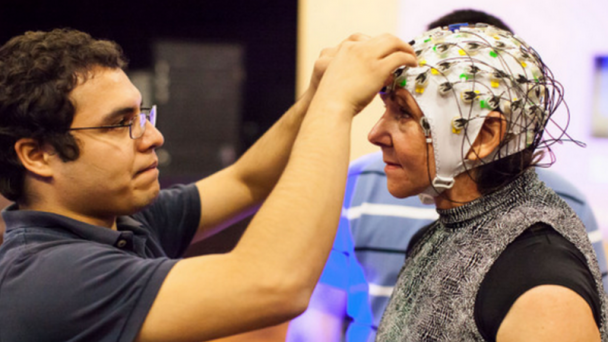
This project will deploy noninvasive Mobile Brain-body Imaging devices (MoBI) in a public museum with the goal of assaying individuality and variation in neural activity as it occurs (e.g., “in action and context”) in a large and diverse group of people, including children, experiencing fixed and interactive art exhibits. A natural setting such as an art museum attracts thousands of people with rich demographic factors such as age, sex, education level, occupation, and other factors such as health, medication and neurological status, thereby providing a unique opportunity to study the population distribution, accuracy and stability of neural activity and advance understanding of the dynamics of complex neural and cognitive systems in natural environments. The broader impacts of this research include integrating the arts, science and engineering to advance brain science; advancing the regulatory science of biomedical devices by uncovering biometric neural data ...

OnAir Post: qEEG in freely behaving people

Noise in mental exploration for learning

In our unpredictable world, decision-makers face an inherent trade-off: higher certainty leads to more precise and accurate choices when the world is stable but an inability to adjust to change, whereas less certainty can lead to greater adaptability but also more variable and imprecise decisions. The investigators propose that this trade-off is regulated by interactions between arousal and cortical systems.

OnAir Post: Noise in mental exploration for learning

Neural Variability During Motor Learning

Principal Investigator: Steven Chase, CMU Title:  The Structure of Neural Variability During Motor Learning BRAIN Category: Individuality and Variation

This study will investigate the neural correlates of motor variability and establish the connections between neural variability, behavioral performance, and learning.

Abstract

Movements are inherently variable: one never throws a dart or a basketball in exactly the same way twice. On the face of it, this variability in behavior is detrimental to performance, preventing one from consistently hitting the bull’s-eye or making the basket. However, computational theories posit that motor variability may also serve a functional role, enabling exploration and learning of more efficient movements. This creates an intriguing duality: while variability should be minimized for short-term motor performance (to act reliably), it should be maximized for long-term performance (to promote learning). During practice, variability might be useful for developing motor skill. When it’s game time, however, variability should be suppressed to the greatest extent possible. Might the central nervous system set the amount of variability in a context-appropriate fashion? This study will investigate the neural correlates of motor variability and establish the connections between neural variability, behavioral performance, and learning.

Neural variability lies at the heart of several theoretical computational models, from implementations of probabilistic computation to Hebbian ...

OnAir Post: Neural Variability During Motor Learning

Skip to toolbar