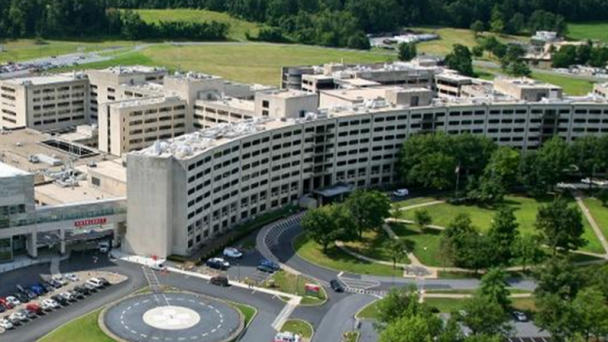
PSU Institute of the Neurosciences

The Institute also provides oversight and coordination for neuroscience-related activities in education, research, patient care and outreach, while promoting an intellectual environment that enhances the interdisciplinary neuroscience educational experience from the undergraduate to postdoctoral levels.

The Institute also provides oversight and coordination for neuroscience-related activities in education, research, patient care and outreach, while promoting an intellectual environment that enhances the interdisciplinary neuroscience educational experience from the undergraduate to postdoctoral levels.

OnAir Post: PSU Institute of the Neurosciences

Neuroscience @Penn

Neuroscience @Penn is based in the Department of Neuroscience with substantial coordination via the Mahoney Institute of Neuroscience. The Department of Neuroscience is located in the Perelman School of Medicine at the University of Pennsylvania. 

Neuroscience @Penn has a number of affiliated groups including: Behavioral Neuroscience at Penn, ; Center for Study of Addiction; Center for Cognitive Neuroscience, Center for Neuroscience and Society, Center for Sleep and Respiratory Neurobiology, Penn Medicine Neuroscience Center, Department of Neurology, Institute for Research in Cognitive Science, Penn Vision Research Center,  Computational Neuroscience at Penn, and Neuroscience Graduate Group.

Web Information

Department of Neuroscience : http://www.med.upenn.edu/nscience/index.shtml

Institute of Neuroscience: http://www.med.upenn.edu/ins/

Behavioral Neuroscience at Pennhttp://www.psych.upenn.edu/behavneuro/

Center for Study of Addictionhttp://www.med.upenn.edu/csa/index.html

Center for Cognitive Neurosciencehttp://www.ccn.upenn.edu/

Center for Neuroscience and Societyhttp://www.neuroethics.upenn.edu/

Center for Sleep and Respiratory Neurobiologyhttp://www.med.upenn.edu/sleepctr/

Penn Medicine Neuroscience Center: http://www.uphs.upenn.edu/neuroscience-center

Department of Neurology: http://www.uphs.upenn.edu/neuro/

Institute for Research in Cognitive Science: http://www.ircs.upenn.edu/

Penn Vision Research Centerhttp://vrc.med.upenn.edu/

Computational Neuroscience at Penn: http://www.ircs.upenn.edu/compneuro/

Neuroscience Graduate Group: http://www.med.upenn.edu/ngg/

NSF BRAIN Initiative Grant: http://brain2015.onair.cc/noise-in-mental-exploration-for-learning/

Contact Information

Department of Neuroscience and Institute of Neuroscience Email: johndani@mail.med.upenn.edu (John Dani’s is Chair of both organizations)

Chair’s Phone: (215) 898-8498

Address: 211 Clinical Research Building 415 Curie Blvd Philadelphia, PA 19104

Department of Neuroscience 

The Department of Neuroscience, located in the School of Medicine at the University of Pennsylvania. ...
OnAir Post: Neuroscience @Penn

UMass Amherst Neuroscience

The Neuroscience and Behavior Program at UMass Amherst is an interdepartmental graduate degree-granting academic unit that brings together faculty members from various departments to provide cutting-edge research training.

Neuroscience research at UMass Amherst falls within five broadly defined areas: Neuroendocrinology; Molecular and Cellular Neuroscience; Animal Behavior and Learning; Neural and Behavioral Development; and Sensorimotor, Cognitive, and Computational Neuroscience.

Web Information

Neuroscience and Behavior Program: https://www.umass.edu/neuro/


Neuroendocrinology

This nationally recognized group of faculty has formed a Center for Neuroendocrine Studies, which emphasizes interdisciplinary and collaborative studies on the interactions between hormones, brain function, and behavior. Current research interests include hormones and neuronal development, regulation of neuroendocrine cells and behavior, circadian rhythms, environmental endocrine disruptors, stress, and neuronal integration of experiential, metabolic, and hormonal signals. There is particular emphasis on reproductive neuroendocrinology and the role of gonadal steroids in ovulation and female mating behavior and sexual differentiation


Molecular and Cellular Neuroscience

Faculty members within this area apply state-of-the-art molecular and genetic techniques to the analysis of neuronal function and development in a variety of model systems. Particularly noteworthy is a strong and highly interactive group using zebrafish as a model organism to investigate the molecular mechanisms of neural development and organization. Another major area of interest involves ...

OnAir Post: UMass Amherst Neuroscience

Houston Neuroscience

The University of Houston neuroscience programs include the Developmental Cognitive Neuroscience program in the Department of Psychology and various centers including Center for Neuro-Engineering & Cognitive Science and the Center for Neuromotor, Biomechanics Research (CNBR). and the Brain-Machine Interface Systems Lab.

Web Information

Developmental Cognitive Neuroscience: http://www.uh.edu/class/psychology/dev-psych/research/

Center for Neuro-Engineering & Cognitive Science: http://cnecs.egr.uh.edu/

Center for Neuromotor, Biomechanics Research: http://www.hhp.uh.edu/cnbr/about.php

Brain-Machine Interface Systems Lab: http://www2.egr.uh.edu/~nbmis/

Developmental Cognitive Neuroscience

The Developmental Psychology graduate program in the Department of Psychology in the College of Liberal Arts and Social Sciences at the University of Houston is divided into the following research laboratories:

Behavioral Neuroscience Lab, Director: Leigh Leasure Cognitive Development Lab, Director: Hanako Yoshida Developmental Behavioral Neuroscience, Director: Therese Kosten Laboratory for the Neural Bases of Bilingualism, Director: Arturo Hernandez The Texas Center for Learning Disabilities, Overall Project Principal Investigator: Jack M. Fletcher Texas Institute for Measurement, Evaluation and Statistics, Director: David J. Francis; Associate Director: Coleen D. Carlson Visual Cognition Lab, Director: Bruno Breitmeyer

Center for Neuro-Engineering & Cognitive Science

This center is the successor of the Cognitive Science Initiative, and its primary mission is to conduct basic and applied research in neuro-engineering and cognitive science.

Other important objectives include the education of students in a multi-disciplinary ...

OnAir Post: Houston Neuroscience

Skip to toolbar