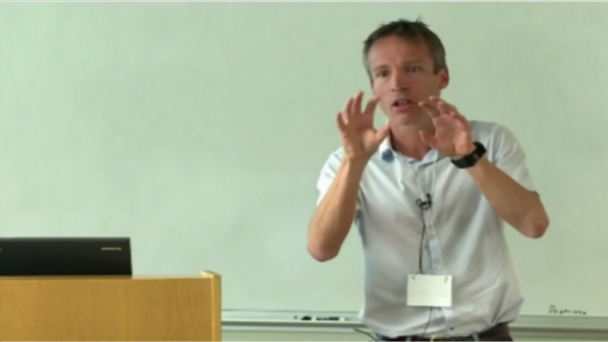
Mark Steyvers, PhD – UC Irvine


Professor, Cognitive Sciences UC Irvine Principal Investigator, Memory and Decision Laboratory

Dr. Steyvers research focuses on Wisdom of Crowds; Aggregating human judgments; Computational models of the mind; Machine Learning and Statistics; Memory and Decision Making.


Web Information

Department webpage: http://www.faculty.uci.edu/profile.cfm?faculty_id=5064

Memory and Decision Laboratory websitehttp://psiexp.ss.uci.edu/research/madlab.htm

Google Scholar: https://scholar.google.com/citations?user=szUb_isAAAAJ&hl=en

Contact Information

Email: msteyver@uci.edu

Phone: (949) 824-7642

Address: University of California, Irvine 2316 Social & Behavioral Sciences Gateway Building Mail Code: 5100 Irvine, CA 92697


Biosketch

2000 – 2002 Postdoctoral fellow. Stanford University

1995 – 2000 PhD, Indiana University, Joint degree in Cognitive Psychology and Cognitive Science. 1994

BA, University of Amsterdam, Psychology (Cum Laude)

See CV


Research Interests

Higher order cognition (memory/ decision-making/ inductive inference)

Computational modeling / Bayesian data analysis

Wisdom of crowds / Collective Intelligence / Crowdsourcing

Machine learning

Cognitive neuroscience (joint models for behavior and imaging data)

Computational Psychotherapy (joint models for text, coding, and patient data)

My research interests span a diverse set of topics in cognitive science such as wisdom of crowds, episodic and semantic memory, dynamic decision making, and causal reasoning. In each of these areas, I combine mathematical and computational modeling with behavioral experiments. The models and experiments are tightly coupled: I try to formulate empirical questions with the goals of constraining, developing, or testing between alternative computational models of how people learn, process, and represent information. My ...

OnAir Post: Mark Steyvers, PhD – UC Irvine

Zhong-Lin Lu, PhD – Ohio State


Distinguished Professor of Social and Behavioral Sciences and Psychology Director, Center for Brain and Cognitive Sciences at The Ohio State University

The goal of Lu’s research program is to construct computational brain models for perception and cognition.


Web Information

Department web pagehttp://faculty.psy.ohio-state.edu/lu/

Center for Brain and Cognitive Sciences websitehttp://lobes.osu.edu/

Amazon page: http://www.amazon.com/Zhong-Lin-Lu/e/B00E5S0UMQ

Contact Information

Email:lu.535@osu.edu

Address: Department of Psychology 1835 Neil Ave 60 Psychology Building Ohio State University Columbus, OH 43210


Biosketch

Lu received his bachelor’s degree in theoretical physics from the University of Science and Technology of China in 1989 and his master’s and doctorate degree in physics from New York University in 1992. Before joining OSU, he was the William M. Keck Chair in Cognitive Neuroscience, Professor of Psychology and Biomedical Engineering, and co-Director of the Dana and David Dornsife Cognitive Neuroscience Imaging Center, University of Southern California. Lu is a fellow of the Society of Experimental Psychologist and Association for Psychological Science.

My Ph.D. is in physics. Through my specialization in low-temperature physics, I became involved in a particular application: the development of an extremely sensitive device for recording and precisely localizing human brain activity through measurements of the magnetic fields it generates outside the scalp. Under the supervision of Sam Williamson (a physicist) and Lloyd Kaufman (an experimental ...

OnAir Post: Zhong-Lin Lu, PhD – Ohio State

David Warren, PhD – Utah

Research Assistant Professor, Department of Bioengineering, University of Utah Director, Center for Neural Interfaces

Dr. Warren does research in the fundamental Properties of Micromagnetics for Peripheral and Central Nervous System. He also focuses on stimulation and reliable peripheral interfaces.


Web Information

Department web pagehttps://www.bioen.utah.edu/directory/profile.php?userID=198

Center for Neural Interfaces website: http://www.bioen.utah.edu/cni/index.html

Google Scholar: http://scholar.google.com/citations?user=KvOkV30AAAAJ&hl=en


Contact Information

Email: David.Warren@utah.edu

Phone: 801-585-2697

Address: 20 S. 2030 E., Rm. 506E Salt Lake City, UT 84112-9458


Biosketch

BSEE – Washington State University (1979) MSEE – University of Washington (1982) Ph. D. – Unversity of Utah (2006)

CV Here


Research

Fundamental Properties of Micromagnetics for Peripheral and Central Nervous System Stimulation Reliable Peripheral Interfaces

Center for Neural Interfaces

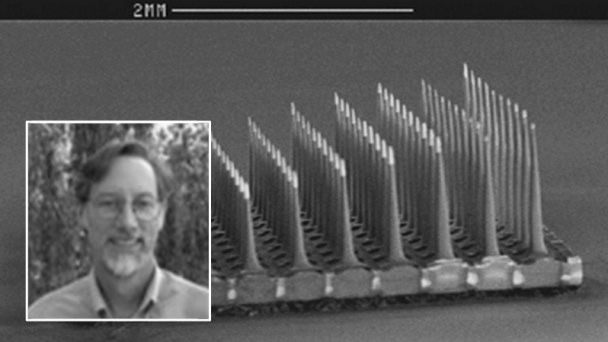
SEM image of the Utah Slanted Electrode Array (USEA). From Lab website.

The Center for Neural Interfaces was founded in 1995 as a Utah State Center of Excellence. The current focus is on the integration of biomedical technology with the physiological aspect of neuroscience and potential clinical applications. Chronically or acutely implantable neural interface devices based on the Utah Electrode Array are tested and used in the nervous system for recording or initiating neural signals, which may assist with sensory or motor functioning. The mission includes:

• Developing multichannel interfaces to ...

OnAir Post: David Warren, PhD – Utah

Lilianne R. Mujica-Parodi, PhD – Stony Brook


Associate Professor, Department of Biomedical Engineering.Stony Brook Appointments in Departments of  Neurobiology and Behavior,Neurology, and Psychiatry Director of the Laboratory for Computational Neurodiagnostics (LCNeuro)

Dr. Mujica-Parodi’s Lab performs clinical research on the neurobiology of emotional arousal, and its effects on physiology and cognition.The Laboratory for Computational Neurodiagnostics studies provide simultaneous measurement of neural, cardiac, endocrine, cognitive, immune, epigenetic and clinical components of the human emotional response.


Web Information

Department web pagehttp://bme.sunysb.edu/people/faculty/l_mujica-parodi.html

LCNeuro websitehttp://www.lcneuro.org/

Department  of  Neurobiology and Behavior web page: medicine.stonybrookmedicine.edu/neurobiology/gradprogram/faculty/Mujica-Parodi

Contact Information

Email: lmujicaparodi@gmail.com

Phone: (631) 632-1008

Address: Stony Brook Medicine 101 Nicolls Road Stony Brook NY 11794


Biosketch

8/88-6/92* B.A., 5/92 Georgetown University, Washington DC Philosophy College of Arts & Sciences Physics

9/93-8/98 Ph.D., 8/98 Columbia University, New York NY Philosophy Graduate School of Arts & Sciences (Mathematical Logic, Foundations of Physics) Thesis Advisor: Richard Friedberg, Ph.D. (Department of Theoretical Physics) Dissertation: “Quantum nonlocality and preferred frames of reference.”

9/98-8/01 Postdoctoral Fellow Columbia University, New York, NY Clinical Neuroscience College of Physicians and Surgeons Neuroimaging Psychiatry

CV here

Research

The Laboratory for Computational Neurodiagnostics performs clinical research on the neurobiology of emotional arousal, and its effects on physiology and cognition.The Laboratory for Computational Neurodiagnostics studies provide simultaneous measurement of neural, cardiac, endocrine, cognitive, immune, epigenetic and clinical components of the human emotional response. These data are then analyzed using statistics, ...

OnAir Post: Lilianne R. Mujica-Parodi, PhD – Stony Brook

Hava Siegelmann, PhD – UMass

Professor, Computer Science, University of Massachusetts at Amherst Director, BINDS Lab Core Member, Neuroscience and Behavior Program

Hava Siegelmann’s research focuses on the understanding of biologically inspired computational systems. In particular, she studies the computational and dynamical complexity of neural systems as well as genetic-networks.


Web Information

Department web page: https://www.cics.umass.edu/faculty/directory/siegelmann_hava

BINDS Lab websitehttp://binds.cs.umass.edu/index.html

Neuroscience and Behavior Program website:

Contact Information

Email: hava@cs.umass.edu

Phone: (413) 577-4282

Address: School of Computer Science BINDS Lab 140 Governors Drive University of Massachusetts Amherst Amherst, MA 01003-9264


Biosketch

Ph.D., Computer Science, Rutgers University (1993, Fellow of excellence),

M.Sc., Computer Science, Hebrew University (1992, Cum Laude),

B.A., Computer Science, the Technion (1988, Suma Cum Laude). Professor.

Before joining UMass, she was on the faculty of Industrial Engineering and Management at the Technion and served as the head of Information Systems Engineering. She has been a visiting professor at MIT and Harvard University.

Activites and Awards

Professor Siegelmann has been active in the International Neural Networks Society, serving on the Elected Board of Governors since 2012, she recently served as the Program Chair of the International Joint Conference on Neural Networks (IJCNN), 2011. She currently also serves as the Vice Chair on the Neural Network Technical Committee (NNTC) of the IEEE Computational Intelligence Society (CIS) as well as a Task Force member in “Towards Human-like ...

OnAir Post: Hava Siegelmann, PhD – UMass

Ken Paller, PhD – Northwestern


Professor of Psychology, Northwestern University Director, Cognitive Neuroscience Program and the Training Program in the Neuroscience of Human Cognition Fellow, Cognitive Neurology and Alzheimer’s Disease Center Editor (memory section) of Neuropsychologia

My research focuses on understanding human memory functions and their implementation in the brain. Multiple techniques for measuring brain activity are combined using a Cognitive Neuroscience approach that respects the complexity of cognition as well as the detailed organization of the brain.


Web Information

Department webpagehttp://faculty.wcas.northwestern.edu/~paller/

Cognitive Neuroscience Lab websitehttp://pallerlab.psych.northwestern.edu/

Neuropsychologia webpage: http://www.journals.elsevier.com/neuropsychologia/

Scholar’s Profilehttp://www.scholars.northwestern.edu/expert.asp?u_id=1792

New Reddit Journal of Science: reddit.com/r/science/comments/2ini0s/scienceamaseries_im_ken_paller_a_cognitive/

Contact Information

Email: kap@northwestern.edu

Phone: 847/467-3370

Address: 210 Cresap Department of Psychology 2029 Sheridan Road Evanston, IL 60208-2710


Research

Paller’s research focuses on understanding human memory functions and their implementation in the brain. Multiple techniques for measuring brain activity are combined using a Cognitive Neuroscience approach that respects the complexity of cognition as well as the detailed organization of the brain.

A central type of memory currently under study is conscious recollection, which is associated with memory for facts and events. This is the experience most people would associate with remembering. Another type of memory, perceptual priming, is generally measured as a facilitation in performance on implicit memory tests — in these tests subjects are not necessarily aware that memory is being ...

OnAir Post: Ken Paller, PhD – Northwestern

Kenneth Norman, Phd – Princeton


Professor of Psychology and the Princeton Neuroscience Institute Principal Investigator, Computational Memory Lab

A major focus of Dr. Norman’s research is characterizing how different subregions of the medial temporal lobes (in particular, the hippocampus and perirhinal cortex) contribute to recognition and recall, and how the contributions of these structures differ from one another. He is also interested in how accuracy and distortion in episodic memory arise from interactions between medial temporal structures and prefrontal cortex.

Web Information

Department web pagehttps://psych.princeton.edu/psychology/research/norman/index.php

Princeton Neuroscience Institute (BRAIN 2015)http://brain2015.onair.cc/princeton-neuroscience-institute/

Computational Memory Lab website: http://compmem.princeton.edu/?n=Main.HomePage

Contact Information

Email: knorman@princeton.edu

Phone: (609) 258-9694

Address: Department of Psychology Princeton University Green Hall, Washington Road Princeton, NJ 08540


Biosketch

Education

June 1999 Ph.D. in Psychology, Harvard University Advisor: Daniel Schacter, Ph.D. Thesis: “Differential Effects of List Strength on Recollection and Familiarity”

June 1996 MA in Psychology, Harvard University

June 1993 BS with distinction, Stanford University Advisors: John Gabrieli, Ph.D., Fred Dretske, Ph.D. Honors Thesis: “Is Consciousness the Gatekeeper of Memory?”

June 1999 – June 2002 NIH NRSA postdoctoral fellow, University of Colorado, Boulder Mentor: Randall O’Reilly, Ph.D.

1995 Fellow, McDonnell Summer Institute in Cognitive Neuroscience, Davis, CA

Click here for full CV

Research

In the Norman lab, we use biologically realistic neural network models to explore how the brain gives rise to learning and memory phenomena, and we test these models’ predictions using several different ...

OnAir Post: Kenneth Norman, Phd – Princeton

Ping Li, PhD – Penn State


Professor of Psychology, Linguistics, & Information Sciences & Technology Co-Director, Center for Brain, Behavior, and Cognition Facult, Center for Language Science (CLS)

Dr. Li’s research aims at understanding the relationships among language, brain, and culture. He investigates the computational and neural mechanisms underlying language acquisition and representation in both native and non-native speakers of Western languages.

Web Information

Department webpagehttp://psych.la.psu.edu/directory/pul8

Brain, Language, and Computation Lab websitehttp://blclab.org/

Penn State Neurosciencehttp://brain2015.onair.cc/psu-institute-of-neurosciences/

NSF BRAIN Initiative Granthttp://brain2015.onair.cc/neural-approaches-to-understanding-science-text/

Contact Information

Email: pul8@psu.edu

Phone: (814) 863-3921

Address: 452 Moore Building


Biography

Education and Professional Preparation

1992 Post-doctoral fellow McDonnell-Pew Center for Cognitive Neuroscience, San Diego, USA

1990-1992 Post-doctoral fellow Center for Research in Language, University of California, San Diego, USA

1990 Ph.D. in Psycholinguistics, University of Leiden, The Netherlands (graduate training at the Max Planck Institute for Psycholinguistics)

1986 M.A. in Theoretical Linguistics, Peking University, China

1983 B.A. in Chinese Linguistics, Peking University, China

CV

Research

My research aims at understanding the relationships among language, brain, and culture. In particular, we examine the dynamic changes that occur in the language learner and the dynamic interactions that occur in the competing language systems over the course of learning. We investigate the computational and neural mechanisms underlying language acquisition and representation in both native and non-native speakers of Western languages (e.g., English) and ...

OnAir Post: Ping Li, PhD – Penn State

Jose Luis Contreras-Vidal, PhD – Houston


Professor, Department of Electrical & Computing Engineering, University of Houston Cullen College of Engineering Principal Investigator, Brain-Machine Interface Systems

Dr. Jose Luis Contreras-Vidal’s vision is to innovate neural, prosthetic and rehabilitation engineering by developing non-invasive intuitive bi-directional brain-machine interface systems that harness user’s intent from scalp EEG. We are also uncovering exciting applications in the arts and STEM training in K-12 education, as well as reverse engineering the brain while achieving reverse-translational benefits of co-robots.


Web Information

Department webpagehttp://www.ece.uh.edu/faculty/contreras-vidal

Brain-Machine Interface Systems websitehttp://www2.egr.uh.edu/~nbmis/

University of Houston Neuroscience: http://brain2015.onair.cc/university-of-houston-neuroscience/

LinkedIn: https://www.linkedin.com/pub/jose-l-contreras-vidal-ph-d/19/949/131

Contact Information

Email: jlcontreras-vidal%40uh.edu

Phone: 713-743-4400

Address:Dept. of Electrical & Computer Engineering N308 Engineering Building 1 Houston, Texas 77004-4005Biography


Biosketch

Education:

Engineer’s Degree in Electronics & Communications, Monterrey Institute of Technology (ITESM), Monterrey, Mexico

M.S. in Electrical Engineering, University of Colorado at Boulder, Boulder, CO Ph.D. in Cognitive and Neural Systems, Boston University, Boston, MA Postdoctoral Fellow in Computational Motor Neuroscience, Arizona State University, Tempe, AZ Human Frontiers Science Postdoctoral Fellow, University of Fribourg, Switzerland, Fribourg, Switzerland

Professional Experience:

University of Maryland-College Park; Assistant (1999) and Associate (2005) Professor, 1999-2011

Awards & Honors:

Research and Development Award, School of Public Health, University of Maryland, 2011 President, International Graphonomics Society, 2013-2015 National Science Foundation Review Panel (Ad-hoc) NIH 2011/10 ZRG1 BBBP-V (10) B: Small Business: Biobehavioral and Behavioral Processes across the Lifespan Study ...

OnAir Post: Jose Luis Contreras-Vidal, PhD – Houston

Joshua Gold, PhD – Penn


Professor of Neuroscience, Perelman School of Medicine Principal Investigator, Gold Lab Chair, Neuroscience Graduate Group (NGG) Co-Director, Computational Neuroscience Initiative

Dr. Gold’s recent work has begun to identify how and where in the brain inference processes are implemented, particularly in the service of perceptual and reward-based decision-making. Research in my laboratory focuses on how these processes are shaped by learning to provide the flexibility a decision-maker needs to survive in a complex and dynamic world.

Web Information

Deparatment webpagemed.upenn.edu/apps/faculty/index.php/g309/p843

Gold Lab websitemed.upenn.edu/goldlab/index.shtml

Neuroscience Graduate Group  webpage: med.upenn.edu/ngg/

Computational Neuroscience Initiative website:  cni.upenn.edu/

Neuroscience @Penn: http://brain2015.onair.cc/neuroscience-penn/

NSF BRAIN Initiative Grant: http://brain2015.onair.cc/noise-in-mental-exploration-for-learning/

Contact Information

Email:jigold@mail.med.upenn.edu

Phone: (215) 746-0028

Address: 116 Johnson Pavilion 3610 Hamilton Walk University of Pennsylvania School of Medicine Philadelphia, PA 19104-6060


Biography

Sc.B. (Neural Sciences) , Brown University , 1991

Ph.D. (Neurosciences) , Stanford University, 1997

Research

Many aspects of higher brain function rely on two closely related capacities, inference and learning. Inference is the process of drawing conclusions from uncertain data, like forming a percept from noisy sensory information or predicting the most rewarding future outcome from the recent history of outcomes. These inferences often inform decisions that determine behavior. Learning uses experience to shape how these kinds of inference and decision processes function, often optimizing them to meet particular goals. Recent work has begun to ...

OnAir Post: Joshua Gold, PhD – Penn

Steven Chase, PhD – CMU

Assistant Professor, Center for the Neural Basis of Cognition and Biomedical Engineering Principal Investigator, Chase Lab

Dr. Chase uses brain-computer interfaces to study motor learning and skill acquisition. His work stands to provide a better understanding of how movement information is represented in networks of neurons in the brain and will inform the development of neural prosthetics.

Web Information

Department web page: https://www.bme.cmu.edu/people/faculty1.html#Chase

Lab websitehttp://www.cnbc.cmu.edu/~schase/index.php

Contact Information

Email: schase@andrew.cmu.edu

Phone: 412 268 5512

Address: Hamerschlag Hall C122 Carnegie Mellon University 5000 Forbes Avenue Pittsburgh, PA 15213

Biosketch

Steve Chase received his BS in Applied Physics from Caltech in ’97, his MS in Electrical Engineering from UC Berkeley in ’99, and his PhD in Biomedical Engineering from Johns Hopkins in ’06. He recently completed his post-doctoral training under the joint mentorship of Dr. Robert Kass (Carnegie Mellon, Statistics) and Dr. Andrew Schwartz (University of Pittsburgh, Neurobiology), where he used brain-computer interfaces to study adaptation and plasticity in the primary motor cortex. His research probes the coding and flow of information in neural populations.

Research

Brain-computer interface, or BCIs, are a promising technology for alleviating motor deficits caused by injury or disease. These devices can read out motor intent by recording directly from populations of motor cortical neurons, and ...

OnAir Post: Steven Chase, PhD – CMU

Skip to toolbar