Decoding and Modulation of Human Language

Principal Investigators: Behnaam Aazhang, PhD – Rice and Nitin Tandon, MD – UT Health Title: Micro-scale Real-time Decoding and Closed-loop Modulation of Human Language BRAIN Category: Neuroengineering and Brain-inspired concepts and design

The engineering objective is to develop biocompatible microchips to vastly enhance our insight into language and other cognitive processes and learning. Miniaturized microchips in silicon technology will be developed that can record neural signals, digitize them, and transmit the signals to an in vitro receiver wirelessly.

Abstract

Award Number: #1533688

Humans produce language, which is a defining characteristic of our species and our civilization. We can select words precisely out of a large lexicon with remarkably low error rates. It is perhaps not surprising that this complex speech production system is easily affected by disease. Brain damage induced language disorders affect millions of Americans, and there is little hope of remediation. Research on the anatomical, physiological, and computational bases of speech production has made important strides in recent years but this has been limited by a glaring lack of information on the dynamics of the process. This limitation results from the low spatio-temporal resolution of the available tools to collect data and the effectiveness of the current tools for analysis. Our driving vision ...

OnAir Post: Decoding and Modulation of Human Language
Nanomagnetic Stimulation Capability

Principal Investigators: Sydney Cash, MD/PhD – Mass General and Nian X. Sun, PhD – Northeastern Title: Nanomagnetic Stimulation Capability for Neural Investigation and Control BRAIN Category: Neuroengineering and Brain-inspired concepts and design

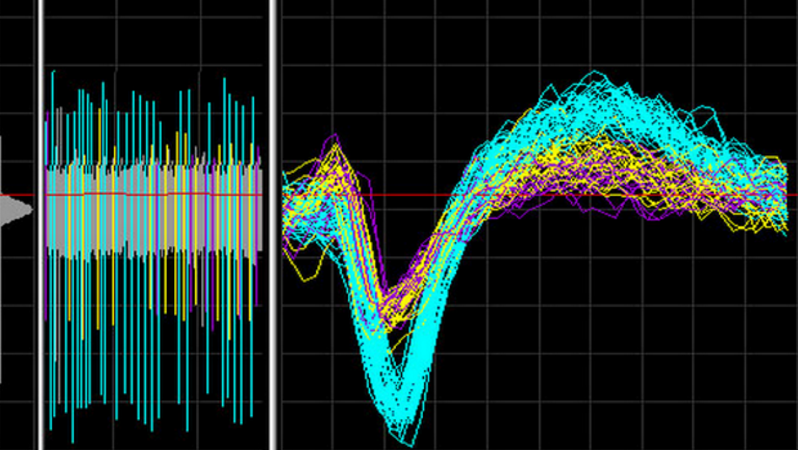
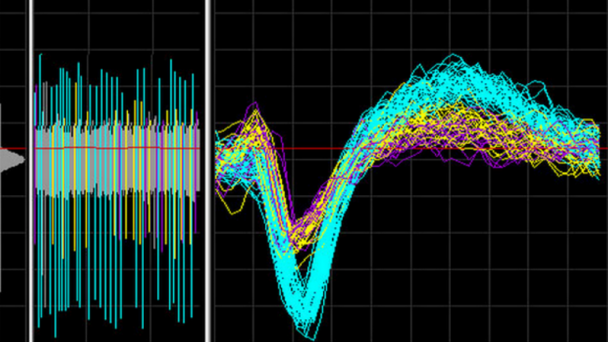
Image from Cortical Physiology Lab – Single Neural Channel

Abstract

Award Number: ##1533484

Abstract not available

NSF Project Information

NSF webpage:  nsf.gov/awardsearch/showAward?AWD_ID=1533484&HistoricalAwards

NSF Org: ECCS   Div Of Electrical, Commun & Cyber Sys

Start Date:  September 1, 2015      End Date: August 31, 2019 (Estimated)

Awarded Amount to Date: $363,640.00

Investigator(s): Nian Sun nian@ece.neu.edu

NSF Program(s): BIOMEDICAL ENGINEERING, IntgStrat Undst Neurl&Cogn Sys

Program Reference Code(s): 8089, 8091, 8551

Sponsor: Northeastern University 360 HUNTINGTON AVE BOSTON, MA 02115-5005 (617)373-2508

NSF Project Information

NSF webpage:  nsf.gov/awardsearch/showAward?AWD_ID=1533484&HistoricalAwards

NSF Org: ECCS   Div Of Electrical, Commun & Cyber Sys

Start Date:  September 1, 2015      End Date: August 31, 2019 (Estimated)

Awarded Amount to Date: $456,364.00

Investigator(s): Sydney Cash SCASH@PARTNERS.ORG

NSF Program(s): BIOMEDICAL ENGINEERING, IntgStrat Undst Neurl&Cogn Sys

Program Reference Code(s): 8089, ...

OnAir Post: Nanomagnetic Stimulation Capability

Integrating neural interfaces & machine intelligence for prosthetics

Principal Investigators: Charles Liu, PhD – USC; Kapil Katyal, PhD – JHU; Richard Andersen, PhD – Caltech Title: Integrating neural interfaces and machine intelligence for advanced neural prosthetics BRAIN Category: Neuroengineering and Brain-inspired concepts and design 

This collaborative project will decode high-level cognitive actions from neural signals recorded in the parietal cortex of a tetraplegic human, then carry out those intents using a smart robotic prosthesis. Experimental results will be used to construct BMI control algorithms optimized to decode these cognitive signals.

Abstract

Brain-machine interfaces (BMI) read signals directly from the brain to control external devices such as robotic limbs. While this technology has great potential to benefit people who are paralyzed, BMIs often have poor performance because they use noisy, low-level signals to simultaneously control many aspects of the robotic limb’s movements. In contrast, this project will address this shortcoming by reading high-level intents from the brain in order to control an intelligent robotic system. These changes reflect cutting-edge advances in neuroscience and machine intelligence and will require close cooperation between scientists, engineers, and physicians. The project aims to leverage expertise across these diverse fields in order to generate significant improvements in BMI technology to advance the national health, increase scientific understanding of the brain, and lead to dramatic ...

OnAir Post: Integrating neural interfaces & machine intelligence for prosthetics

Identifying Design Principles of Neural Cells

This proposal seeks to develop a robust theory of how single neural cells form electrically active networks. The project integrates emerging methods in computer science, systems biology, neuroengineering and developmental biology to offer insight into the brain's organization.

OnAir Post: Identifying Design Principles of Neural Cells

A circuit theory of cortical function

This project aims to develop and test a new conceptual framework for understanding brain function, and informing biologically based artificial intelligence systems. The underlying theory holds that the properties of any neuron and any cortical area are not fixed but undergo state changes with changing perceptual task, expectation and attention.

OnAir Post: A circuit theory of cortical function

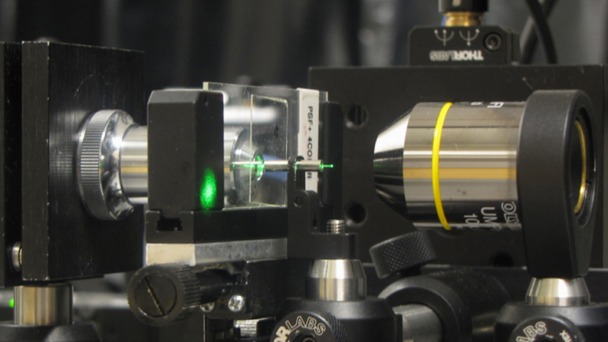
Imaging synaptic activity using super-resolution cannula microscopy

Principal Investigator: Rajesh Menon – Utah Neuroscience Title:Imaging synaptic activity deep in the brain using super-resolution cannula microscopy” BRAIN Category: Neuroengineering and Brain-inspired concepts and design (#1532591)

Objective: This project will develop a tool for high-resolution (<100-nm) imaging of synapses in freely moving animals for neuronal studies. It will accomplish this goal by the development and integration of compact and lightweight cannula microscopy with in vitro fluorescence imaging with accompanying technology and methodologies for imaging synapses.

Abstract

Award Number#1533611

Objective: This project will develop a tool for high-resolution (<100-nm) imaging of synapses in freely moving animals for neuronal studies. It will accomplish this goal by the development and integration of compact and lightweight cannula microscopy with in vitro fluorescence imaging with accompanying technology and methodologies for imaging synapses.

Non-Technical

The long-term vision of this project is to image with high resolution deep inside the brain of freely moving mice using inexpensive technologies so as to elucidate the fundamental basis of information processing and memory. Changes in synaptic strength at specific synapses are thought to underlie memory encoding and storage, yet there is very little experimental evidence for this theory in the intact brain due to technical limitations of visualizing the specific synaptic pattern involved in experience-dependent ...

OnAir Post: Imaging synaptic activity using super-resolution cannula microscopy

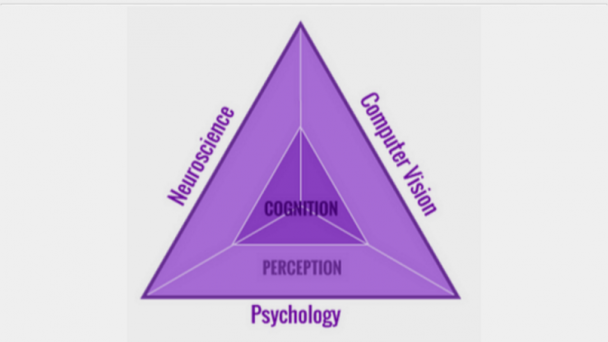
Neural representation of visual memory

We propose to combine three technologies to predict what makes an image memorable or forgettable: neuro-imaging technologies recording where encoding happens in the human brain (spatial scale), when it happens (temporal scale), and what types of computation are performed at the different stages of storage (computational scale.

OnAir Post: Neural representation of visual memory

Skip to toolbar