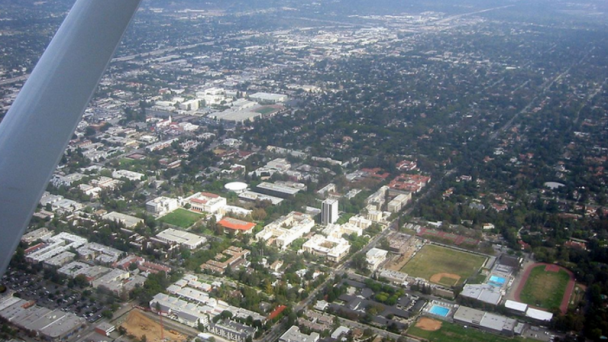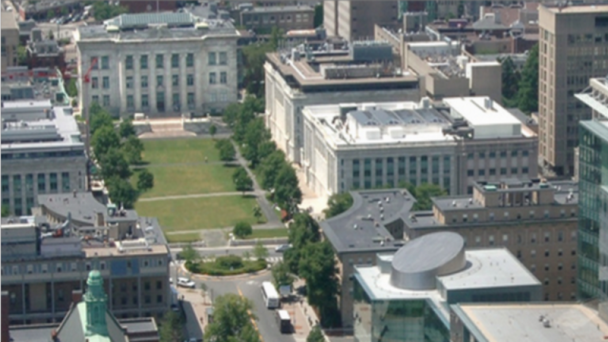
Harvard Neuroscience

The Program in Neuroscience draws together neuroscientists from across Harvard. The physical home base of the program is located at the Longwood Campus of Harvard Medical School, in the Department of Neurobiology.

Research sites include the Longwood Medical Area, Cambridge Campus, Massachusetts General Hospital, and the McLean Hospital. The Center for Brain Science unites many neuroscience labs and houses in the newly established Swartz Program in Theoretical Neuroscience.

Web Information

Website: dms.hms.harvard.edu/neuroscience/prospective/AboutPIN Research Sites: dms.hms.harvard.edu/neuroscience/prospective/ResearchSites Brain Initiative Grant – “Comprehensive Classification Of Neuronal Subtypes By Single Cell Transcriptomics” BRAIN Initiative Grant– “Magnetic Particle Imaging (MPI) for Functional Brain Imaging in Humans” BRAIN Initiative Grant– “Mapping neuronal chloride microdomains” Brain Initiative Grant– “Neural circuits in zebrafish: form, function and plasticity”

Contact Information

Email: karen_harmin@hms.harvard.edu Phone: (617) 432-0912 Address: Program in Neuroscience Harvard Medical School 220 Longwood Avenue Goldenson 129 Boston, MA 02115

About the Program in Neuroscience

Mission Statement: We are an inter-departmental Ph.D. program for training in neuroscience. Our mission is to provide students with the instruction, research experience, and mentoring they need to become leaders in research and education.

Who we are: The Program in Neuroscience draws together neuroscientists from across Harvard. The physical home base of the program is located at the Longwood Campus of Harvard Medical School, in the Department of Neurobiology. Most coursework occurs at this campus, ...

OnAir Post: Harvard Neuroscience
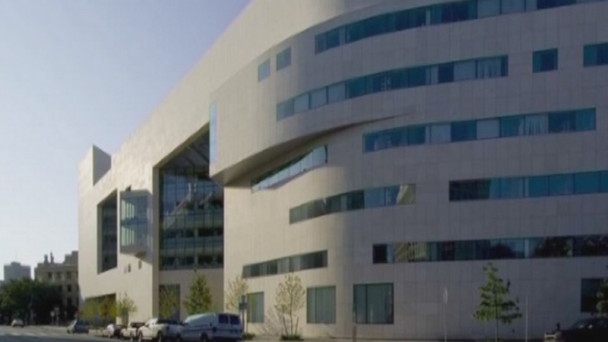
MIT Neuroscience

MIT has numerous academic and research programs related to neuroscience. Key institutions include the Department of Brain, and Cognitive Sciences, Department of Biological Engineering, and the MIT Media Lab.

Important neuroscience related centers include: Center for Neurobiological Engineering (CNBE); McGovern Institute Neurotechnology (MINT) program; Simons Center for the Social Brain (SCSB); Synthetic Biology Center;Picower Center for Learning and Memory; and the Martinos Imaging Center at MIT.

Grant Information

Brain Initiative Grant – “Advancing MRI & MRS Technologies for Studying Human Brain Function and Energetics” Brain Initiative Grant – “Novel technologies for nontoxic transsynaptic tracing”“Novel technologies for nontoxic transsynaptic tracing” Brain Initiative Grant – “Ultra-Multiplexed Nanoscale In Situ Proteomics for Understanding Synapse Types” Brain Initiative Grant – “Calcium sensors for molecular fMRI” Brain Initiative Grant – “Next generation high-throughput random access imaging, in vivo” Brain Initiative Grant – “Cortical circuits and information flow during memory-guided perceptual decisions”

Department of Brain and Cognitive Sciences

Undergraduate program

Graduate program

Postdoctoral Program

Open Courseware

People

48 faculty members,over 200 graduate & undergraduate students, 180 researchers and post-docs and 36 staff

Department Head: James Dicarlo, PhD

Department of Biological Engineering

Academic Programs

Faculty

MIT Media Lab

Research

People

Research Centers 

Center for Neurobiological Engineering (CNBE)

OnAir Post: MIT Neuroscience

Rockefeller University

Centered around 76 cutting-edge laboratories working in a broad range of fields, The Rockefeller University fosters a collaborative research environment for its faculty and provides an innovative educational experience for its outstanding graduate students and postdoc researchers.

To help reduce artificial barriers and provide its investigators with the greatest degree of freedom, Rockefeller does not have academic departments. As a result, the university is not constrained to perform research in any particular field and can recruit the most accomplished and gifted investigators across a wide spectrum of disciplines in the sciences.

Web Information

Website: rockefeller.edu/ Wikipedia Entry: wiki/Rockefeller_University Brain Initiative Grant – “Remote regulation of neural activity”

Contact Information

Email: contacts Phone: 212-327-8000 Address: The Rockefeller University | 1230 York Avenue, New York, NY 10065

Fisher Center for Alzheimer’s Disease Research

The Fisher Center is a nexus for Alzheimer’s disease research at Rockefeller. The center’s scientists use state-of-the-art technologies to expand and accelerate Alzheimer’s research and lay the foundation for new treatment strategies.

The center’s investigations build on Alzheimer’s studies conducted in Rockefeller University labs, particularly research focused on how the cells of the brain process the amyloid precursor protein (APP). Faulty regulation of APP processing — in which APP is chopped into smaller pieces during normal brain cell ...

OnAir Post: Rockefeller University

Rice Neuroscience

The Rice Neuroscience Program is a composition of courses, research opportunities, and seminars that seek to provide an education experience that can lead to exciting and rewarding career paths directly in, or related to, neuroscience.

Currently, we have a neuroscience minor program that is an official part of the Rice curriculum, which involves participation in core and elective courses at Rice, Baylor College of Medicine, and the University of Texas Health Sciences Center as well as research in active faculty laboratories throughout the Texas Medical Center.  The Neuroscience Program is in a state of growth, with working efforts to build a shared graduate degree in Neuroscience, and next, a neuroscience major at Rice.

Web Information

Rice Neuroscience Program website: http://neuroscience.rice.edu/ NSF Grant – “Identifying Design Principles of Neural Cells

Contact Information

Email:  neuroscience@rice.edu Address: Rice University, MS-543 Attn: Neuroscience Administrator 6100 Main Street Houston, TX 77005

About the Rice Neuroscience Program

Neuroscience is the study of the brain and nervous system; how it develops, how it works, and what happens when it doesn’t work properly.  Neuroscience is a multidisciplinary field that encompasses most areas of modern science, from genetics and biology, to mathematics and engineering, to social and physical sciences, to medicine.  Progress in neuroscience research has ...

OnAir Post: Rice Neuroscience

University of Utah Neuroscience Initiative

The University of Utah Health Sciences has committed $10 million to launch a Neuroscience Initiative that will catalyze interdisciplinary approaches to neuroscience research.

The goal is to deepen the understanding of the function and disorders of the nervous system and to improve patient care through innovation and integration of basic, translational, and clinical research efforts. Initial funds will be used to create a “neuroscience hub,” including space for collaborative research and neuroscience training.


Web Information

Website:   neurogateway.utah.edu/Neuroscience-Institute Twitter: twitter.com/uu_neuro

Contact Information

Emailparker.becca@utah.edu Phone: (801) 585-0343 Address:

Organization

Program Manager: Becca Parker, Ph.D.

Background

The BRAIN Initiative Fact Sheet 9/30/14

University of Utah is committing $10 million to launch a Neuroscience Initiative to support the goals of the BRAIN Initiative:

The University of Utah Health Sciences has committed $10 million to launch a Neuroscience Initiative that will catalyze interdisciplinary approaches to neuroscience research. The goal is to deepen the understanding of the function and disorders of the nervous system and to improve patient care through innovation and integration of basic, translational, and clinical research efforts. This targeted investment by the university will lay the foundation for an expanded effort to enhance neuroscience research and advance the goals of ...

OnAir Post: University of Utah Neuroscience Initiative

Caltech Neuroscience

Several Caltech laboratories are applying basic science findings to animal models of brain disorders, and these translational approaches are opening up novel therapeutic avenues.

Caltech Neuroscience research spans a wide range: from the molecular function of receptors; through signaling organelles like the synapse; the structure and function of single neurons; the assembly and function of circuits of nerve cells; and the collective function of brain systems in controlling behavior, perception, memory, cognition, and emotion.


Web Information

Neurobiology website:   http://neurobiology.caltech.edu/ Computaton & Neural Systems website: http://www.cns.caltech.edu/ Wikipedia Entry: http://en.wikipedia.org/wiki/California_Institute_of_Technology BRAIN Initiative Grant – Time-Reversal Optical Focusing for Noninvasive Optogenetics BRAIN Initiative Grant – “Modular nanophotonic probes for dense neural recording at single-cell resolution” BRAIN Initiative Grant – “Integrative Functional Mapping of Sensory-Motor Pathways” BRAIN Initiative Grant – “Dissecting human brain circuits in vivo using ultrasonic neuromodulation”

Contact Information

Email: meister@caltech.edu Phone: 626) 395-1782 Address: Neurobiology California Institute of Technology 1200 E. California Blvd., MC 216-76 Pasadena, CA 91125

Executive Officer for Neurobiology: Marianne Bronner

Computation and Neural Systems

Research

The CNS faculty maintain strong connections with colleagues throughout the Division, the Institute, and the Jet Propulsion Laboratory (JPL). Our faculty collaborate with colleagues from Bioengineering, Biology, Electrical Engineering, Control and Dynamical Systems, Mechanical Engineering, Physics, Mathematics and Astronomy, and JPL.

Neurophysiology Allman : Andersen :

OnAir Post: Caltech Neuroscience

USC Neuroscience

University of Southern California (USC) has neuroscience undergraduate and graduate programs in addition to its USC Keck School of Medicine.

USC has numerous neuroscience related research centers and labs including: USC Imaging Genetics Center; LONI Laboratory of Neuro Imaging; Zilkha Neurogenetic Institute; USC Brain and Creativity Institute; USC Davis School of Gerontology; and USC Neurorestoration Center.

USC Neuroscience Undergraduate Program

Offers three different undergraduate degrees in Neuroscience, plus a Minor. Please click on the links below to see details of the BS in Neuroscience, the BS in Computational Neuroscience, the BA in Neuroscience, and the Minor in Neuroscience.

USC Neuroscience Graduate Program

Overview:

Students and faculty in the USC Neuroscience Graduate Program come from a variety of academic backgrounds to study questions spanning the entire spectrum of modern neuroscience research. Key questions include:

how do molecules work together in time and space to build functioning nerve cells? how do individual neurons and their interconnections lead to the emergent properties of neural circuits? how do the information processing functions of neural circuits lead to complex behaviors, memories, emotions, and thought?

Departing from the traditional focus on individual disciplines, USC Neuroscience is characterized by collaborative interactions between faculty and students who have undergraduate or graduate degrees in biology, engineering, ...

OnAir Post: USC Neuroscience

UT System Neuroscience Institute

The U.T. BRAIN initiative funds $20 million in support of a virtual U.T. System Neuroscience and Neurotechnology Research Institute.

The institute’s purpose is to promote trans-disciplinary, multi-institutional research projects focused on neuroscience and neurotechnology challenges that will transform the fields of imaging, neurocomputation, and molecular mapping; the development of neuro-devices; and basic/translational/clinical investigations in intractable neurological diseases.


Web Information

Website:  utsystem.edu/sites/neuroscience/ut-system-neuroscience-institute neUroTransmitter Blog:  utsystem.edu/sites/neuroscience/blog

Contact Information

Email: Tom Jacobs tjacobs@utsystem.edu or Andrew Hughes anhughes@utsystem.edu

Organization

Advisory Board Neuroscience Council Working Groups

Background

The BRAIN Initiative Fact Sheet 9/30/14

University of Texas System is announcing alignment of more than $20 million in equipment, faculty resources, and seed grants with the goals of the BRAIN Initiative:

In 2013, the University of Texas (UT) System organized a multi-campus Neuroscience Council in response to the BRAIN Initiative. The Council brings together top researchers from UT’s 15 academic and health institutions to explore new convergent research that takes advantage of faculty expertise in disciplines such as engineering, computer science, mathematics, materials science, physics, and chemistry, along with cutting-edge resources such as the 10-petaflop supercomputer at UT Austin. The UT System has also created a Neuroscience and Neurotechnology Research Institute that ...

OnAir Post: UT System Neuroscience Institute

Skip to toolbar