Neuroanatomy Overview

In contrast to animals with radial symmetry, whose nervous system consists of a distributed network of cells, animals with bilateral symmetry have segregated, defined nervous systems. In vertebrates, the nervous system is segregated into the internal structure of the brain and spinal cord (together called the central nervous system, or CNS) and the routes of the nerves that connect to the rest of the body (known as the peripheral nervous system, or PNS).

Link to Neuroanatomy Hub

Initial Overview based on Wikipedia entry Jan. 3, 2016.  Also see the Nervous SystemBrain,  and Human Brain wikipedia entries.

OnAir Post: Neuroanatomy Overview

Molecular Neuroscience Overview

The scope of this subject covers topics such as molecular neuroanatomy, mechanisms of molecular signaling in the nervous system, the effects of genetics and epigenetics on neuronal development, and the molecular basis for neuroplasticity and neurodegenerative diseases.

OnAir Post: Molecular Neuroscience Overview

Neuroinformatics Overview

These areas of research are important for the integration and analysis of increasingly large-volume, high-dimensional, and fine-grain experimental data. Neuroinformaticians provide computational tools, mathematical models, and create interoperable databases for clinicians and research scientists.

OnAir Post: Neuroinformatics Overview

Basic Research in Neuroscience

In this post, you will find short summaries of some of the major basic research disciplines in neuroscience. To learn more about a specific discipline and related posts, click on the titles to go directly to a slide show of related posts.

Neuroanatomy

Neuroanatomy is the study of the anatomy and stereotyped organization of nervous systems. In contrast to animals with radial symmetry, whose nervous system consists of a distributed network of cells, animals with bilateral symmetry have segregated, defined nervous systems.

In vertebrates, the nervous system is segregated into the internal structure of the brain and spinal cord (together called the central nervous system, or CNS) and the routes of the nerves that connect to the rest of the body (known as the peripheral nervous system, or PNS).


Neuroinformatics

Neuroinformatics is a research field concerned with the organization of neuroscience data by the application of computational models and analytical tools. These areas of research are important for the integration and analysis of increasingly large-volume, high-dimensional, and fine-grain experimental data.

Neuroinformaticians provide computational tools, mathematical models, and create interoperable databases for clinicians and research scientists.


Molecular Neuroscience

Molecular neuroscience is a branch of neuroscience that observes concepts in molecular biology applied to the nervous ...

OnAir Post: Basic Research in Neuroscience

Behavioral Neuroscience Overview

It typically investigates at the level of neurons, neurotransmitters, brain circuitry and the basic biological processes that underlie normal and abnormal behavior. Often, experiments in behavioral neuroscience involve non-human animal models (such as rats and mice, and non-human primates) which have implications for better understanding of human pathology.

OnAir Post: Behavioral Neuroscience Overview

Cellular Neuroscience Overview

Cellular neuroscience is the study of neurons at a cellular level. This includes morphology and physiological properties of single neurons. Several techniques such as intracellular recording, patch-clamp, and voltage-clamp technique, pharmacology, confocal imaging, molecular biology, two photon laser scanning microscopy and Ca2+ imaging have been used to study activity at the cellular level.

OnAir Post: Cellular Neuroscience Overview

Cognitive Neuroscience Overview

Cognitive neuroscience is an academic field concerned with the scientific study of biological substrates underlying cognition, with a specific focus on the neural substrates of mental processes. It addresses the questions of how psychological/cognitive functions are produced by neural circuits in the brain.

OnAir Post: Cognitive Neuroscience Overview

Computational Neuroscience Overview

It is an interdisciplinary science that links the diverse fields of neuroscience, cognitive science, and psychology with electrical engineering, computer science, mathematics, and physics.

OnAir Post: Computational Neuroscience Overview

Developmental Neuroscience Overview

The study of neural development aims to describe the cellular basis of brain development and to address the underlying mechanisms.

OnAir Post: Developmental Neuroscience Overview

Neuropharmacology Overview


Neuropharmacology is the study of how drugs affect cellular function in the nervous system, and the neural mechanisms through which they influence behavior. There are two main branches of neuropharmacology: behavioral and molecular.

Behavioral neuropharmacology focuses on the study of how drugs affect human behavior (neuropsychopharmacology), including the study of how drug dependence and addiction affect the human brain.[1] Molecular neuropharmacology involves the study of neurons and their neurochemical interactions, with the overall goal of developing drugs that have beneficial effects on neurological function.

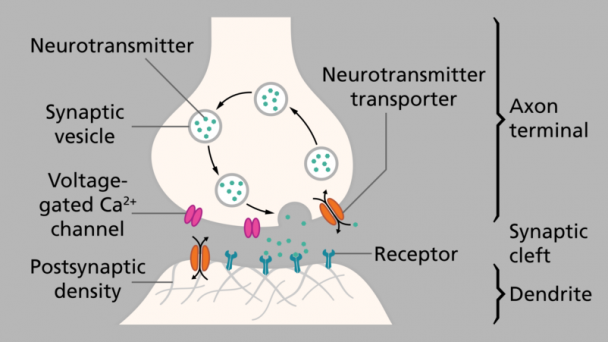
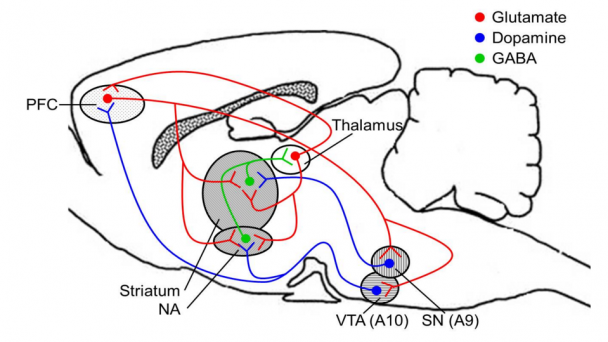
Both of these fields are closely connected, since both are concerned with the interactions of neurotransmitters, neuropeptides, neurohormones, neuromodulators, enzymes, second messengers, co-transporters, ion channels, and receptor proteins in the central and peripheral nervous systems. Studying these interactions, researchers are developing drugs to treat many different neurological disorders, including pain, neurodegenerative diseases such as Parkinson’s disease and Alzheimer’s disease, psychological disorders, addiction, and many others.

Link to Neuropharmacology Hub

 Initial Overview based on Wikipedia entry Jan. 5, 2016.


History

Neuropharmacology did not appear in the scientific field until, in the early part of the 20th century, scientists were able to figure out a basic understanding of the nervous system and how nerves communicate between one another. Before ...

OnAir Post: Neuropharmacology Overview

Social Neuroscience Overview

Emergent structures evolved hand in hand with neural and hormonal mechanisms to support them because the consequent social behaviors helped these organisms survive, reproduce, and care for offspring sufficiently long that they too survived to reproduce.

OnAir Post: Social Neuroscience Overview

Skip to toolbar