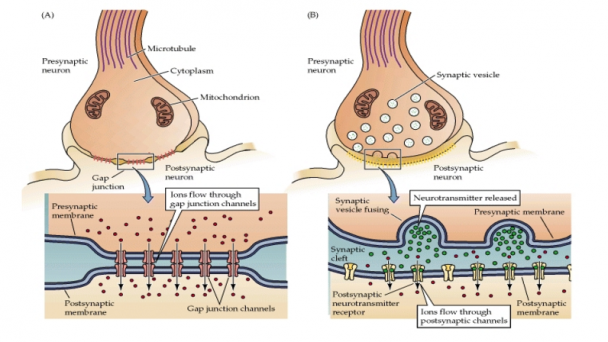
Neurophysiology Overview

The primary tools of basic neurophysiological research include electrophysiological recordings, such as patch clamp, voltage clamp, extracellular single-unit recording and recording of local field potentials, as well as some of the methods of calcium imaging,optogenetics, and molecular biology.

Neurophysiology is connected with electrophysiology, neurobiology, psychology, neurology, clinical neurophysiology, neuroanatomy, cognitive science, biophysics,mathematical biology, and other brain sciences.[1]

Initial Overview based on Wikipedia entry Jan. 3, 2016.  Also see the Nervous SystemBrain,  and Human Brain wikipedia entries.

OnAir Post: Neurophysiology Overview
Understanding Science Text

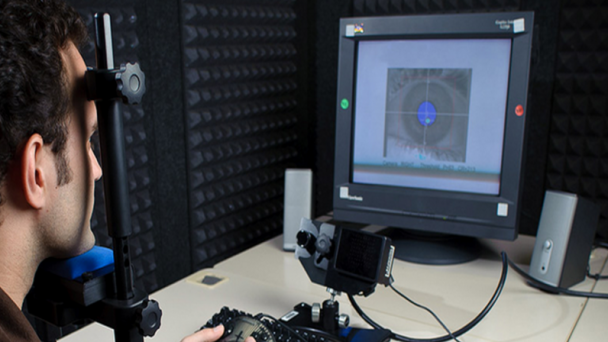
The overall goal of this project is to understand the neurocognitive mechanisms underlying reading comprehension of expository scientific texts by school-aged children, adult first language readers, and adult second language readers. It combines methods from functional magnetic resonance imaging and advanced data-analytic techniques in cognitive modeling and brain networks.

OnAir Post: Understanding Science Text

Noise in mental exploration for learning

In our unpredictable world, decision-makers face an inherent trade-off: higher certainty leads to more precise and accurate choices when the world is stable but an inability to adjust to change, whereas less certainty can lead to greater adaptability but also more variable and imprecise decisions. The investigators propose that this trade-off is regulated by interactions between arousal and cortical systems.

OnAir Post: Noise in mental exploration for learning

Identifying Design Principles of Neural Cells

This proposal seeks to develop a robust theory of how single neural cells form electrically active networks. The project integrates emerging methods in computer science, systems biology, neuroengineering and developmental biology to offer insight into the brain's organization.

OnAir Post: Identifying Design Principles of Neural Cells

A circuit theory of cortical function

This project aims to develop and test a new conceptual framework for understanding brain function, and informing biologically based artificial intelligence systems. The underlying theory holds that the properties of any neuron and any cortical area are not fixed but undergo state changes with changing perceptual task, expectation and attention.

OnAir Post: A circuit theory of cortical function

Skip to toolbar