Houston Neuroscience Videos

The Boundary of Life is Quietly Crossed

Professor teams up with local artist to study aesthetic experiences in the brain.

Visitors to Dario’s Robleto’s conceptual art exhibit were given the option of wearing an EEG skullcap to record their brain activity while they observe Robleto’s artwork. The team of researchers from the University of Houston’s Cullen College of Engineering were led by Jose “Pepe” Luis Contreras-Vidal, Hugh Roy and Lillie Cranz Cullen University Professor of electrical and computer engineering.

Video published on  Nov. 3, 2014 by UH Cullen College of Engineering

https://www.youtube.com/watch?v=Qaad7eh9yH0Video can’t be loaded because JavaScript is disabled: Dario Robleto: The Boundary of Life is Quietly Crossed (https://www.youtube.com/watch?v=Qaad7eh9yH0)

Professor teams up with local artist to study aesthetic experiences in the brain

by Audrey Grayson on Nov. 4, 2014 in  Cullen College of Engineering News

It’s rare to find science and art so inextricably tied together. It’s rarer still to find yourself playing the role of scientist, artist and art ...

OnAir Post: Houston Neuroscience Videos

Penn Neuroscience Center (video)

https://www.youtube.com/watch?v=yGh6Yr7BtS0Video can’t be loaded because JavaScript is disabled: The Penn Neuroscience Center (https://www.youtube.com/watch?v=yGh6Yr7BtS0)

Penn Medicine makes it easier and more convenient for you to see the top neuroscience specialists. From initial consultation, to treatment and follow-up care, Penn Neurosciences provides access to the most advanced brain and spine care in the region.

Video published on June 16, 2015 by Penn Medicine

OnAir Post: Penn Neuroscience Center (video)

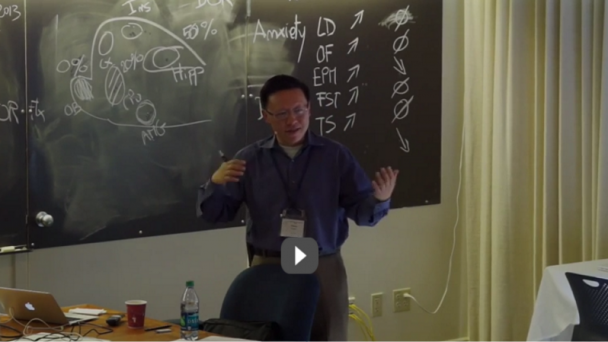
Genetic Dissection of Basal Ganglia Circuitry

https://www.youtube.com/watch?v=QydWI8UWEkEVideo can’t be loaded because JavaScript is disabled: X. William Yang, UCLA (https://www.youtube.com/watch?v=QydWI8UWEkE)

“Genetic Dissection of Basal Ganglia Circuitry:Novel Insights into Opiate Reward” from the Cellular Biology of Addiction course 8/11/213

Video published on Nov. 4, 2013 by CSHL Leading Strand

X. William Yang Profile

Professor, Psychiatry and Biobehavioral Sciences, UC Los Angeles Director, X. William Yang Research Group

Yang is interested in using the mouse molecular genetic approach to study the pathogenesis of neurodegenerative diseases. One recurring theme in neurodegenerative diseases is that a widely expressed mutant protein can cause highly selective degeneration of a subset of neurons. The pathogenesis of such selective neurodegeneration remains unclear. Currently, we are focusing on Huntington’s disease (HD) to study the molecular and cellular mechanisms underlying the disease.


OnAir Post: Genetic Dissection of Basal Ganglia Circuitry

Stephen Friend: 2013 Annual Symposium

https://www.youtube.com/watch?v=b24TOINYIqYVideo can’t be loaded because JavaScript is disabled: Stephen Friend: 2013 Annual Symposium (https://www.youtube.com/watch?v=b24TOINYIqY)

Title: Harnessing the power of teams to build better models of disease in real time: If not now, then when.

Dr. Stephen Friend is the President of Sage Bionetworks. He was previously Senior Vice President and Franchise Head for Oncology Research at Merck & Co., Inc., where he led Merck’s Basic Cancer Research efforts. He led the Advanced Technologies and Oncology groups to firmly establish molecular profiling activities throughout Merck’s laboratories around the world, as well as to coordinate oncology programs from basic research through phase IIA clinical trials.

Published on October 3, 2013  by Allen Institute for Brain Science

OnAir Post: Stephen Friend: 2013 Annual Symposium

Know thyself, with a brain scanner

https://www.youtube.com/watch?v=8rzlrItooG4Video can’t be loaded because JavaScript is disabled: Ariel Garten: Know thyself, with a brain scanner (https://www.youtube.com/watch?v=8rzlrItooG4)

“Imagine playing a video game controlled by your mind. Now imagine that game also teaches you about your own patterns of stress, relaxation and focus. Ariel Garten shows how looking at our own brain activity gives new meaning to the ancient dictum “know thyself.”

Filmed September 2011 at TEDx Toronto 2011 Uploaded to YouTube on January 26, 2012 by TED 

OnAir Post: Know thyself, with a brain scanner

One more reason to get a good night’s sleep

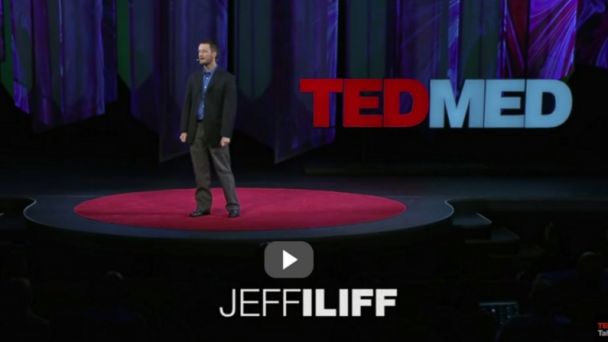
https://www.youtube.com/watch?v=MJK-dMlATmMVideo can’t be loaded because JavaScript is disabled: One more reason to get a good night’s sleep | Jeff Iliff (https://www.youtube.com/watch?v=MJK-dMlATmM)

“The brain uses a quarter of the body’s entire energy supply, yet only accounts for about two percent of the body’s mass. So how does this unique organ receive and, perhaps more importantly, rid itself of vital nutrients? New research suggests it has to do with sleep.”

Filmed September 2014 at TEDMED 2014 Uploaded to YouTube on October 13, 2014 by TED 

OnAir Post: One more reason to get a good night’s sleep

Reviews of Still Alice – in The Conversation

At age fifty, Alice Howland (Julianne Moore) has it all: a Columbia University linguistics professorship, a devoted husband, and three loving children. Her life is a whirlwind of work and family, and she thrives on it.

But, while lecturing at UCLA, something unexpected happens: mid-sentence, she struggles to find a word. Though a seemingly innocuous relapse, the incident leads to a diagnosis of early-onset Alzheimer’s disease, a stunning realisation that sees the bonds between Alice and her family thoroughly tested.


Trailer & Clips

https://www.youtube.com/watch?v=4pDSzCBa4cwVideo can’t be loaded because JavaScript is disabled: Still Alice trailer – in cinemas nationwide 6 March (https://www.youtube.com/watch?v=4pDSzCBa4cw) https://www.youtube.com/watch?v=QtfsPr9t1lAVideo can’t be loaded because JavaScript is disabled: Still Alice clip – “To be answered” (https://www.youtube.com/watch?v=QtfsPr9t1lA)

OnAir Post: Reviews of Still Alice – in The Conversation

Skip to toolbar