Neuropharmacology Overview


Neuropharmacology is the study of how drugs affect cellular function in the nervous system, and the neural mechanisms through which they influence behavior. There are two main branches of neuropharmacology: behavioral and molecular.

Behavioral neuropharmacology focuses on the study of how drugs affect human behavior (neuropsychopharmacology), including the study of how drug dependence and addiction affect the human brain.[1] Molecular neuropharmacology involves the study of neurons and their neurochemical interactions, with the overall goal of developing drugs that have beneficial effects on neurological function.

Both of these fields are closely connected, since both are concerned with the interactions of neurotransmitters, neuropeptides, neurohormones, neuromodulators, enzymes, second messengers, co-transporters, ion channels, and receptor proteins in the central and peripheral nervous systems. Studying these interactions, researchers are developing drugs to treat many different neurological disorders, including pain, neurodegenerative diseases such as Parkinson’s disease and Alzheimer’s disease, psychological disorders, addiction, and many others.

Link to Neuropharmacology Hub

 Initial Overview based on Wikipedia entry Jan. 5, 2016.


History

Neuropharmacology did not appear in the scientific field until, in the early part of the 20th century, scientists were able to figure out a basic understanding of the nervous system and how nerves communicate between one another. Before ...

OnAir Post: Neuropharmacology Overview
Large-Scale Machine Learning for Drug Discovery

Excerpt

Recently, deep learning with neural networks has been applied in virtual drug screening.

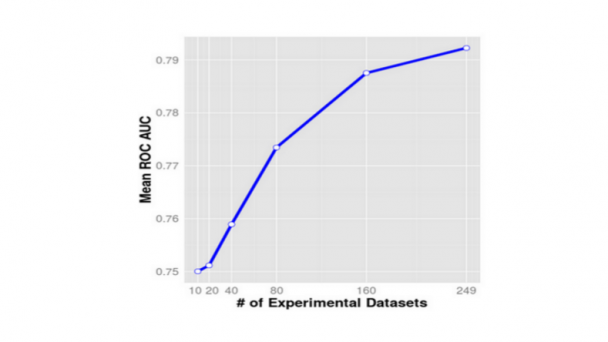
Several research groups have demonstrated that data from multiple diseases can be leveraged with multitask neural networks to improve the virtual screening effectiveness. This is the first time the effect of adding additional data has been quantified in this domain, and our results suggest that even more data could improve performance even further.

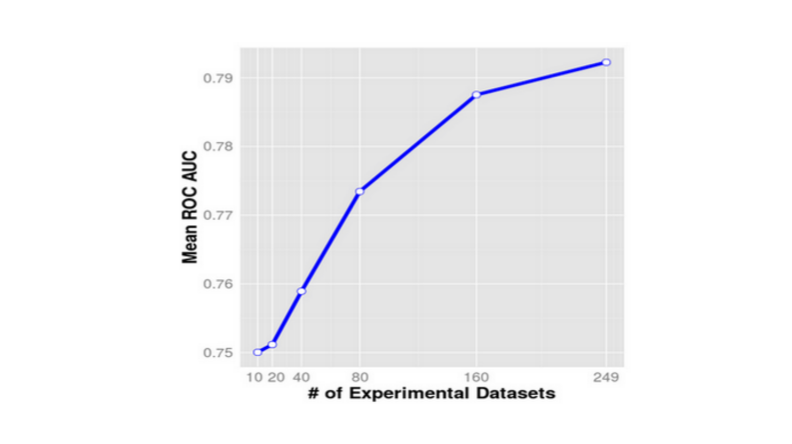
This graph shows a measure of prediction accuracy (ROC AUC is the area under the receiver operating characteristic curve) for virtual screening on a fixed set of 10 biological processes as more datasets are added.


Google Research Blog

Google Research and Stanford Pande Lab 3/2/15

Large-Scale Machine Learning for Drug Discovery

by Patrick Riley and Dale Webster, Google Research and Bharath Ramsundar, Google Research Intern and Stanford Ph.D. candidate

One encouraging conclusion from this work is that our models are able to utilize data from many different experiments to increase prediction accuracy across many diseases. To our knowledge, this is the first time the effect of adding additional data has been quantified in this domain, and our results suggest that even more data could improve ...

OnAir Post: Large-Scale Machine Learning for Drug Discovery

No link between psychedelics and psychosis

Data from population surveys in the United States challenge public fears that psychedelic drugs such as LSD can lead to psychosis and other mental-health conditions and to increased risk of suicide, two studies have found.

Nature News March 2015 by Zoe Cormier

OnAir Post: No link between psychedelics and psychosis

Skip to toolbar