Neurophysiology Overview

The primary tools of basic neurophysiological research include electrophysiological recordings, such as patch clamp, voltage clamp, extracellular single-unit recording and recording of local field potentials, as well as some of the methods of calcium imaging,optogenetics, and molecular biology.

Neurophysiology is connected with electrophysiology, neurobiology, psychology, neurology, clinical neurophysiology, neuroanatomy, cognitive science, biophysics,mathematical biology, and other brain sciences.[1]

Initial Overview based on Wikipedia entry Jan. 3, 2016.  Also see the Nervous SystemBrain,  and Human Brain wikipedia entries.

OnAir Post: Neurophysiology Overview

Remote regulation of neural activity

The Stanley team will focus on the development of tools to instantly and precisely target cell activity deep in the brain using radio waves, nanoparticles and genetically modified viruses.

NIH Webpages

OnAir Post: Remote regulation of neural activity

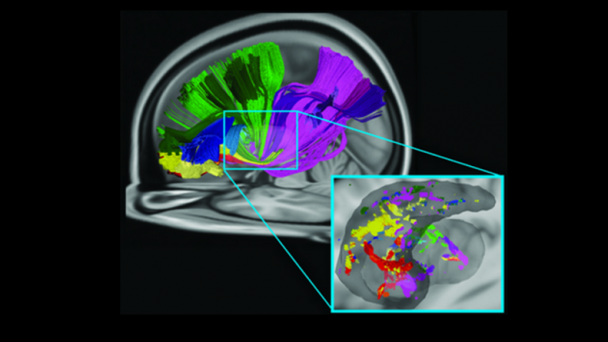
Several Brain Areas Communicate In New Way

The findings illustrate structural and functional connections that allow the brain to use reinforcement learning to make spatial decisions. This discovery will impact learning and could lead to improved treatments for Parkinson’s disease.

Journal of Neuroscience 3/4/15

OnAir Post: Several Brain Areas Communicate In New Way

Skip to toolbar