Understanding the Brain: Allen Institute

A visual explanation of how the Allen Institute for Brain Science is devoted to answering the most pressing questions in neuroscience and sharing this knowledge with the world.

Published on YouTube September 24, 2014 by Allen Institute

https://www.youtube.com/watch?v=bmO8-17K8jsVideo can’t be loaded because JavaScript is disabled: Allen Institute for Brain Science: Understanding the Brain (https://www.youtube.com/watch?v=bmO8-17K8js)

OnAir Post: Understanding the Brain: Allen Institute

A map of the brain


https://www.youtube.com/watch?v=iNPsDky1z94Video can’t be loaded because JavaScript is disabled: Allan Jones: A map of the brain (https://www.youtube.com/watch?v=iNPsDky1z94)

“How can we begin to understand the way the brain works? The same way we begin to understand a city: by making a map. In this visually stunning talk, Allan Jones shows how his team is mapping which genes are turned on in each tiny region, and how it all connects up.”

Filmed July 2011 at TED Global 2011 Uploaded to YouTube on November 10, 2011 by TED

OnAir Post: A map of the brain

Single Cell Molecular Profiling

https://www.youtube.com/watch?v=aVb4Js2_Y6UVideo can’t be loaded because JavaScript is disabled: Virtual Tour: Single Cell Molecular Profiling (https://www.youtube.com/watch?v=aVb4Js2_Y6U)

A virtual journey through the Allen Institute for Brain Science’s single cell molecular profiling program.

Published on September 22, 2014 by Allen Institute for Brain Science


OnAir Post: Single Cell Molecular Profiling

Allen Mouse Brain Connectivity Atlas

https://www.youtube.com/watch?v=peR9dqX6hJ4Video can’t be loaded because JavaScript is disabled: Virtual Tour: Allen Mouse Brain Connectivity Atlas (https://www.youtube.com/watch?v=peR9dqX6hJ4)

A virtual journey through the Allen Mouse Brain Connectivity Atlas.

Published September 19, 2014 by Allen Institute for Brain Science

OnAir Post: Allen Mouse Brain Connectivity Atlas

Allen Mouse Brain Connectivity Atlas

https://www.youtube.com/watch?v=Te-SDsb6sHMVideo can’t be loaded because JavaScript is disabled: Fueling Discovery: Allen Mouse Brain Connectivity Atlas (https://www.youtube.com/watch?v=Te-SDsb6sHM)

“Hongkui Zeng, senior director at the Allen Institute for Brain Science, discusses our unique Connectivity Atlas that quantitatively shows how regions of the mouse brain are connected.”

Published on April 9, 2014 by Allen Institute for Brain Science

Hongkui Zeng, PhD

Senior Director, Research Science Allen Institute Research and Development

Zeng explores novel technologies and develop high-throughput paradigms for generating large-scale, public datasets and tools to fuel neuroscience discovery. Zeng  has broad scientific experience and a keen interest in using a combined molecular, genetic and physiological approach to unravel mechanisms of brain circuitry and potential approaches for treating brain diseases.


OnAir Post: Allen Mouse Brain Connectivity Atlas

Allen Institute for Brain Science: Fueling Discovery


https://www.youtube.com/watch?v=9HclD7T9KFgVideo can’t be loaded because JavaScript is disabled: Allen Institute for Brain Science: Fueling Discovery (https://www.youtube.com/watch?v=9HclD7T9KFg)

Founded by philanthropist Paul G. Allen and Jody Allen, the Allen Institute for Brain Science was established to accelerate the understanding of the human brain, compelled by the need to improve the treatment of brain-related disorders and inspired by our quest to uncover the essence of what makes us human.

Published on October 3, 2013  by Allen Institute for Brain Science

OnAir Post: Allen Institute for Brain Science: Fueling Discovery

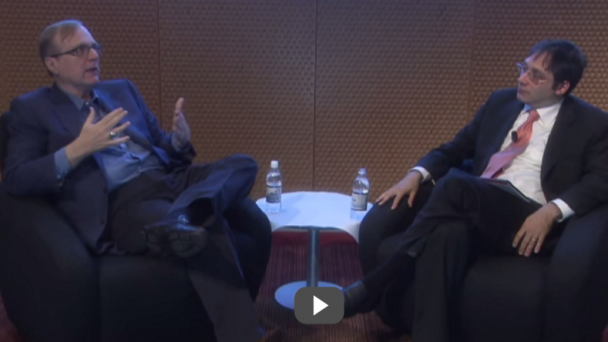
Paul Allen and Gary Marcus Fireside Chat: 2013 Annual Symposium


https://www.youtube.com/watch?v=ykBgh4nG88UVideo can’t be loaded because JavaScript is disabled: Paul Allen and Gary Marcus Fireside Chat: 2013 Annual Symposium (https://www.youtube.com/watch?v=ykBgh4nG88U)

Gary Marcus, a cognitive scientist at New York University, is the author of four books. He also writes a blog on artificial intelligence and science for The New Yorker. Paul G. Allen and his sister Jody Allen founded the Allen Institute for Brain Science.

A true visionary, Paul Allen was inspired by a host of leading scientists 10 years ago to move the needle on brain research.

Published on October 3, 2013  by Allen Institute for Brain Science

OnAir Post: Paul Allen and Gary Marcus Fireside Chat: 2013 Annual Symposium

Tutorials: Allen Institute Technical Tours

The twelve videos in this post are tutorials on the various Allen Brain Atlases published between 2011 and 2015.


Tutorial: Allen Human Brain Atlas

“This tutorial provides a brief orientation to the data and basic features of the Allen Human Brain Atlas, a multi-modal atlas of gene expression in the adult human brain.”

https://www.youtube.com/watch?v=x0PZ_SCXf-cVideo can’t be loaded because JavaScript is disabled: Webinar: Using the Allen Brain Atlas resources (October 2012) (https://www.youtube.com/watch?v=x0PZ_SCXf-c)


Allen Cell Types Database: Understanding the fundamental building blocks of the brain

“The Allen Institute for Brain Science is taking the first major scientific step to create a searchable standards database for the brain with the launch of the Allen Cell Types Database.”

https://www.youtube.com/watch?v=1GWyjxzxqIIVideo can’t be loaded because JavaScript is disabled: Allen Cell Types ...

OnAir Post: Tutorials: Allen Institute Technical Tours

Allen Data Base (video)

https://www.youtube.com/watch?v=1GWyjxzxqIIVideo can’t be loaded because JavaScript is disabled: Allen Cell Types Database: Understanding the fundamental building blocks of the brain (https://www.youtube.com/watch?v=1GWyjxzxqII)

“Allen Cell Types Database: Understanding the fundamental building blocks of the brain”

The Allen Institute for Brain Science is taking the first major scientific step to create a searchable standards database for the brain with the launch of the Allen Cell Types Database.

Published on May 14, 2015 by Allen Institute for Brain Science

OnAir Post: Allen Data Base (video)

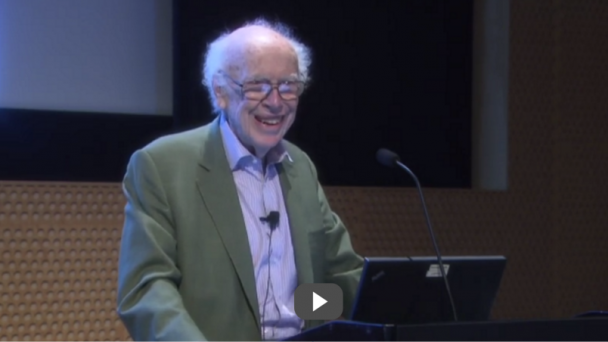
James Watson: 2013 Annual Symposium

Title: Genes and mental illness.

Dr. James Watson is Chancellor Emeritus at Cold Spring Harbor Laboratory. He received the Nobel Prize in Physiology or Medicine in 1962 for his 1953 co-discovery of the structure of DNA. The prize was awarded with Drs. Francis Crick and Maurice Wilkins. Their research elucidated a central concept in the emerging field of biology: understanding the structure of a molecule reveals information about its function. DNA’s double helix structure suggested a clear mechanism by which genes are replicated and living beings reproduce.


Published on October 3, 2013  by Allen Institute for Brain Science

https://www.youtube.com/watch?v=L7oFqMAqDMQ

Title: Genes and mental illness.

Dr. James Watson is Chancellor Emeritus at Cold Spring Harbor Laboratory. He received the Nobel Prize in Physiology or Medicine in 1962 for his 1953 co-discovery of the structure of DNA. The prize was awarded with Drs. Francis Crick and Maurice Wilkins. Their research elucidated a central concept in the emerging field of biology: understanding the structure of a molecule reveals information about its function. DNA’s double helix structure suggested a clear mechanism by which genes are replicated and living beings reproduce.

Published on October 3, 2013  by Allen Institute for Brain Science

OnAir Post: James Watson: 2013 Annual Symposium
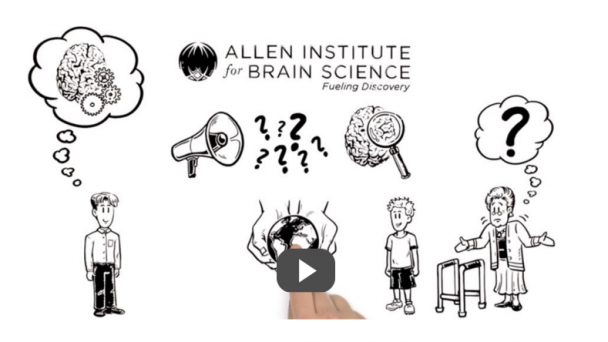
Electron Microscopy Imaging

https://www.youtube.com/watch?v=WAkaLEM0gTQVideo can’t be loaded because JavaScript is disabled: Virtual Tour: Electron Microscopy Imaging (https://www.youtube.com/watch?v=WAkaLEM0gTQ)

A virtual journey through the Allen Institute for Brain Science’s Electron Microscopy (EM) imaging program

Published on April 9, 2014 by Allen Institute for Brain Science

OnAir Post: Electron Microscopy Imaging

Coding & Vision 101 by Allen Institute

The 12 full-length, undergraduate-level video lectures below are entitled “Coding & Vision 101” and are produced by the Allen Institute for Brain Science as an educational resource for the community.

Published to YouTube in late 2015 and early 2015 by Allen Institute for Brain Science

Allen Institute webpage for all videos


Lecture 1: A Walk-through of the Mammalian Visual System

“From the retina to the superior colliculus, the lateral geniculate nucleus into primary visual cortex and beyond, R. Clay Reid gives a tour of the mammalian visual system highlighting the Nobel-prize winning discoveries of Hubel & Wiesel.”

https://www.youtube.com/watch?v=mtPgW1ebxmEVideo can’t be loaded because JavaScript is disabled: Lecture 1: A Walk-through of the Mammalian Visual System (https://www.youtube.com/watch?v=mtPgW1ebxmE)


Lecture 2: What is Meant by Computation?

“From Universal Turing Machines to McCulloch-Pitts and Hopfield associative memory networks, Christof Koch explains what is meant by computation.”

https://www.youtube.com/watch?v=dwOGh6qkzG4

Lecture 3: The Structure of the Neocortex

“In an overview of the structure of the mammalian neocortex, Dr. Clay Reid explains how the mammalian cortex is organized ...

OnAir Post: Coding & Vision 101 by Allen Institute

Connectivity Dot-o-Gram

https://www.youtube.com/watch?v=3CvY-y2IPdgVideo can’t be loaded because JavaScript is disabled: Connectivity Dot-o-Gram (https://www.youtube.com/watch?v=3CvY-y2IPdg)

“This movie displays 21 mapping experiments from the Allen Mouse Brain Connectivity Atlas: a tool to investigate how different regions of the brain are connected. The density of axons at each voxel (dot) are displayed as overlapping circles color-coded by the area of the brain from which the axons are projecting. This animation shows how projections from different regions of the cortex divide the thalamus and striatum into distinct domains. The Allen Mouse Brain Connectivity Atlas is available to everyone online at www.brain-map.org.

Published on April 9, 2014 by Allen Institute for Brain Science

OnAir Post: Connectivity Dot-o-Gram

Future Home of the Allen Institute

https://www.youtube.com/watch?v=36wi_ycd3BkVideo can’t be loaded because JavaScript is disabled: Fall 2014: Future Home of the Allen Institute for Brain Science (https://www.youtube.com/watch?v=36wi_ycd3Bk)

A brief tour of the Allen Institute’s new building, under construction in Seattle’s South Lake Union neighborhood

Published on October 14, 2014 by Allen Institute

OnAir Post: Future Home of the Allen Institute

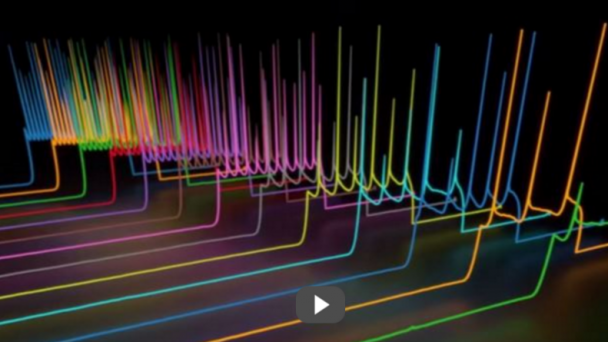
Brain Waves: Recording from 12 neurons at once

https://www.youtube.com/watch?v=ILgONEL1Jz0Video can’t be loaded because JavaScript is disabled: Brain Waves: Recording from 12 neurons at once (https://www.youtube.com/watch?v=ILgONEL1Jz0)

The art and science of measuring the electrical activity of many individual neurons at the same time

Published on March 24, 2015  by Allen Institute for Brain Science

OnAir Post: Brain Waves: Recording from 12 neurons at once

Cortico-thalamic connections

https://www.youtube.com/watch?v=6u0q5jIxR10Video can’t be loaded because JavaScript is disabled: Organization of the cortico-thalamic connections (https://www.youtube.com/watch?v=6u0q5jIxR10)

“This video shows a composite of 80 injection sites of a viral tracer in the cortex (round spheres) and their major projections into the thalamus. We can clearly see that the spatial pattern of the injections is conserved in the thalamus. This kind of information was only previously available in piecemeal form, but with the comprehensive, standardized data in the Allen Mouse Brain Connectivity Atlas, we can reproducibly measure and visualize this topography.”

Published on February 27, 2014 by Allen Institute for Brain Science


OnAir Post: Cortico-thalamic connections

Arthur Toga: 2013 Allen Symposium


https://www.youtube.com/watch?v=U8vesksXErsVideo can’t be loaded because JavaScript is disabled: Arthur Toga: 2013 Annual Symposium (https://www.youtube.com/watch?v=U8vesksXErs)

“Brain mapping and integrating multimodal data across subjects and projects.”

Dr. Arthur Toga is Provost Professor of Ophthalmology, Neurology, Psychiatry and the Behavioral Sciences, Radiology and Engineering at the University of Southern California, and serves as the inaugural Director of the USC Institute for Neuroimaging and Informatics. He also holds an appointment in the USC Viterbi School of Engineering. A leading authority on neuroimaging, informatics, mapping brain structure and function, and brain atlasing, Dr. Toga is the former Distinguished Professor of Neurology, University Professor, Vice Chair of the Department of Neurology, Associate Dean at the Geffen School of Medicine, and Co-Director of the UCLA Brain Mapping Center.

Published on October 3, 2013  by Allen Institute for Brain Science

OnAir Post: Arthur Toga: 2013 Allen Symposium

Lloyd Watts: 2013 Allen Symposium


https://www.youtube.com/watch?v=U5-YeSZwFREVideo can’t be loaded because JavaScript is disabled: Lloyd Watts: 2013 Annual Symposium (https://www.youtube.com/watch?v=U5-YeSZwFRE)

Commercializing auditory neuroscience

Dr. Donald “Lloyd” Watts has worked as an engineer at Microtel Pacific Research, Synaptics and Arithmos. In 1997, he joined Paul Allen’s Interval Research Corporation and continued his research in reverse-engineering the human auditory pathway. In 2000, he founded Audience, Inc., to commercialize his research, with investment from Paul Allen, Carver Mead and Allan Crawford. He served as Chairman and Chief Executive Officer from 2000-2005, leading the development of the company’s core technologies. In 2005, he transitioned to the role of Audience’s Chief Technology Officer. In 2011, he became Chief Scientist. In 2013, he retired from Audience.


Published on October 3, 2013 by Allen Institute for Brain Science

OnAir Post: Lloyd Watts: 2013 Allen Symposium

Cori Bargmann: 2012 Allen Symposium

https://www.youtube.com/watch?v=Blquxto1oIoVideo can’t be loaded because JavaScript is disabled: Cori Bargmann: 2012 Allen Institute for Brain Science Symposium (https://www.youtube.com/watch?v=Blquxto1oIo)

Published on November 12, 2012  by Allen Institute for Brain Science

Dr. Cori Bargmann, recent winner of the Kavli Prize in Neuroscience and a pioneer in methods of looking at C. elegans to uncover how neural circuits operate, presented the idea that particular classes of genes — neuropeptides to be specific — are good places to look for the genetic origin of behavior. Because much of the genome is conserved across species and throughout time, new behaviors may be created by redeploying old genes in different ways.

Uncovering the basic building blocks of behavior, she believes, is an unsolved question in neuroscience that is now becoming solvable.

“The question is not whether calbindin is expressed in the hippocampus, but whether it has something to do with the unique functions of human memory capabilities,” Bargmann said. “That is a hard question.” Certain kinds of molecules relate to innate behaviors that are shared across ...

OnAir Post: Cori Bargmann: 2012 Allen Symposium

Earl Miller: 2012 Allen Symposium

https://www.youtube.com/watch?v=6QjIKr_vIecVideo can’t be loaded because JavaScript is disabled: Earl Miller: 2012 Allen Institute for Brain Science Symposium (https://www.youtube.com/watch?v=6QjIKr_vIec)

Published on October 12, 2012  by Allen Institute for Brain Science

“Brain rhythms and cognition”

From physics to electrophysiology and imaging, Dr. Miller and his lab focus on broad and far-reaching approaches to neuroscience questions. This symposium talk focused on questions similarly posed by Sabine Kastner, namely the relationship between action potential timing and brain function. By recording neural activity in monkeys as they switch among two tasks, Miller found that over half of the recording sites in the network for one task also appear to participate in the network for the other task. This suggests that circuitry in the prefrontal cortex may overlap and that oscillations are the key to selecting appropriate networks for the task that needs to be performed. Miller showed that neural ensembles, or networks, in close proximity oscillate out of phase with one another to avoid being simultaneously activated. That is, the oscillations bind neural ensembles ...

OnAir Post: Earl Miller: 2012 Allen Symposium

Ed Lein: 2012 Allen Symposium

https://www.youtube.com/watch?v=pSqyRRec1cMVideo can’t be loaded because JavaScript is disabled: Ed Lein: 2012 Allen Institute for Brain Science Symposium (https://www.youtube.com/watch?v=pSqyRRec1cM)

Deciphering the mammalian brain transcriptome”

Published on November 12, 2012  by Allen Institute for Brain Science

The development, structure and function of our brains are guided by selective usage of the 20,000-odd genes in our genomes. Taking advantage of the Allen Institute’s anatomically and genomically comprehensive atlases of gene expression in the developing brain in species from mouse to human, Dr. Lein explores the molecular logic of gene expression in the brain. How do gene expression profiles relate to the functional and cellular architecture of the brain, and what makes the human brain unique? Focusing on the human neocortex, the outermost layer of the brain, Lein showed that molecular similarities reflect spatial proximity across the neocortex; such that neighboring cortical regions are more similar to one another than to more distant regions. Surprisingly, these molecular similarities vary across the cortex in a graded fashion, in contrast to models of cortical architecture ...

OnAir Post: Ed Lein: 2012 Allen Symposium

Sabine Kastner: 2012 Allen Symposium


https://www.youtube.com/watch?v=26n7I2biijQVideo can’t be loaded because JavaScript is disabled: Sabine Kastner: 2012 Allen Institute for Brain Science Symposium (https://www.youtube.com/watch?v=26n7I2biijQ)

“The role of thalamo-cortical interactions in spatial attention”

Similar to the questions posed by Ila Fiete and Earl Miller, Dr. Kastner asks: How do large-scale networks achieve cognition? How do the connections between molecules and neurons give rise to complex visual processing that we as primates enjoy? The basic premise of her work relies on the assumption that spike timing may play a critical role in brain function, particularly for higher cognitive functions, and that how neurons are connected may have important implications on the function of their networks. By simultaneously recording neural activity from three areas in the brain’s attentional network, Kastner has developed a hypothesis that identifies one area as performing a synchronizing function between the other two in order to optimize the transmission of information between them. She maintains that the pulvinar, a collection of nuclei in the back of the thalamus, is strongly connected to the ...

OnAir Post: Sabine Kastner: 2012 Allen Symposium

Ila Fiete: 2012 Allen Symposium


https://www.youtube.com/watch?v=bY-JlkJl2hAVideo can’t be loaded because JavaScript is disabled: Ila Fiete: 2012 Allen Institute for Brain Science Symposium (https://www.youtube.com/watch?v=bY-JlkJl2hA)

“A new class of neural population codes”

Dr. Fiete is a theoretician, the only member of such discipline at this year’s symposium, whose work relates closely to various approaches of other speakers. An Alfred P. Sloan Foundation Fellow, a Searle Scholar, and a McKnight Scholar, Fiete studies coding of sensory or memory information in neural populations, ultimately seeking to unravel the meanings in such patterns. She aims to reduce noise-induced errors in measurements and recording of brain activity by searching for a type of neural population code that, for over six decades now, has been known to exist theoretically but has not been unambiguously described. Most neural codes in the sensory and motor cortices tend to follow a classical population code, where accuracy increases with population size. These, however, are considered weak codes. The brain makes up for this, posits Fiete, by organizing in an interleaving system she compared to ...

OnAir Post: Ila Fiete: 2012 Allen Symposium

John Donoghue: 2012 Allen Symposium

“Neurotechnology: Fixing broken brains by decoding cortex”

Dr. Donoghue’s lab works in both basic and applied neuroscience, studying network computation on one end, and restoring lost motor cortical function on the other end. His work has culminated in BrainGate, a human brain-computer interface that senses neural activity in the motor cortex and decodes it to instruct a robotic arm or a cursor, reconnecting the cortex to lost action in the case of spinal cord injury or paralyzing disease such as amyotrophic lateral sclerosis. Donoghue showed video clips from his lab featuring long-paralyzed patients successfully navigating a robotic arm to drink their favorite beverage or guiding a computer cursor to communicate with loved ones. Among other noteworthy aspects of this work are the two notions that 1) the program actually decodes activity in the motor cortex rather than using a binary measure of activity (e.g., on or off) and 2) individual neurons in the motor cortex retain activity and function, even in quadriplegics who have not used this area of the brain in over a dozen years. While the functional utility of this work is self-evident, the value and applications to basic neuroscience are no less important. In going from a plan ...

OnAir Post: John Donoghue: 2012 Allen Symposium

Ricardo Dolmetsch: 2012 Allen Symposium

https://www.youtube.com/watch?v=tr8k9IWVHggVideo can’t be loaded because JavaScript is disabled: Ricardo Dolmetsch: 2012 Allen Institute for Brain Science Symposium (https://www.youtube.com/watch?v=tr8k9IWVHgg)

“Using human genetics and stem cells to study brain development”

Ricardo Dolmetsch, recently joining the Allen Institute team from Stanford University, discussed his plans for a research program in molecular networks. The goals of the program, he described, are to 1) identify the molecular networks that control neuronal development and function, 2) understand the cellular and molecular basis of neurdevelopmental diseases, and 3) generate public resources that facilitate the study of brain development and developmental diseases. In a landscape of increasing data collection and “big science”, Dolmetsch suggested a refined and potentially more efficient tactic towards reaching these goals: use human genetic diversity to prioritize data collection. The idea is to genotype human cells to identify critical signaling pathways and molecular hubs that regulate brain development and are affected in disease. The neuroscience community has been uncovering mountains of copy number variants (CNVs) and rare mutations (RMs) that tip the ...

OnAir Post: Ricardo Dolmetsch: 2012 Allen Symposium

Jack L. Gallant: 2012 Allen Symposium


https://www.youtube.com/watch?t=294&v=s4FP0F7AKtQVideo can’t be loaded because JavaScript is disabled: Jack L. Gallant: 2012 Allen Institute for Brain Science Symposium (https://www.youtube.com/watch?t=294&v=s4FP0F7AKtQ)

Functional magnetic resonance imaging (fMRI) detects the location of functions in the brain better than any other method we have today. While localization is necessary, it is not sufficient for understanding how the brain works. Dr. Gallant suggests the reverse approach – to search for functional maps. That is, he uses brain activity to determine or reconstruct what a subject was looking at. To this end the Gallant lab has constructed the WordNet model, which is able to predict what an observer is seeing from 2,000 nouns and verbs. The process uses brain activity in fMRI to predict from semantic models while an observer watches a video, and the results are remarkably accurate. Dr. Gallant explains how encoding models, decoding models, and functional maps of the brain are all closely related. “Once you have encoding, you get decoding for free,” he proclaims.

Published on November 13, ...

OnAir Post: Jack L. Gallant: 2012 Allen Symposium

JosephTakahashi: 2013 Annual Symposium


https://www.youtube.com/watch?v=PYS4ShSM5BcVideo can’t be loaded because JavaScript is disabled: Joseph Takahashi: 2013 Annual Symposium (https://www.youtube.com/watch?v=PYS4ShSM5Bc)

Molecular architecture of the circadian clock in mammals

Dr. Joseph Takahashi is Chair of the Department of Neuroscience and an Investigator of the Howard Hughes Medical Institute at the University of Texas Southwestern Medical Center. He currently holds the Loyd B. Sands Distinguished Chair in Neuroscience. Before moving to UT Southwestern, Dr. Takahashi was the Walter and Mary Elizabeth Glass Professor in the Life Sciences at Northwestern University. Dr. Takahashi has pioneered the use of forward genetics and positional cloning in the mouse as a tool for discovery of genes underlying neurobiology and behavior, and his discovery of the mouse and human clock genes led to a description of a conserved circadian clock mechanism in animals.

Published on October 3, 2013  by Allen Institute for Brain Science

OnAir Post: JosephTakahashi: 2013 Annual Symposium

Gregor Eichele: 2013 Annual Symposium


https://www.youtube.com/watch?v=gvroT5wYokAVideo can’t be loaded because JavaScript is disabled: Gregor Eichele: 2013 Annual Symposium (https://www.youtube.com/watch?v=gvroT5wYokA)

Title: Fluid dynamics in the brain

Dr. Gregor Eichele is Director and Scientific Member at the Max-Planck-Institute of Biophysical Chemistry, Goettingen, Germany. At the Max-Planck Genes and Behavior Department, Dr. Eichele investigates the dynamic interplay between gene expression, development and behavior. His research focuses on mammalian brain development and takes advantage of a gene expression database in which a very large number of gene expression patterns are stored. Dr. Eichele’s second focus of research is on circadian clocks which determine sleep/wake and daily feeding patterns, regulate the 24-hour patterns of production of certain hormones and steer other biological activities that are tied to the recurring day/night cycle. His third focus of research concerns functional genomics. Work using robotic in situ hybridization reveals in detail the spatial and temporal dynamics of the transcriptome in the developing and adult mammalian brain.

Published on October 3, 2013  by Allen Institute for Brain Science

OnAir Post: Gregor Eichele: 2013 Annual Symposium

Patricia Kuhl: 2013 Annual Symposium


https://www.youtube.com/watch?v=-0E7P_3ikLAVideo can’t be loaded because JavaScript is disabled: Patricia Kuhl: 2013 Annual Symposium (https://www.youtube.com/watch?v=-0E7P_3ikLA)

Title: Human learning and the child’s developing brain.

Dr. Patricia K. Kuhl is the Bezos Family Foundation Endowed Chair for Early Childhood Learning, Co-Director of the University of Washington Institute for Learning and Brain Sciences, Director of the NSF-funded Science of Learning Center, and Professor of Speech and Hearing Sciences. She is internationally recognized for her research on early language and brain development, and studies that show how young children learn. Dr. Kuhl’s work has played a major role in demonstrating how early exposure to language alters the brain. It has implications for critical periods in development, for bilingual education and reading readiness, for developmental disabilities involving language, and for research on computer understanding of speech.

Published on October 2, 2013  by Allen Institute for Brain Science

OnAir Post: Patricia Kuhl: 2013 Annual Symposium

Shawn Olsen: 2013 Annual Symposium
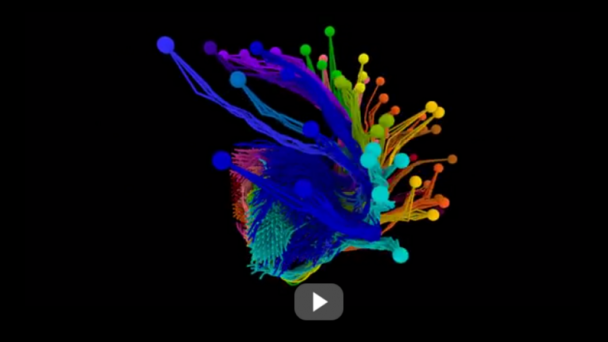


https://www.youtube.com/watch?t=1491&v=uOlmEFaj9PoVideo can’t be loaded because JavaScript is disabled: Shawn Olsen: 2013 Annual Symposium (https://www.youtube.com/watch?t=1491&v=uOlmEFaj9Po)

Title: Cortical circuits mediating vision in the mouse

Dr. Olsen joined the Allen Institute in 2013 as an assistant investigator in the neural coding group. He is leading a team of scientists to investigate the cortical circuit mechanisms underlying visual behavior and cognition in the mouse. Before joining the Allen Institute, he worked as a Helen Hay Whitney Postdoctoral Fellow in the lab of Massimo Scanziani at the University of California, San Diego. In his postdoctoral research, Dr. Olsen combined multi-channel electrophysiological recordings with cell-type specific optogenetic manipulations to examine how distinct microcircuits such as cortical layers and inhibitory interneuron subtypes contribute to visual processing in the mouse visual cortex. He also developed a robust behavioral paradigm for studying vision and decision-making in mice. He is overseeing further development of this paradigm at the Allen Institute in order to probe the neural circuits mediating visual perception, selective attention, object recognition and decision-making.


Published on October 3, 2013  by Allen Institute for Brain Science

OnAir Post: Shawn Olsen: 2013 Annual Symposium
Stephen Friend: 2013 Annual Symposium
https://www.youtube.com/watch?v=b24TOINYIqYVideo can’t be loaded because JavaScript is disabled: Stephen Friend: 2013 Annual Symposium (https://www.youtube.com/watch?v=b24TOINYIqY)
Title: Harnessing the power of teams to build better models of disease in real time: If not now, then when.

Dr. Stephen Friend is the President of Sage Bionetworks. He was previously Senior Vice President and Franchise Head for Oncology Research at Merck & Co., Inc., where he led Merck’s Basic Cancer Research efforts. He led the Advanced Technologies and Oncology groups to firmly establish molecular profiling activities throughout Merck’s laboratories around the world, as well as to coordinate oncology programs from basic research through phase IIA clinical trials.

Published on October 3, 2013  by Allen Institute for Brain Science

OnAir Post: Stephen Friend: 2013 Annual Symposium
Richard Gibbs: 2013 Annual Symposium


https://www.youtube.com/watch?v=sX4EgmL5bNYVideo can’t be loaded because JavaScript is disabled: Richard Gibbs: 2013 Annual Symposium (https://www.youtube.com/watch?v=sX4EgmL5bNY)
Title: Genomic futurism

Dr. Richard Gibbs is the Wofford Cain Chair in Molecular and Human Genetics Professor, Department of Molecular and Human Genetics and Director, Human Genome Sequencing Center, at Baylor College of Medicine (BCM). He joined the faculty at BCM in 1991 and played a key role in the early planning and development phases of the Human Genome Project. In 1996, Dr. Gibbs established the BCM Human Genome Sequencing Center, one of three NIH groups to complete the final phase of the HGP. Under his leadership the group subsequently undertook multiple additional genome projects, including drosophila, rat, the honey bee, sea urchin and the bovine.

Dr. Gibbs has made fundamental contributions to human genetics, through identification of rare variants in population studies, and following their role in human disease. Most recently these technologies have been translated into clinical applications in detecting genetic disease and somatic changes in cancer.

Published on October 3, 2013  by Allen Institute for Brain Science

OnAir Post: Richard Gibbs: 2013 Annual Symposium
Viviana Gradinaru


https://www.youtube.com/watch?v=NJJnmSlTjIgVideo can’t be loaded because JavaScript is disabled: Viviana Gradinaru: 2013 Annual Symposium (https://www.youtube.com/watch?v=NJJnmSlTjIg)
“Neuromodulation and neurodegeneration: Insights from optogenetics.”
Dr. Viviana Gradinaru is Assistant Professor at the Califiornia Institute of Technology (Caltech). She discovered her passion for neuroscience at Caltech, her alma mater, where she was accepted as a transfer student from University of Physics, Romania, with a full scholarship. Dr. Gradinaru did her Ph.D. work with Karl Deisseroth at Stanford University and she played an instrumental role in the early development and applications of optogenetics, a research area concerned with the perturbation of neuronal activity via light-controlled ion channels and pumps.

Published on October 3, 2013  by Allen Institute for Brain Science

OnAir Post: Viviana Gradinaru

Showcase 2014: Welcome and Introduction


https://www.youtube.com/watch?v=nX_2-WMILRUVideo can’t be loaded because JavaScript is disabled: Showcase 2014: Welcome and Introduction (https://www.youtube.com/watch?v=nX_2-WMILRU)

Allan Jones, Ph.D., CEO of the Allen Institute for Brain Science, welcomes the attendees to the first Showcase symposium. Julie Harris, Ph.D., Assistant Investigator with the Allen Institute and chair of the Showcase Committee, gives a brief overview of the day’s events.

Published on September 26, 2014 by Allen Institute for Brain Science

OnAir Post: Showcase 2014: Welcome and Introduction

Jerry Chen, Ph.D., Next Generation Leader

Dissecting Long-range Cortical Networks During Behavior

Published on September 26, 2014 by Allen Institute for Brain Science


https://www.youtube.com/watch?v=yOZ3ArGi7YcVideo can’t be loaded because JavaScript is disabled: Showcase 2014: Jerry Chen, Ph.D., Next Generation Leader (https://www.youtube.com/watch?v=yOZ3ArGi7Yc)

Dissecting Long-range Cortical Networks During Behavior

Published on September 26, 2014 by Allen Institute for Brain Science

OnAir Post: Jerry Chen, Ph.D., Next Generation Leader

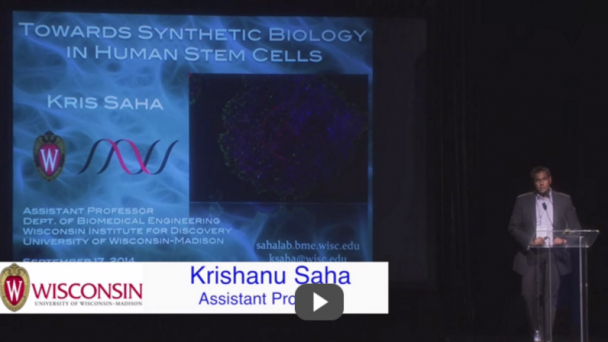
Krishanu Saha, Ph.D., Next Generation Leader


https://www.youtube.com/watch?t=24&v=PjfaaMbapCoVideo can’t be loaded because JavaScript is disabled: Showcase 2014: Krishanu Saha, Ph.D., Next Generation Leader (https://www.youtube.com/watch?t=24&v=PjfaaMbapCo)

Towards integration of synthetic biology into human stem cells

Published on September 26, 2014 by Allen Institute for Brain Science

OnAir Post: Krishanu Saha, Ph.D., Next Generation Leader

Lisa Giocomo, Ph.D., Next Generation Leader

https://www.youtube.com/watch?v=_XPk6OlfC8MVideo can’t be loaded because JavaScript is disabled: Showcase 2014: Lisa Giocomo, Ph.D., Next Generation Leader (https://www.youtube.com/watch?v=_XPk6OlfC8M)

Identifying the Iconic Algorithms for Calculating Spatial Maps

Stanford University School of Medicine

Published on September 26, 2014 by Allen Institute for Brain Science

OnAir Post: Lisa Giocomo, Ph.D., Next Generation Leader

Viviana Gradinaru, Ph.D., Next Generation Leader


https://www.youtube.com/watch?v=Awz4-Y_RKQQVideo can’t be loaded because JavaScript is disabled: Showcase 2014: Viviana Gradinaru, Ph.D., Next Generation Leader (https://www.youtube.com/watch?v=Awz4-Y_RKQQ)

Visualizing the activity and anatomy of brain circuits: optogenetic sensors and tissue clearing approaches

Published on September 26, 2014 by Allen Institute for Brain Science

OnAir Post: Viviana Gradinaru, Ph.D., Next Generation Leader

Ueli Rutishauser, Ph.D., Next Generation Leader

https://www.youtube.com/watch?v=x2gssYj_a5sVideo can’t be loaded because JavaScript is disabled: Showcase 2014: Ueli Rutishauser, Ph.D., Next Generation Leader (https://www.youtube.com/watch?v=x2gssYj_a5s)

Probing the mechanisms of learning and memory at the single-neuron level in humans

Published on September 26, 2014 by Allen Institute for Brain Science 

OnAir Post: Ueli Rutishauser, Ph.D., Next Generation Leader

Neville Sanjana, PhD, Next Generation Leader


https://www.youtube.com/watch?v=IO4O54E75K8Video can’t be loaded because JavaScript is disabled: Showcase 2014: Neville Sanjana, Ph.D., Next Generation Leader (https://www.youtube.com/watch?v=IO4O54E75K8)

Genome-scale CRISPR-Cas9 screening in human cells

Published on April 9, 2014 by Allen Institute for Brain Science

OnAir Post: Neville Sanjana, PhD, Next Generation Leader

Development of the Human Brain

https://www.youtube.com/watch?v=-LiKX8BvBBIVideo can’t be loaded because JavaScript is disabled: Fueling Discovery: BrainSpan Atlas of the Developing Human Brain (https://www.youtube.com/watch?v=-LiKX8BvBBI)

Fueling Discovery: BrainSpan Atlas of the Developing Human Brain

“Ed Lein, an investigator at the Allen Institute for Brain Science, discusses how we are creating the BrainSpan Atlas of the Developing Human Brain and learning about how genes are used differently in the developing brain.”

Published on April 9, 2014 by Allen Institute for Brain Science


OnAir Post: Development of the Human Brain

Skip to toolbar