Allen Institute for Brain Science: Fueling Discovery


https://www.youtube.com/watch?v=9HclD7T9KFgVideo can’t be loaded because JavaScript is disabled: Allen Institute for Brain Science: Fueling Discovery (https://www.youtube.com/watch?v=9HclD7T9KFg)

Founded by philanthropist Paul G. Allen and Jody Allen, the Allen Institute for Brain Science was established to accelerate the understanding of the human brain, compelled by the need to improve the treatment of brain-related disorders and inspired by our quest to uncover the essence of what makes us human.

Published on October 3, 2013  by Allen Institute for Brain Science

OnAir Post: Allen Institute for Brain Science: Fueling Discovery

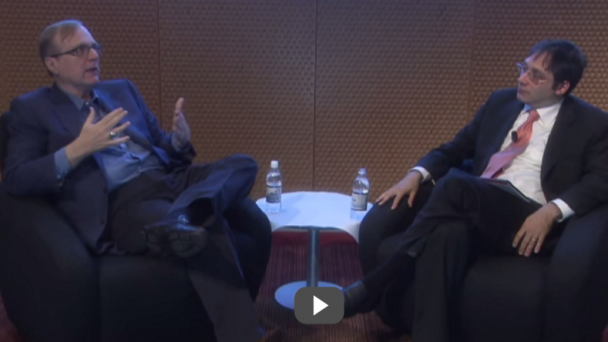
Paul Allen and Gary Marcus Fireside Chat: 2013 Annual Symposium


https://www.youtube.com/watch?v=ykBgh4nG88UVideo can’t be loaded because JavaScript is disabled: Paul Allen and Gary Marcus Fireside Chat: 2013 Annual Symposium (https://www.youtube.com/watch?v=ykBgh4nG88U)

Gary Marcus, a cognitive scientist at New York University, is the author of four books. He also writes a blog on artificial intelligence and science for The New Yorker. Paul G. Allen and his sister Jody Allen founded the Allen Institute for Brain Science.

A true visionary, Paul Allen was inspired by a host of leading scientists 10 years ago to move the needle on brain research.

Published on October 3, 2013  by Allen Institute for Brain Science

OnAir Post: Paul Allen and Gary Marcus Fireside Chat: 2013 Annual Symposium

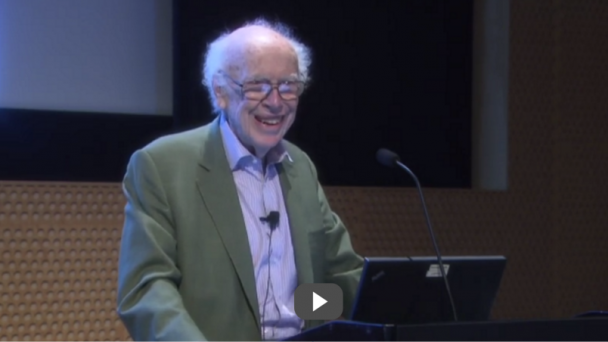
James Watson: 2013 Annual Symposium

Title: Genes and mental illness.

Dr. James Watson is Chancellor Emeritus at Cold Spring Harbor Laboratory. He received the Nobel Prize in Physiology or Medicine in 1962 for his 1953 co-discovery of the structure of DNA. The prize was awarded with Drs. Francis Crick and Maurice Wilkins. Their research elucidated a central concept in the emerging field of biology: understanding the structure of a molecule reveals information about its function. DNA’s double helix structure suggested a clear mechanism by which genes are replicated and living beings reproduce.


Published on October 3, 2013  by Allen Institute for Brain Science

https://www.youtube.com/watch?v=L7oFqMAqDMQ

Title: Genes and mental illness.

Dr. James Watson is Chancellor Emeritus at Cold Spring Harbor Laboratory. He received the Nobel Prize in Physiology or Medicine in 1962 for his 1953 co-discovery of the structure of DNA. The prize was awarded with Drs. Francis Crick and Maurice Wilkins. Their research elucidated a central concept in the emerging field of biology: understanding the structure of a molecule reveals information about its function. DNA’s double helix structure suggested a clear mechanism by which genes are replicated and living beings reproduce.

Published on October 3, 2013  by Allen Institute for Brain Science

OnAir Post: James Watson: 2013 Annual Symposium
Arthur Toga: 2013 Allen Symposium


https://www.youtube.com/watch?v=U8vesksXErsVideo can’t be loaded because JavaScript is disabled: Arthur Toga: 2013 Annual Symposium (https://www.youtube.com/watch?v=U8vesksXErs)

“Brain mapping and integrating multimodal data across subjects and projects.”

Dr. Arthur Toga is Provost Professor of Ophthalmology, Neurology, Psychiatry and the Behavioral Sciences, Radiology and Engineering at the University of Southern California, and serves as the inaugural Director of the USC Institute for Neuroimaging and Informatics. He also holds an appointment in the USC Viterbi School of Engineering. A leading authority on neuroimaging, informatics, mapping brain structure and function, and brain atlasing, Dr. Toga is the former Distinguished Professor of Neurology, University Professor, Vice Chair of the Department of Neurology, Associate Dean at the Geffen School of Medicine, and Co-Director of the UCLA Brain Mapping Center.

Published on October 3, 2013  by Allen Institute for Brain Science

OnAir Post: Arthur Toga: 2013 Allen Symposium

Lloyd Watts: 2013 Allen Symposium


https://www.youtube.com/watch?v=U5-YeSZwFREVideo can’t be loaded because JavaScript is disabled: Lloyd Watts: 2013 Annual Symposium (https://www.youtube.com/watch?v=U5-YeSZwFRE)

Commercializing auditory neuroscience

Dr. Donald “Lloyd” Watts has worked as an engineer at Microtel Pacific Research, Synaptics and Arithmos. In 1997, he joined Paul Allen’s Interval Research Corporation and continued his research in reverse-engineering the human auditory pathway. In 2000, he founded Audience, Inc., to commercialize his research, with investment from Paul Allen, Carver Mead and Allan Crawford. He served as Chairman and Chief Executive Officer from 2000-2005, leading the development of the company’s core technologies. In 2005, he transitioned to the role of Audience’s Chief Technology Officer. In 2011, he became Chief Scientist. In 2013, he retired from Audience.


Published on October 3, 2013 by Allen Institute for Brain Science

OnAir Post: Lloyd Watts: 2013 Allen Symposium

JosephTakahashi: 2013 Annual Symposium


https://www.youtube.com/watch?v=PYS4ShSM5BcVideo can’t be loaded because JavaScript is disabled: Joseph Takahashi: 2013 Annual Symposium (https://www.youtube.com/watch?v=PYS4ShSM5Bc)

Molecular architecture of the circadian clock in mammals

Dr. Joseph Takahashi is Chair of the Department of Neuroscience and an Investigator of the Howard Hughes Medical Institute at the University of Texas Southwestern Medical Center. He currently holds the Loyd B. Sands Distinguished Chair in Neuroscience. Before moving to UT Southwestern, Dr. Takahashi was the Walter and Mary Elizabeth Glass Professor in the Life Sciences at Northwestern University. Dr. Takahashi has pioneered the use of forward genetics and positional cloning in the mouse as a tool for discovery of genes underlying neurobiology and behavior, and his discovery of the mouse and human clock genes led to a description of a conserved circadian clock mechanism in animals.

Published on October 3, 2013  by Allen Institute for Brain Science

OnAir Post: JosephTakahashi: 2013 Annual Symposium

Gregor Eichele: 2013 Annual Symposium


https://www.youtube.com/watch?v=gvroT5wYokAVideo can’t be loaded because JavaScript is disabled: Gregor Eichele: 2013 Annual Symposium (https://www.youtube.com/watch?v=gvroT5wYokA)

Title: Fluid dynamics in the brain

Dr. Gregor Eichele is Director and Scientific Member at the Max-Planck-Institute of Biophysical Chemistry, Goettingen, Germany. At the Max-Planck Genes and Behavior Department, Dr. Eichele investigates the dynamic interplay between gene expression, development and behavior. His research focuses on mammalian brain development and takes advantage of a gene expression database in which a very large number of gene expression patterns are stored. Dr. Eichele’s second focus of research is on circadian clocks which determine sleep/wake and daily feeding patterns, regulate the 24-hour patterns of production of certain hormones and steer other biological activities that are tied to the recurring day/night cycle. His third focus of research concerns functional genomics. Work using robotic in situ hybridization reveals in detail the spatial and temporal dynamics of the transcriptome in the developing and adult mammalian brain.

Published on October 3, 2013  by Allen Institute for Brain Science

OnAir Post: Gregor Eichele: 2013 Annual Symposium

Patricia Kuhl: 2013 Annual Symposium


https://www.youtube.com/watch?v=-0E7P_3ikLAVideo can’t be loaded because JavaScript is disabled: Patricia Kuhl: 2013 Annual Symposium (https://www.youtube.com/watch?v=-0E7P_3ikLA)

Title: Human learning and the child’s developing brain.

Dr. Patricia K. Kuhl is the Bezos Family Foundation Endowed Chair for Early Childhood Learning, Co-Director of the University of Washington Institute for Learning and Brain Sciences, Director of the NSF-funded Science of Learning Center, and Professor of Speech and Hearing Sciences. She is internationally recognized for her research on early language and brain development, and studies that show how young children learn. Dr. Kuhl’s work has played a major role in demonstrating how early exposure to language alters the brain. It has implications for critical periods in development, for bilingual education and reading readiness, for developmental disabilities involving language, and for research on computer understanding of speech.

Published on October 2, 2013  by Allen Institute for Brain Science

OnAir Post: Patricia Kuhl: 2013 Annual Symposium

Shawn Olsen: 2013 Annual Symposium


https://www.youtube.com/watch?t=1491&v=uOlmEFaj9PoVideo can’t be loaded because JavaScript is disabled: Shawn Olsen: 2013 Annual Symposium (https://www.youtube.com/watch?t=1491&v=uOlmEFaj9Po)

Title: Cortical circuits mediating vision in the mouse

Dr. Olsen joined the Allen Institute in 2013 as an assistant investigator in the neural coding group. He is leading a team of scientists to investigate the cortical circuit mechanisms underlying visual behavior and cognition in the mouse. Before joining the Allen Institute, he worked as a Helen Hay Whitney Postdoctoral Fellow in the lab of Massimo Scanziani at the University of California, San Diego. In his postdoctoral research, Dr. Olsen combined multi-channel electrophysiological recordings with cell-type specific optogenetic manipulations to examine how distinct microcircuits such as cortical layers and inhibitory interneuron subtypes contribute to visual processing in the mouse visual cortex. He also developed a robust behavioral paradigm for studying vision and decision-making in mice. He is overseeing further development of this paradigm at the Allen Institute in order to probe the neural circuits mediating visual perception, selective attention, object recognition and decision-making.


Published on October 3, 2013  by Allen Institute for Brain Science

OnAir Post: Shawn Olsen: 2013 Annual Symposium

Stephen Friend: 2013 Annual Symposium

https://www.youtube.com/watch?v=b24TOINYIqYVideo can’t be loaded because JavaScript is disabled: Stephen Friend: 2013 Annual Symposium (https://www.youtube.com/watch?v=b24TOINYIqY)

Title: Harnessing the power of teams to build better models of disease in real time: If not now, then when.

Dr. Stephen Friend is the President of Sage Bionetworks. He was previously Senior Vice President and Franchise Head for Oncology Research at Merck & Co., Inc., where he led Merck’s Basic Cancer Research efforts. He led the Advanced Technologies and Oncology groups to firmly establish molecular profiling activities throughout Merck’s laboratories around the world, as well as to coordinate oncology programs from basic research through phase IIA clinical trials.

Published on October 3, 2013  by Allen Institute for Brain Science

OnAir Post: Stephen Friend: 2013 Annual Symposium

Richard Gibbs: 2013 Annual Symposium


https://www.youtube.com/watch?v=sX4EgmL5bNYVideo can’t be loaded because JavaScript is disabled: Richard Gibbs: 2013 Annual Symposium (https://www.youtube.com/watch?v=sX4EgmL5bNY)

Title: Genomic futurism

Dr. Richard Gibbs is the Wofford Cain Chair in Molecular and Human Genetics Professor, Department of Molecular and Human Genetics and Director, Human Genome Sequencing Center, at Baylor College of Medicine (BCM). He joined the faculty at BCM in 1991 and played a key role in the early planning and development phases of the Human Genome Project. In 1996, Dr. Gibbs established the BCM Human Genome Sequencing Center, one of three NIH groups to complete the final phase of the HGP. Under his leadership the group subsequently undertook multiple additional genome projects, including drosophila, rat, the honey bee, sea urchin and the bovine.

Dr. Gibbs has made fundamental contributions to human genetics, through identification of rare variants in population studies, and following their role in human disease. Most recently these technologies have been translated into clinical applications in detecting genetic disease and somatic changes in cancer.

Published on October 3, 2013  by Allen Institute for Brain Science

OnAir Post: Richard Gibbs: 2013 Annual Symposium

Viviana Gradinaru


https://www.youtube.com/watch?v=NJJnmSlTjIgVideo can’t be loaded because JavaScript is disabled: Viviana Gradinaru: 2013 Annual Symposium (https://www.youtube.com/watch?v=NJJnmSlTjIg)

“Neuromodulation and neurodegeneration: Insights from optogenetics.”

Dr. Viviana Gradinaru is Assistant Professor at the Califiornia Institute of Technology (Caltech). She discovered her passion for neuroscience at Caltech, her alma mater, where she was accepted as a transfer student from University of Physics, Romania, with a full scholarship. Dr. Gradinaru did her Ph.D. work with Karl Deisseroth at Stanford University and she played an instrumental role in the early development and applications of optogenetics, a research area concerned with the perturbation of neuronal activity via light-controlled ion channels and pumps.

Published on October 3, 2013  by Allen Institute for Brain Science

OnAir Post: Viviana Gradinaru

Skip to toolbar