Janelia Research Open House


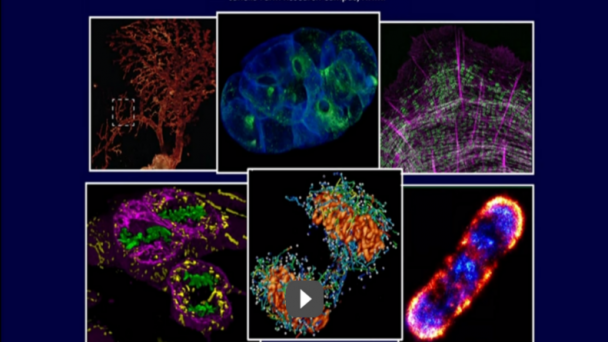
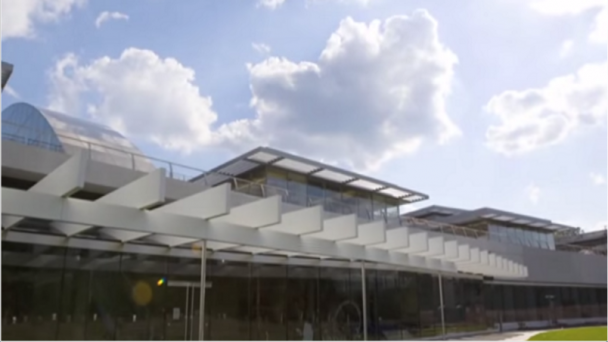
A rare “peek behind the curtain” for the members of the scientific community, inviting them to tour its Janelia Farms campus in Sterling, Virginia. Produced by Feats Inc. for HHMI to showcase the caliber and quality of Janelia’s research.

The unique open house was followed by an intimate evening event designed to foster personal interaction among some of the greatest minds in science, including a number of Nobel laureates. Nearly 2,500 people attended the event demonstrating the science community’s interest in HHMI and its work.


https://www.youtube.com/watch?v=wgFNjMs9rvUVideo can’t be loaded because JavaScript is disabled: hhmi DOCUMENTARY (https://www.youtube.com/watch?v=wgFNjMs9rvU)

YouTube page

Uploaded Sept. 27, 2009

OnAir Post: Janelia Research Open House

Gerry Rubin – Janelia Farm Research

https://www.youtube.com/watch?v=uvgq0LOyNT8Video can’t be loaded because JavaScript is disabled: Gerry Rubin, Janelia Farm – Loudoun Business Success! (https://www.youtube.com/watch?v=uvgq0LOyNT8)

Gerry Rubin, the executive director of the Howard Hughes Medical Institute’s Janelia Farm Research Campus discusses why the leading edge research institution chose Loudoun Virginia for their $500 million + project. Blue sky thinking, creativity and highly educated workforce.

Produced by Loudoun County Virginia Government. Published July 28, 2010

OnAir Post: Gerry Rubin – Janelia Farm Research

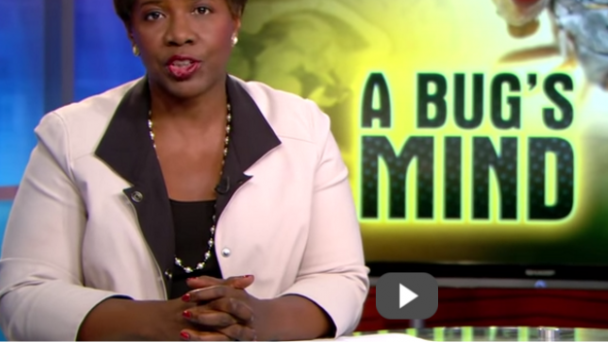
What a fly’s brain tells us about our own minds

https://www.youtube.com/watch?v=FpE9hFJWA8k

“The fruit fly has a very long and distinguished career in science. At a facility considered a Nirvana for scientists, researchers pursue greater understanding of biomedical processes, using test subjects like dragonflies and zebrafish.

PBS News Hour Science correspondent Miles O’Brien reports on how the Janelia Farm Research Campus supports groundbreaking basic research.”

Article on PBS website art

Published July 23, 2014 by PBS Newshour


Transcript

GWEN IFILL: Next: trying to better understand what’s happening in the brain of a fruit fly, a dragonfly, or a zebra fish, all part of a larger puzzle to learn more about how our own brains work.

NewsHour science correspondent Miles O’Brien has the first in our three-part series on the science of the brain.

MILES O’BRIEN: Oh, to be a fly on the wall at the Basic Research Facility scientist consider nirvana. You might see a Nobel Prize in the making or you might be subjected to this, the fruit fly version of a scary movie, the rapidly growing shadow of a predator homing in for the kill.

GWYNETH CARD, Howard Hughes Medical Institute-Janelia Farm Research Campus: My lab is really interested in how flies make decisions.

MILES O’BRIEN: Neuroscientist Gwyneth Card runs a laboratory at the Howard Hughes Medical ...

OnAir Post: What a fly’s brain tells us about our own minds

Unraveling embryonic development cell by cell

YouTube link

“New computer software to unravel embryonic development cell by cell”

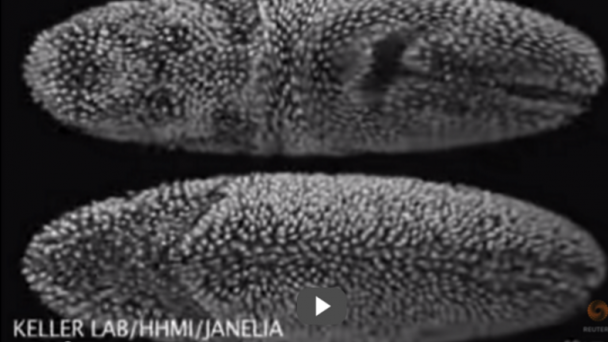
Researchers at the Howard Hughes Medical Institute Janelia Research campus are using a new type of computer software to track and image how a nervous system develops in unprecedented detail. The new system is able to track individual cells during embryonic development, giving scientists a powerful to tool to create a blueprint of how brains form. Ben Gruber reports, Reuters.


Published Aug. 6, 2014 by Reuters


OnAir Post: Unraveling embryonic development cell by cell

Single molecules, cells, and super-resolution optics

https://www.youtube.com/watch?v=M2MOGnYe2lAVideo can’t be loaded because JavaScript is disabled: Single molecules, cells, and super-resolution optics (https://www.youtube.com/watch?v=M2MOGnYe2lA)

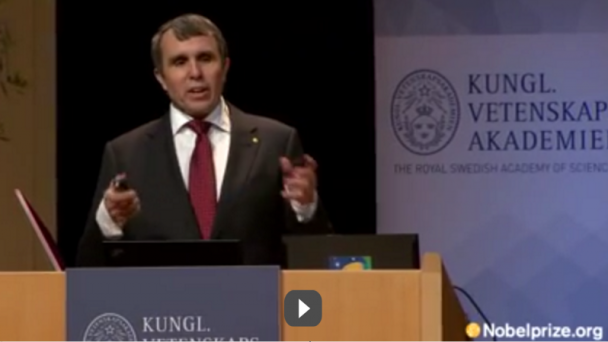
Nobel Laureate in Chemistry 2014: Eric Betzig, Janelia Research Campus, Howard Hughes Medical Institute, Ashburn, VA, USA.

From: The Nobel Lectures 2014, 2014-12-08.

Published on Jan. 8, 2015 by Vetenskapsakademien

OnAir Post: Single molecules, cells, and super-resolution optics

Imaging Life at High Spatiotemporal Resolution


https://www.youtube.com/watch?v=2R2ll9SRCeoVideo can’t be loaded because JavaScript is disabled: Eric Betzig: Imaging Life at High Spatiotemporal Resolution (https://www.youtube.com/watch?v=2R2ll9SRCeo)

In this lecture, held on 3/9/15 at UC Berkeley, Nobel Laureate Eric Betzig, describes three areas focused on addressing the challenges of high resolution imaging: super-resolution microscopy; plane illumination microscopy using non-diffracting beams; and adaptive optics to recover optimal images from within optically heterogeneous specimens.

Published on March 15, 2015 by UC Berkeley Events

OnAir Post: Imaging Life at High Spatiotemporal Resolution

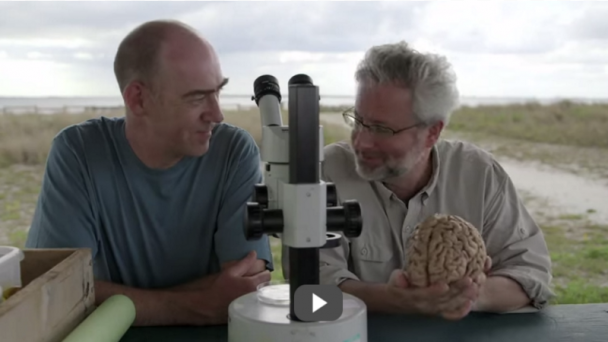
Betzig and Hess: Developing PALM Microscopy


https://www.youtube.com/watch?v=GcQ24khZzvUVideo can’t be loaded because JavaScript is disabled: Eric Betzig and Harald Hess (Janelia Farm/HHMI): Developing PALM Microscopy (https://www.youtube.com/watch?v=GcQ24khZzvU)

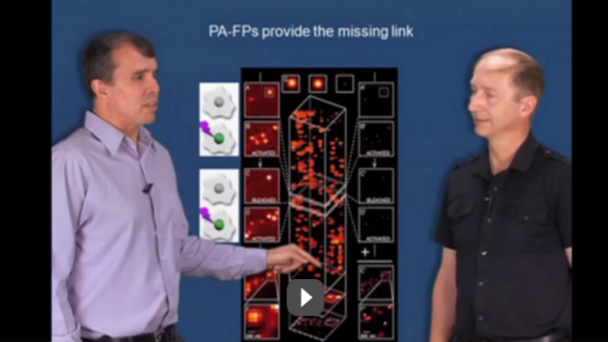
During their 20-year friendship, Eric Betzig and Harald Hess, now at Janelia Farm/HHMI, worked together and separately, in academia and industry, before eventually joining forces to develop the first super-high-resolution PALM microscope.

They tell us the story of this journey and emphasize how their unusual and varied backgrounds provided the skills to complete the project.

Uploaded on Jan. 8, 2011 by iBioMagazine

OnAir Post: Betzig and Hess: Developing PALM Microscopy

Resolving Everything: Harald Hess

https://www.youtube.com/watch?v=esC6cr6qfs8Video can’t be loaded because JavaScript is disabled: Resolving Everything (https://www.youtube.com/watch?v=esC6cr6qfs8)

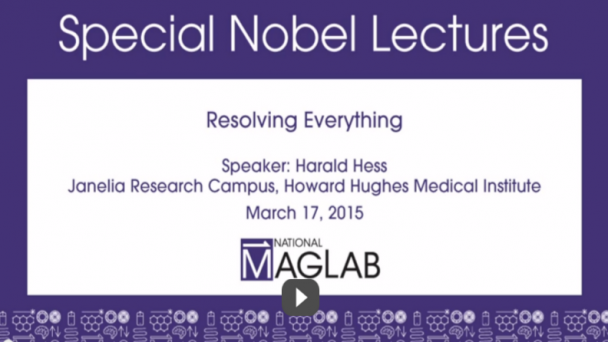
Harald Hess of the Janelia Research Campus of the Howard Hughes Medical Institute describes his path in basic physics, industry and biology and how the challenge of resolution in microscopy has guided and inspired his research.

Published April 1, 2015 by the National High Magnetic Field Laboratory

OnAir Post: Resolving Everything: Harald Hess

Inside the Lab: Karel Svoboda

https://www.youtube.com/watch?v=1jQIHrrbms8Video can’t be loaded because JavaScript is disabled: Inside the Lab: Karel Svoboda, Janelia Research Campus (https://www.youtube.com/watch?v=1jQIHrrbms8)

“An Exploration of Brain Dynamics”

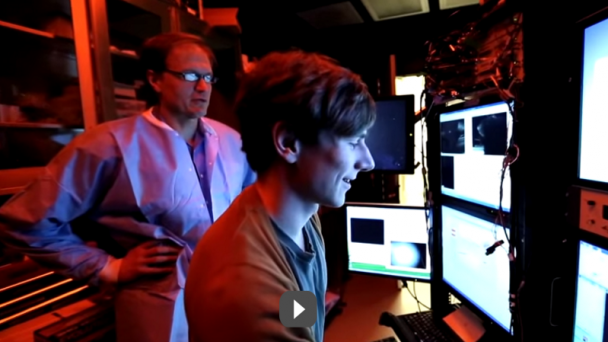
Get a behind-the-scenes look at a day in the lab of neuroscientist Karel Svoboda as his group at the Howard Hughes Medical Institute’s Janelia Research Campus pushes to build a new type of microscope and uses a virtual reality system to learn how mice explore the world.

Published on July 28, 2014 by zincfinger23


OnAir Post: Inside the Lab: Karel Svoboda

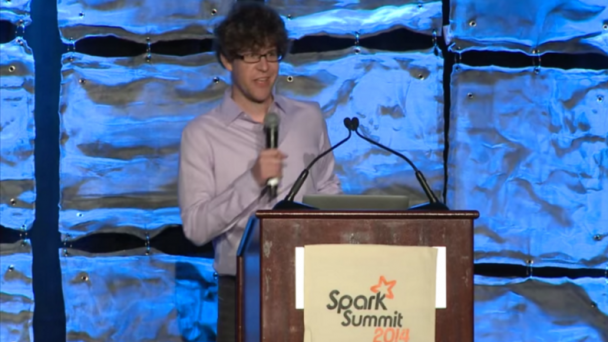
Platform for large-scale neuroscience

https://www.youtube.com/watch?v=Gg_5fWllfgAVideo can’t be loaded because JavaScript is disabled: A platform for large-scale neuroscience – Jeremy Freeman (https://www.youtube.com/watch?v=Gg_5fWllfgA)

A platform for large-scale neuroscience” Jeremy Freeman (HHMI Janelia Farm Research Campus)

Filmed and recorded live at Spark Summit 2014 in San Francisco at the Westin St. Francis.

Published on July 17, 2014 by Apache Spark

OnAir Post: Platform for large-scale neuroscience

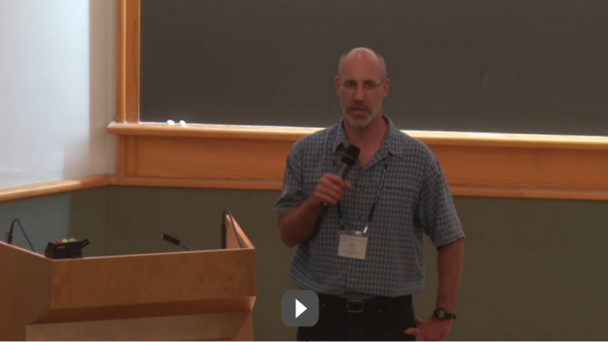
CSHL Keynote Series, Hidehiko Inagaki

“Neuronal mechanism of state control in Drosophila melanogaster” from the Neuronal Circuits meeting 4/5/2014

Presented by Hidehiko Inagaki, HHMI Janelia Farm Part of Cold Springs Harbor Laboratory Keynote lecture series 

Video

YouTube Page

Published on April 9, 2014 by CSHL Leading Strand

https://www.youtube.com/watch?v=XOW666OXYKYVideo can’t be loaded because JavaScript is disabled: CSHL Keynote Series, Hidehiko Inagaki, HHMI Janelia Farm Research Campus (https://www.youtube.com/watch?v=XOW666OXYKY)


OnAir Post: CSHL Keynote Series, Hidehiko Inagaki

Tools for studying neurons: Loren Looger

https://www.youtube.com/watch?v=C7NUYgdzZ4YVideo can’t be loaded because JavaScript is disabled: CSHL Keynote Series; Dr. Loren Looger, HHMI Janelia Farm (https://www.youtube.com/watch?v=C7NUYgdzZ4Y)

“Tools for studying neurons, the only important cells in the brain” from the Glia in Health & Disease 7/19/2014

Presented by Dr. Loren Looger, HHMI Janelia Farm Part of Cold Springs Harbor Laboratory Keynote lecture series

Pulbished on July 21, 2014 by  CSHL Leading Strand

OnAir Post: Tools for studying neurons: Loren Looger

Your 500-Million-Year-Old Brain

https://www.youtube.com/watch?v=bN-8oYVilpsVideo can’t be loaded because JavaScript is disabled: Your 500-Million-Year-Old Brain — HHMI BioInteractive Video (https://www.youtube.com/watch?v=bN-8oYVilps)

The genetic roots of our brains can be seen in the amphioxus, a modern relative of 500-million-year-old creatures. These small eel-like animals teach us about brain evolution.

Published on Aril 24, 2014 by HHMI Biointeractive

OnAir Post: Your 500-Million-Year-Old Brain

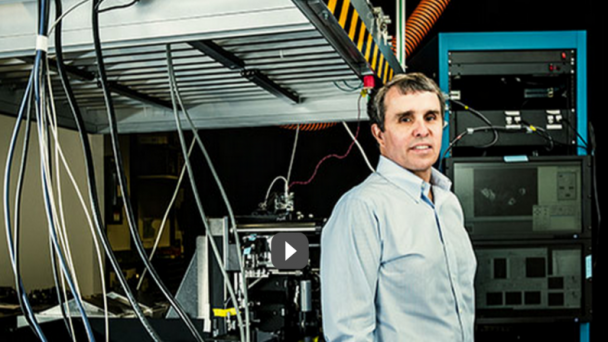
Eric Betzig, PhD – Janelia

Physicist and neuroscientist based at the Janelia Research Campus. Awarded the 2014 Nobel Prize in Chemistry  for “the development of super-resolved fluorescence microscopy”.

Eric Betzig develops novel optical imaging tools in an effort to open new windows into molecular, cellular, and neurobiology. Betzig is focusing on improvements in five areas: Spatial Resolution, Temporal Resolution, Labeling Technology, Deep-Tissue Imaging, and Noninvasive, Data-Rich Imaging.


Web Information

Janelia website:  janelia.org/people/scientist/eric-betzig Betzig Lab:  www.janelia.org/lab/betzig-lab Janelia Research Campus: neuroscience.onair.cc/2015/02/19/janelia-farm/

Contact Information

E-mail: betzige@janelia.hhmi.org Phone:  (571) 209-4143 Work address: Janelia Research Campus, HHMI 19700 Helix Dr., 2C.185 Ashburn, VA 20147

Biography

Betzig was born in Ann Arbor, Michigan, the son of Robert and Helen Betzig. For his undergraduate degree, Betzig studiedPhysics at the California Institute of Technology, graduating with a BS degree in 1983. He then went on to study at Cornell University where he obtained an MS degree and a PhD degree in Applied and Engineering physics in 1985 and 1988, respectively.

After receiving his doctorate, Betzig worked at AT&T Bell Laboratories in the Semiconductor Physics Research Department. In 1996, Betzig left academia to become vice president of research and development at Ann Arbor Machine Company, then owned by his father and stepmother, Susan. Here he developed Flexible Adaptive Servohydraulic Technology (FAST) but did not achieve commercial success.

Betzig then returned to the field ...
OnAir Post: Eric Betzig, PhD – Janelia

Skip to toolbar