Kavli video on the BRAIN Initiative

Kavli Foundation sponsored numerous symposiums and informal meetings in 2011 through 2013 that developed the initial concept for the BRAIN Inititative. Over 100 neuroscientists participated in these meetings which resulted in the Brain Activity Map Project proposal that "would prove important to the scientific thinking behind the BRAIN Initiative, as well as a major catalyst for its launching."

OnAir Post: Kavli video on the BRAIN Initiative

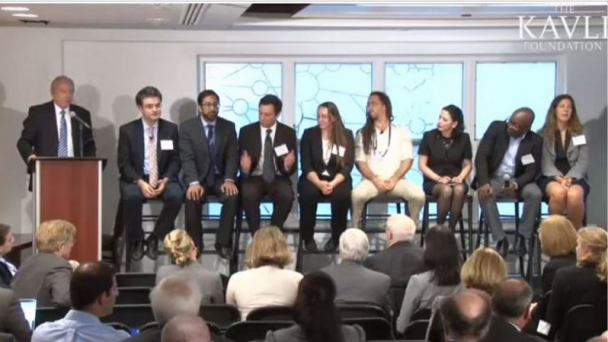
Special Symposium: Neuroscience in the 21st Century


October 1, 2-5 pm EDT Live Webcast from Washington, D.C. Moderated by Alan Leshner, CEO Emeritus, the American Association for the Advancement of Science (AAAS).

View symposium hosted by The Kavli Foundation

This special “mini-symposium”looked at the future of neuroscience and the BRAIN Initiative by hearing from some of the nation’s top neuroscientists, as well as leaders from key federal funding agencies.

https://www.youtube.com/watch?v=LnFqfWFN2aUVideo can’t be loaded because JavaScript is disabled: Neuroscience in the 21st Century (https://www.youtube.com/watch?v=LnFqfWFN2aU)

Neuroscience: Past, Present and Future

TIME: 2:00 – 3:00 pm

Six prominent neuroscientists offer insight into how the field has evolved and what they anticipate for the future.

Pietro De Camilli, Yale University Jeffrey Friedman, The Rockefeller University Michael Miller, Johns Hopkins University Alexandra Nelson, University of California, San Francisco Larry Squire, University of California, San Diego Rafael Yuste, Columbia University


The BRAIN Initiative

TIME: 3:15 – 5:00 pm

Early Successes and Future Plans

Opening remarks from federal agencies highlight discoveries emerging from the BRAIN Initiative, as well as share plans for the future.

Walter Koroshetz, Director, National Institute of Neurological Disorders and Stroke James ...

OnAir Post: Special Symposium: Neuroscience in the 21st Century

Bolstering the Investment in Brain Research

Bipartisan Briefing from Capitol Hill on a new commitment to support brain research and an update on the BRAIN Initiative.

October 1, 2015 at 9:30 – 11:00 am EDT United States Capitol Visitor Center, Washington, D.C.

Sponsored by The Kavli Foundation

YouTube link

https://www.youtube.com/watch?v=X7OWguOqJi0Video can’t be loaded because JavaScript is disabled: Bolstering the Investment in Brain Research (https://www.youtube.com/watch?v=X7OWguOqJi0)

About the Briefing

This briefing will provide details about new funding and research endeavors, including a new commitment to support brain research with The Kavli Foundation in partnership with Johns Hopkins University, The Rockefeller University and the University of California, San Francisco. A discussion will focus on the BRAIN Initiative and on the future of neuroscience moderated by Alan Leshner, CEO Emeritus of the American Association for the Advancement of Science. Joining the discussion will be leaders from the White House Office of Science and Technology Policy, the National Institutes of Health, and the National Science Foundation.


Program

Special Remarks

Barbara Mikulski, U.S. Senator (D-Maryland) Andy Harris, MD, MHS, U.S. Member of Congress (R-Maryland) Carolyn Maloney, U.S. Member of Congress (D-New York)

Speakers

France A. ...

OnAir Post: Bolstering the Investment in Brain Research

Kavli Foundation: Introduction to Neuroscience

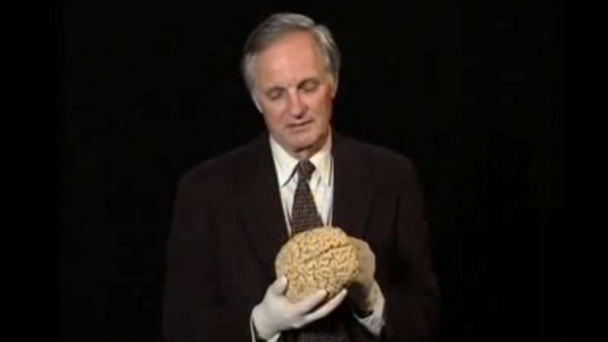
Vidoe narrated by Alan Alda, this introduction to neuroscience gives us a brief overview of the field and illuminates some of the interesting questions being currently researched.

Published on March 6, 2008 by Kavli Foundation


Video

 YouTube Page

https://www.youtube.com/watch?v=PfQkDHopJs8Video can’t be loaded because JavaScript is disabled: Kavli Foundation: Introduction to Neuroscience (https://www.youtube.com/watch?v=PfQkDHopJs8)

OnAir Post: Kavli Foundation: Introduction to Neuroscience

The Brain or the Universe – Where Does Math Come From?

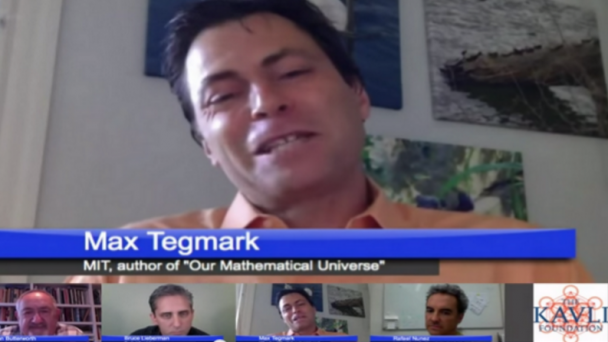
On Aug. 7th, science writer Bruce Lieberman asked your questions of three leading scientists — two neuroscientists and one astrophysicist — about math and the mind.

Join Brian Butterworth (Emeritus Professor of Cognitive Neuropsychology at the Institute of Cognitive Neuroscience at University College London), Rafael Núñez (Professor of Cognitive Science at the University of California, San Diego and member of UCSD’s Kavli Institute for Brain and Mind), and astrophysicist Max Tegmark (Professor of Physics at the Massachusetts Institute of Technology, and member of MIT’s Kavli Institute for Astrophysics and Space Research) as they discuss where math comes from.

Sections of Video

3:15 What are the primary reasons that we think the universe is inherently mathematical? 5:15 If the universe is inherently mathematical how does that effect neuroscience? 8:00 If the universe is not inherently mathematical how does that effect astrophysics? 14:05 If the universe is inherently mathematical, for something to exist does it need to belong to a set/group? 16:50 Are there aspects of the natural world that elude to their innate mathematical properties? 24:05 Does a mathematical universe suggest there was a first cause (god) of all the seen or unseen universe? 29:15 Does the universe have an innate mathematical proportionality?

OnAir Post: The Brain or the Universe – Where Does Math Come From?

The Microbiome & the Brain – A New State of Mind


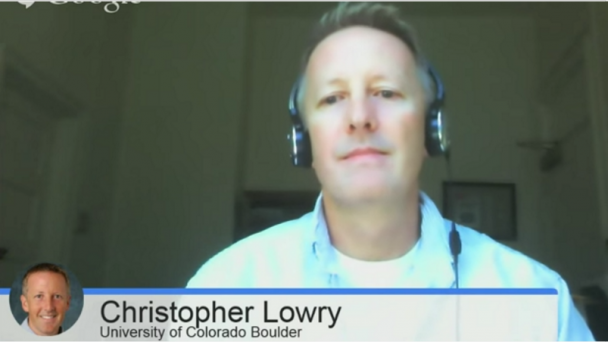
Neuroscientist Christopher Lowry discusses the emerging science, that’s connecting the microbiome – the community of microbes that inhabit the body – with brain health including whether we can treat common brain disorders through the gut.

Lindsay Borthwick is moderating the discussion.

Organized by the Kavli Foundation Jan. 15, 2015


Questions

2:40 Do we know which particular species/community are important for brain health? 5:25 Is it likely that other organisms besides bacteria are also important to the microbiome? 7:20 What prompted you to study bacteria and their interaction with our nervous system? 8:50 How did the behavior of mice change in your experiment? 10:40 How do these microbes communicate with the nervous system? 17:30 Have there been human trials to test microbiome treatments? 19:30 How far are we from treating brain disorders with probiotics? 20:45 Can the microbiome effect our brain development? 22:45 Could destruction to the microbiome cause neurological issues? 24:10 How have you changed your lifestyle throughout your research? 28:00 What kind of research is being done to study the average/optimal microbiome?

Hangout On Air

Streamed live on Jan. 15, 2015 by Kavli Foundation

Youtube page

OnAir Post: The Microbiome & the Brain – A New State of Mind

Skip to toolbar