NSF BRAIN Initiative Videos

The National Science Foundation has assembled a number of excellent videos related to the BRAIN Initiative and neuroscience. You can browse these videos in sliders we have created with the following categories: BRAIN Initiative, Mysteries of the Brain,  Neuroengineering, Phylogeny, and Theorists. 

You can also view a sampling of these videos here in this post or you can find them on the NSF BRAIN Initiative YouTube Channel or on the NSF BRAIN Initiative website. Most of the videos were produced by NSF’s Science Nation, “the online magazine that’s all about science for the people”.

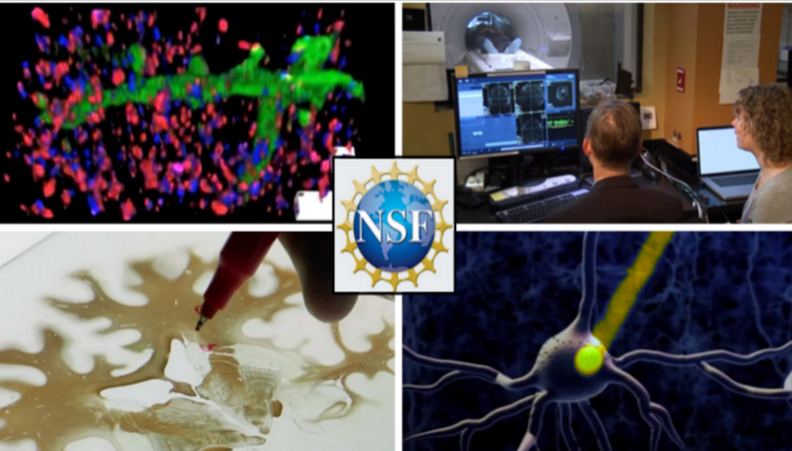
Upper left: Expansion microscopy brings the brain in 3-D into focusUpper right: OpenfMRI allows neuroscientists to share brain research dataLower right: Optogenetics research changes brain research;Lower left: Understanding the Mind by Mapping the Brain


https://www.youtube.com/watch?v=lnxkTTPVceMVideo can’t be loaded because JavaScript is disabled: OpenfMRI allows neuroscientists to share brain research data – Science Nation (https://www.youtube.com/watch?v=lnxkTTPVceM)


OnAir Post: NSF BRAIN Initiative Videos
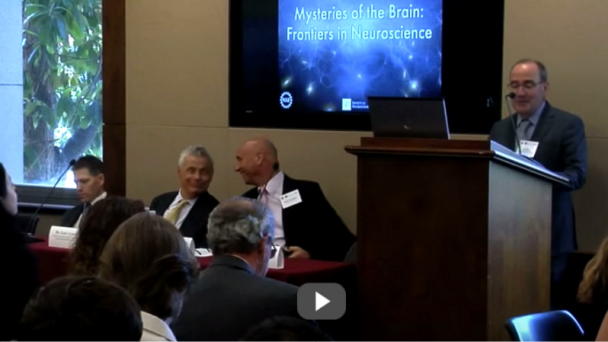
Mysteries of the Brain: Frontiers in Neuroscience

https://www.youtube.com/watch?v=znpaMM8p75IVideo can’t be loaded because JavaScript is disabled: Mysteries of the Brain: Frontiers in Neuroscience (https://www.youtube.com/watch?v=znpaMM8p75I)

NSF-funded scientists and engineers have studied the brain for decades, yet a host of mysteries remain unsolved. In this July 9, 2015 briefing on Capitol Hill, leading experts in brain science discuss some of the latest cross-disciplinary research and cutting-edge technologies to better understand the brain and advance the frontiers of neuroscience.

The briefing was hosted by Congressman Chaka Fattah and sponsored by NSF, Society for Neuroscience, and The Optical Society.

Published on Aug. 5, 2015 by NSF BRAIN Initiative

OnAir Post: Mysteries of the Brain: Frontiers in Neuroscience

Eliciting brain plasticity

https://www.youtube.com/watch?v=RQ9UJXE_a8s

“Eliciting brain plasticity to keep the body moving”

With support from the National Science Foundation’s (NSF) Emerging Frontiers of Research and Innovation (EFRI) program, bioengineer Gert Cauwenberghs, of the Jacobs School of Engineering and the Institute for Neural Computation at the University of California (UC), San Diego, and his colleagues are working to understand how brain circuitry controls how we move. The goal is to develop new technologies to help patients with Parkinson’s disease and other debilitating medical conditions navigate the world on their own.

NSF BRAIN Initiative Science Nation – March 28, 2014

Description

“Parkinson’s disease is not just about one location in the brain that’s impaired. It’s the whole body. We look at the problems in a very holistic way, combine science and clinical aspects with engineering approaches for technology,” explains Cauwenberghs. “We’re using advanced technology, but in a means that is more proactive in helping the brain to get around some of its problems–in this case, Parkinson’s disease–by working with the brain’s natural plasticity, in wiring connections between neurons in different ways.”

Outcomes of this research are contributing to the system-level understanding of human-machine interactions, and motor learning and control in real world environments for humans, and are ...

OnAir Post: Eliciting brain plasticity

Seeing Beyond the Visual Cortex

https://www.youtube.com/watch?v=_Y4KsUqmuUwVideo can’t be loaded because JavaScript is disabled: Seeing Beyond the Visual Cortex | Science Nation (https://www.youtube.com/watch?v=_Y4KsUqmuUw)

“Seeing Beyond the Visual Cortex”

Tony Ro, a neuroscientist at The City College of New York, is artificially recreating a condition called Blindsight in his lab.  With support from the National Science Foundation, Ro is developing a clearer picture of how other parts of the brain, besides the visual cortex, respond to visual stimuli. He says understanding and mapping those alternative pathways might be the key to new rehabilitative therapies.

NSF BRAIN Initiative Science Nation – March 29, 2012 Published March 29, 2012

Description

It’s a chilling thought – losing the sense of sight because of severe injury or damage to the brain’s visual cortex. But, is it possible to train a damaged or injured brain to “see” again after such a catastrophic injury? Yes, according to Tony Ro, a neuroscientist at The City College of New York, who is artificially recreating a condition called Blindsight in his lab. “Blindsight is ...

OnAir Post: Seeing Beyond the Visual Cortex

The connection between sleep and memory

https://www.youtube.com/watch?v=ObuaXhtKbVYVideo can’t be loaded because JavaScript is disabled: The Connection Between Memory & Sleep | Science Nation (https://www.youtube.com/watch?v=ObuaXhtKbVY)

“What’s the connection between sleep and memory?”

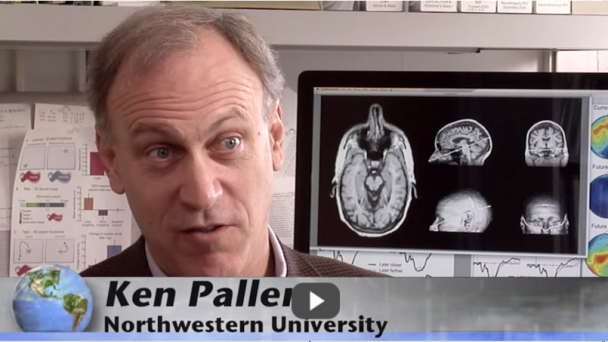
With support from the National Science Foundation (NSF), Ken Paller and his team at Northwestern University are studying the connection between memory and sleep, and the possibilities of boosting memory storage while you snooze. “We think many stages of sleep are important for memory. However, a lot of the evidence has shown that slow-wave sleep is particularly important for some types of memory,” explains Paller.

NSF BRAIN Initiative Science Nation – January 10, 2013

Description

When you’re studying for an exam, is there something you can do while you sleep to retain the information better?

“The question is, ‘What determines which information is going to be kept and which information is lost?'” says neuroscientist Ken Paller.

With support from the National Science Foundation (NSF), Paller and his team at Northwestern University are studying the connection between memory ...

OnAir Post: The connection between sleep and memory

Mind Reading Computer System

https://www.youtube.com/watch?v=FKu75kiqoSoVideo can’t be loaded because JavaScript is disabled: Mind Reading Computer System May Help People with Locked-in Syndrome – Science Nation (https://www.youtube.com/watch?v=FKu75kiqoSo)

“Mind Reading Computer System May Help People with Locked-in Syndrome”

Boston University neuroscientist Frank Guenther works with the National Science Foundation’s Center of Excellence for Learning in Education, Science and Technology (CELEST), which is made up of eight private and public institutions. Its purpose is to synthesize the experimental modeling and technological approaches to research in order to understand how the brain learns as a whole system.

NSF BRAIN Initiative Science Nation – October 13, 2011

Description

Imagine living a life in which you are aware of the world around you but you’re prevented from engaging in it because you are completely paralyzed. Even speaking is impossible. For an estimated 50,000 Americans this is a harsh reality. It’s called locked-in syndrome, a condition in which people with normal cognitive brain activity suffer severe paralysis, often from injuries ...

OnAir Post: Mind Reading Computer System

Ultrasound tech for degenerative diseases

https://www.youtube.com/watch?v=0ruQ7zU4yE0Video can’t be loaded because JavaScript is disabled: Ultrasound technology could treat degenerative brain diseases – Science Nation (https://www.youtube.com/watch?v=0ruQ7zU4yE0)

“Ultrasound technology could treat degenerative brain diseases”

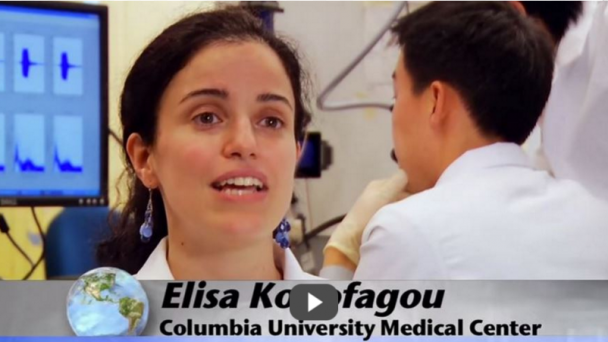
Elisa Konofagou, a bioengineer at Columbia University, believes ultrasound technology could become be a vital component in treating and perhaps curing degenerative brain diseases such as Cancer, Alzheimer’s and Parkinson’s disease. One big problem associated with treating these diseases today is associated with the blood/brain barrier…a chemical shield of sorts that protects the brain against chemicals in the blood. Konofagou believes ultrasound waves could be one key to turning the blood/brain barrier on and off.

NSF BRAIN Initiative Science Nation – April 2, 2014

Description

Elisa Konofagou, a bioengineer at Columbia University, believes ultrasound technology could become be a vital component in treating and perhaps curing degenerative brain diseases such as Cancer, Alzheimer’s and Parkinson’s disease. One big problem associated with treating these diseases today is associated with the blood/brain barrier…a chemical shield of sorts that protects ...

OnAir Post: Ultrasound tech for degenerative diseases

Mind-controlled quadcopter

https://www.youtube.com/watch?v=Vilmvv1cD_AVideo can’t be loaded because JavaScript is disabled: Mind-controlled quadcopter demonstrates new possibilities for disabled people – Science Nation (https://www.youtube.com/watch?v=Vilmvv1cD_A)

“Mind-controlled quadcopter demonstrates new possibilities for disabled people”

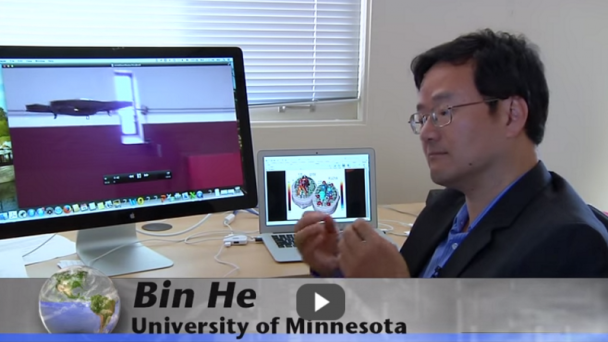
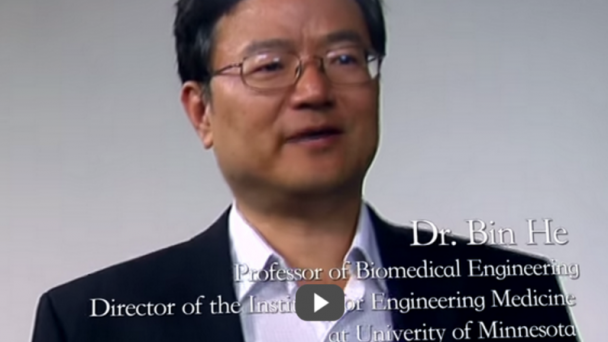
With support from the National Science Foundation (NSF), biomedical engineer Bin He and his team at the University of Minnesota have created a brain-computer interface with the goal of helping people with disabilities.  Participants wear an electro-encephalography, or EEG, cap with 64 electrodes. When the participant thinks about a specific movement, neurons in his or her brain’s motor cortex produce tiny electric signals, which are sent to a computer. The computer processes the signals and sends directions through a Wi-Fi system to direct the quadcopter.

NSF BRAIN Initiative Science Nation – April 2, 2014

Description

Meet the mind-controlled quadcopter. With support from the National Science Foundation (NSF), biomedical engineer Bin He and his team at the University of Minnesota have created a brain-computer interface with the goal of helping people with disabilities, such as paralysis, regain the ability ...

OnAir Post: Mind-controlled quadcopter

Causes of nausea during a 3D movie

https://www.youtube.com/watch?v=LCkHCtK0fM8Video can’t be loaded because JavaScript is disabled: What causes nausea during a 3D movie? – Science Nation (https://www.youtube.com/watch?v=LCkHCtK0fM8)

“What causes nausea during a 3D movie?”

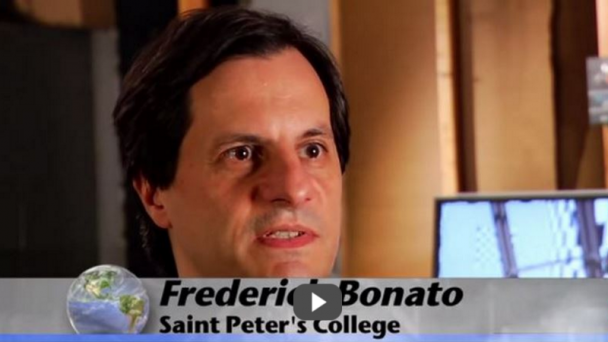
Fred Bonato of St. Peter’s College in Jersey City has spent years steadily tracking what he calls “cyber sickness.” Bonato says that biologically we’re not designed to be put in situations where we experience the unnatural motion of a car, a boat, or weightlessness. His National Science Foundation supported research indicates the sense of motion not matching our sense of vision causes our brains to think we are being poisoned.

NSF BRAIN Initiative Science Nation – April 2, 2014

Description

Ever feel nausea while watching a 3D movie? With the success of movies such as “Avatar” and “Alice in Wonderland” and promises of 3D television just around the corner, 2010 might well be remembered as the year of 3D. But while many of us enjoy 3D technology, a few ...

OnAir Post: Causes of nausea during a 3D movie

Researching human spatial recognition

https://www.youtube.com/watch?v=OT6XT2NSxRcVideo can’t be loaded because JavaScript is disabled: Researching human spatial recognition – Science Nation (https://www.youtube.com/watch?v=OT6XT2NSxRc)

“Researching human spatial recognition”

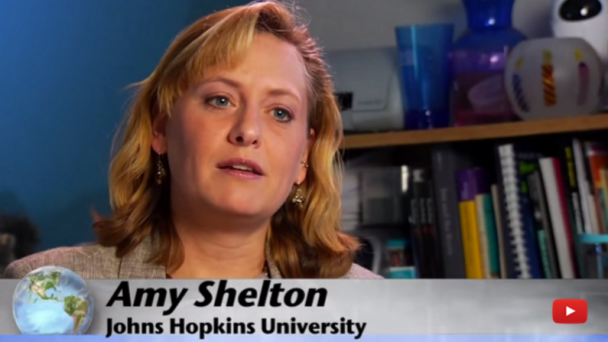
With funding from the National Science Foundation, Amy Shelton is testing human spatial recognition. Study subjects learn and recall their way around a virtual maze while an MRI scans their brains. By analyzing MRI images of blood flow in the human Shelton can get a picture of how the brain learns and recalls the spatial world outside the body.

NSF BRAIN Initiative Science Nation – April 2, 2014

Description

What happens in your brain when you get lost or forget something? Johns Hopkins University Neuroscientist Amy Shelton believes she can find the answer. With funding from the National Science Foundation, she’s testing human spatial recognition. Study subjects learn and recall their way around a virtual maze while an MRI scans their brains. By analyzing MRI images of blood flow in the human Shelton can get a picture of how the brain learns and recalls the spatial world outside the body. By ...

OnAir Post: Researching human spatial recognition

Stress and the teenager’s brain

https://www.youtube.com/watch?v=mhO9sPEsLzAVideo can’t be loaded because JavaScript is disabled: How does stress affect a teenager’s brain? – Science Nation (https://www.youtube.com/watch?v=mhO9sPEsLzA)

“How does stress affect a teenager’s brain?”

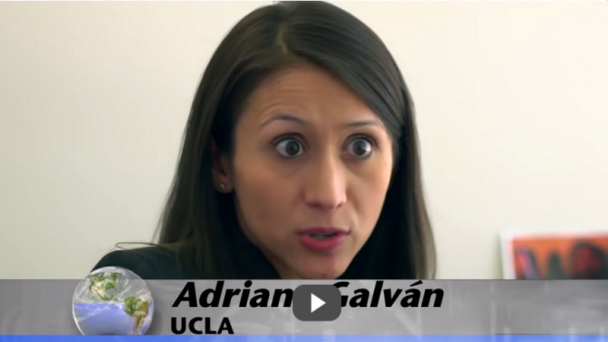
With support from the National Science Foundation, UCLA Psychologist Adriana Galvan is investigating the effects of daily stress on a teen’s cognition and brain function. She is monitoring the daily stress of teens by having them carry a personal digital device that provides daily measures of stress over two weeks. She is also scanning their brains and measuring their stress hormone levels. By taking this multi-method approach, Galvan is learning how daily stress influences cognitive neurodevelopment in teens.

NSF BRAIN Initiative Science Nation – April 2, 2014

Description

Ever wonder what is going on in the brain of a teenager, especially one who is stressed out? UCLA Psychologist Adriana Galvan is on a quest to find out. With support from the National Science Foundation, she’s investigating the effects of daily stress on a teen’s cognition and brain ...

OnAir Post: Stress and the teenager’s brain

Advances in mind-controlled machines

https://www.youtube.com/watch?v=TjKi0hWFIpUVideo can’t be loaded because JavaScript is disabled: Advances in mind-controlled machines (https://www.youtube.com/watch?v=TjKi0hWFIpU)

Mind-controlled machines have the potential to help people with limited physical control. NSF grantee and biomedical engineer Bin He talks about advances in brain-machine interface technology and the big challenges in brain research.

For more information on Bin He, see his BRAIN 2015 profile.

OnAir Post: Advances in mind-controlled machines

Understanding the Mind by Mapping the Brain


https://www.youtube.com/watch?v=igDuigbb-9I

“Understanding the Mind by Mapping the Brain”

Jacopo Annese, Director of the Brain Observatory at the University of California, San Diego is on a quest to collect, dissect, and digitize images of the human brain for the Digital Brain Library, which was launched with support from the National Science Foundation. Annese and his team look for connections, mapping brain structure and connecting it to human behavior.

NSF BRAIN Initiative Science Nation – August 4, 2011

Description

Neuroanatomist Jacopo Annese is looking for 1,000 brains. The Director of the Brain Observatory at the University of California, San Diego is on a quest to collect, dissect, and digitize images of the human brain for the Digital Brain Library, which was launched with support from the National Science Foundation. Annese and his team look for connections, mapping brain structure and connecting it to human behavior. He believes that with a large enough catalog of brains preserved as virtual models, scientists can explore the organ in ways unheard of, revealing new insights into what makes the brain tick. Annese is collecting data on the lives of the people who have already donated brains. He is also studying the behavior of people ...

OnAir Post: Understanding the Mind by Mapping the Brain

OpenfMRI enables sharing brain research data

https://www.youtube.com/watch?v=7HBusVeG8AQ

“OpenfMRI allows neuroscientists to share brain research data”

Researchers around the world can compare notes on one of the most powerful tools available for imaging human brain function, the fMRI, thanks to support from the National Science Foundation (NSF). An fMRI is a functional magnetic resonance imaging scan that measures brain activity by detecting changes in blood oxygenation and flow.

NSF BRAIN Initiative Science Nation – March 15, 2015

OnAir Post: OpenfMRI enables sharing brain research data

How zebrafish advance brain research

https://www.youtube.com/watch?v=662nJsV7GSIVideo can’t be loaded because JavaScript is disabled: How are zebrafish advancing brain research? (https://www.youtube.com/watch?v=662nJsV7GSI)

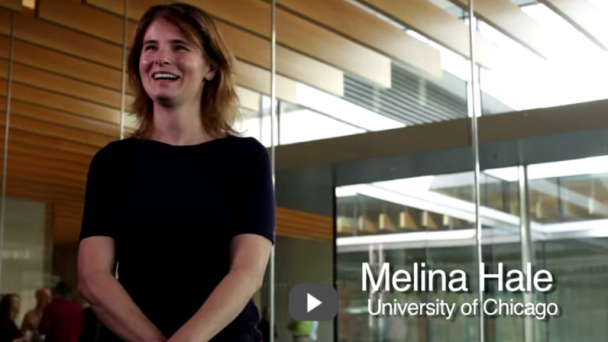
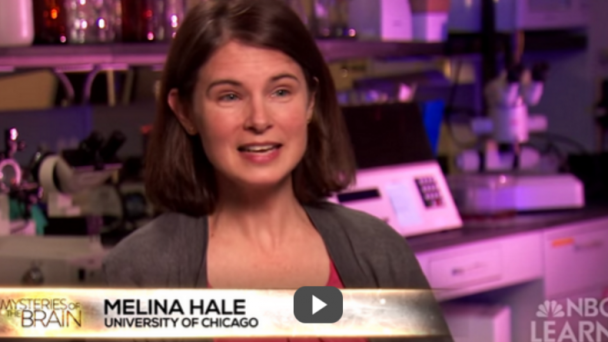
Zebrafish brain research is helping to give scientists like Melina Hale a better understanding of how neural circuits and neurons are used in different behaviors.

NSF BRAIN Initiative Published APRIL 2, 2014

OnAir Post: How zebrafish advance brain research

Social signals modify an animal’s brain

https://www.youtube.com/watch?v=Vk8vArblMbAVideo can’t be loaded because JavaScript is disabled: How do social signals modify an animal’s brain? (https://www.youtube.com/watch?v=Vk8vArblMbA)

How do social signals modify an animal’s brain?

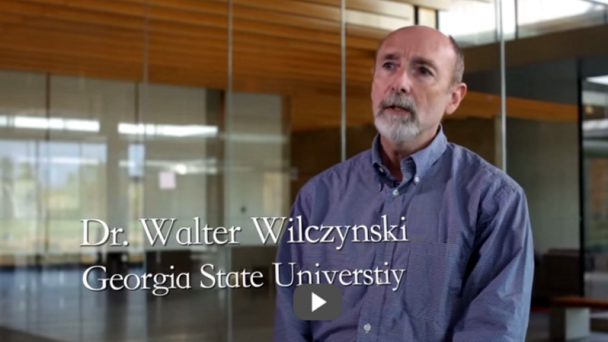
Researching the social signals of non-mamallian animals can give researchers like Walt Wilczynski a better understanding of how their brains are modified by past social interactions and how that affects their behavior in the future.

NSF BRAIN Initiative Published APRIL 2, 2014


OnAir Post: Social signals modify an animal’s brain

Mapping the mouse brain in 3-D

https://www.youtube.com/watch?v=kbv9qoJLheQVideo can’t be loaded because JavaScript is disabled: Mapping the mouse brain in 3-D (https://www.youtube.com/watch?v=kbv9qoJLheQ)

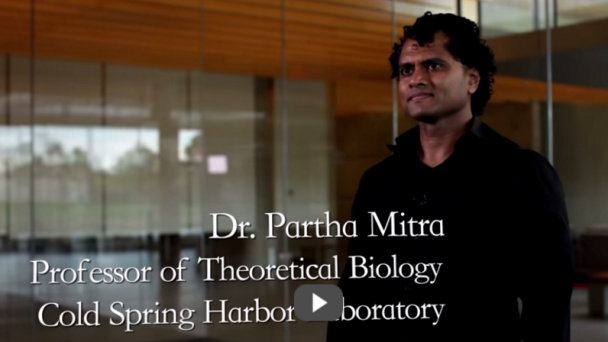
The mapping of the mouse brain is giving researchers like Partha Mitra a better understanding of how neurons are connected and how they communicate across the regions of the brain.


NSF BRAIN Initiative Published APRIL 2, 2014

OnAir Post: Mapping the mouse brain in 3-D

Influences on the cichild fish’s brain


https://www.youtube.com/watch?v=kl8b3YiwDskVideo can’t be loaded because JavaScript is disabled: How do environment and genetics influence the cichild fish’s brain? (https://www.youtube.com/watch?v=kl8b3YiwDsk)

How do environment and genetics influence the cichild fish’s brain?

Cichlids provide excellent model organisms for such studies because thousands of species of cichlids have evolved; many of these species are genetically similar but behaviorally and socially different from one another. Hofmann is using the diversity of cichlid species to help identify which genes regulate various behaviors and evaluate how different social environments affect brain function and behavior.

NSF BRAIN Initiative Published APRIL 2, 2014

OnAir Post: Influences on the cichild fish’s brain

The octopus’ nervous system

https://www.youtube.com/watch?v=kVElsNKR09sVideo can’t be loaded because JavaScript is disabled: Why the octopus’ nervous system makes it such a successful predator? (https://www.youtube.com/watch?v=kVElsNKR09s)

Why the octopus’ nervous system makes it such a successful predator?

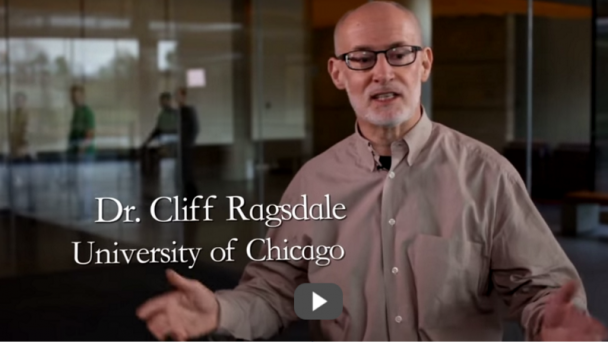
The nervous system of an octopus is a complex system, involving the invertebrate’s eyes, brain and tentacles. Researcher Clifton Ragsdale is currently pioneering the use of modern molecular techniques to study how the octopus’s unique nervous system processes visual information, and if its processing system significantly differs from those of vertebrates.

NSF BRAIN Initiative Published APRIL 2, 2014

OnAir Post: The octopus’ nervous system

Optogenetics research changes brain research

https://www.youtube.com/watch?v=_bZHG-wo6_IVideo can’t be loaded because JavaScript is disabled: Optogenetics research changes brain research (https://www.youtube.com/watch?v=_bZHG-wo6_I)

How two unlikely microbes (that don’t even have brains) led to the development of one of today’s most promising brain research techniques–which is being used to study many diseases including schizophrenia and Parkinson’s.

For more information about the BRAIN Initiative visit: nsf.gov/brain

NSF BRAIN Initiative Published APRIL 18, 2014

OnAir Post: Optogenetics research changes brain research

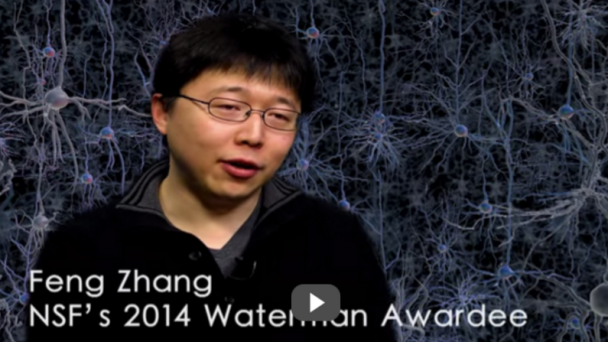
Zhang uses optogenetics to understand the brain

https://www.youtube.com/watch?v=a9wGACshiV4Video can’t be loaded because JavaScript is disabled: 2014 Waterman Awardee Feng Zhang uses optogenetics to understand the brain (https://www.youtube.com/watch?v=a9wGACshiV4)

Feng Zhang, an investigator at the McGovern Institute for Brain Research at MIT and a core member of the Broad Institute of MIT and Harvard, discusses the work of his research team on the brain and its relationship to the President’s Brain Initiative. He spoke with NSF’s Lisa-Joy Zgorski during his visit to NSF in May of 2014 to receive NSF’s most prestigious award for young investigators, the Alan T. Waterman Award, with which he was awarded $1 million to further his research.

NSF BRAIN Initiative Published May 2, 2014

OnAir Post: Zhang uses optogenetics to understand the brain

Flexible materials for innovative brain research

https://www.youtube.com/watch?v=o8B-RSAFkGAVideo can’t be loaded because JavaScript is disabled: How will flexible materials be used for innovative brain research? (https://www.youtube.com/watch?v=o8B-RSAFkGA)

Research within the BRAIN Initiative is using flexible materials to transform the way we study the brain. Researcher Todd Coleman discusses his research on flexible materials and how it’s being used to monitor everything from cognitive impairment to brain injuries.

For more information about the BRAIN Initiative visit: nsf.gov/brain

NSF BRAIN Initiative Published APRIL 2, 2014

OnAir Post: Flexible materials for innovative brain research

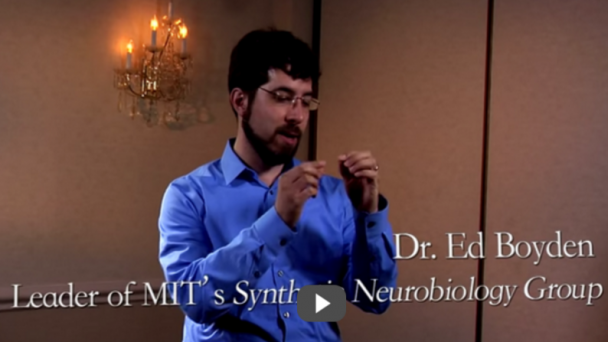
Optogenetics pioneer observes neuron behavior with light

https://www.youtube.com/watch?v=dr_sSYSHxVsVideo can’t be loaded because JavaScript is disabled: Optogenetics pioneer Ed Boyden observes neuron behavior with light (https://www.youtube.com/watch?v=dr_sSYSHxVs)

Optogenetics is a revolutionary field that allows scientists to selectively turn targeted neurons in animal brains on and off. Ed Boyden, of MIT, is one of the pioneering optogenetics research that may help us understand and treat brain disorders.

For more information about the BRAIN Initiative visit: nsf.gov/brain

NSF BRAIN Initiative Published APRIL 2, 2014

OnAir Post: Optogenetics pioneer observes neuron behavior with light

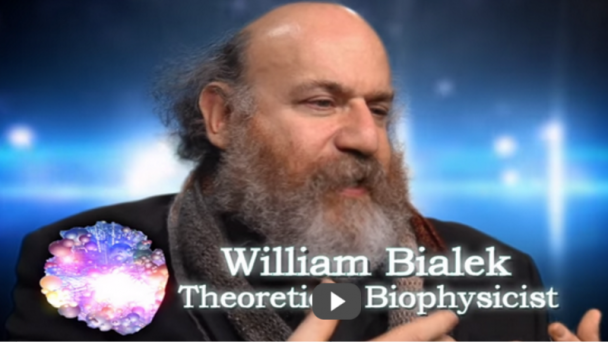
William Bialek, Theoretical Biophysicist

How does our brain use coding to interpret the world?

https://www.youtube.com/watch?v=pYojI666FIMVideo can’t be loaded because JavaScript is disabled: How does our brain use coding to interpret the world? (https://www.youtube.com/watch?v=pYojI666FIM)

Theoretical biophysicist William Bialek discusses how our brain interprets information in a continuous way.

NSF BRAIN Initiative Published APRIL 28, 2014


Observing multiple neurons simultaneously

https://www.youtube.com/watch?v=kD4uyHic4uEVideo can’t be loaded because JavaScript is disabled: Observing multiple neurons simultaneously (https://www.youtube.com/watch?v=kD4uyHic4uE)

NSF BRAIN Initiative Published APRIL 28, 2014

A thought requires roughly a million different brain neurons

https://www.youtube.com/watch?v=qP_cogP_qR8Video can’t be loaded because JavaScript is disabled: A thought requires roughly a million different brain neurons (https://www.youtube.com/watch?v=qP_cogP_qR8)

NSF BRAIN Initiative Published APRIL 28, 2014

OnAir Post: William Bialek, Theoretical Biophysicist

Searching for Answers: Mysteries of the Brain

https://www.youtube.com/watch?v=lg8AeF9IM7s

“For more than a century, scientists have studied the brain, and yet there is still so much about it that remains a mystery. New research is underway to develop and use cutting-edge technologies, and scientists across disciplines are working together to better understand the brain and how it works.”

“Mysteries of the Brain” is produced by NBC Learn in partnership with the NSF.

NSF BRAIN Initiative Published June 9, 2015

OnAir Post: Searching for Answers: Mysteries of the Brain

Thinking Brain – Mysteries of the Brain

https://www.youtube.com/watch?v=lRKo_dN0IMEVideo can’t be loaded because JavaScript is disabled: Thinking Brain | Mysteries of the Brain (https://www.youtube.com/watch?v=lRKo_dN0IME)

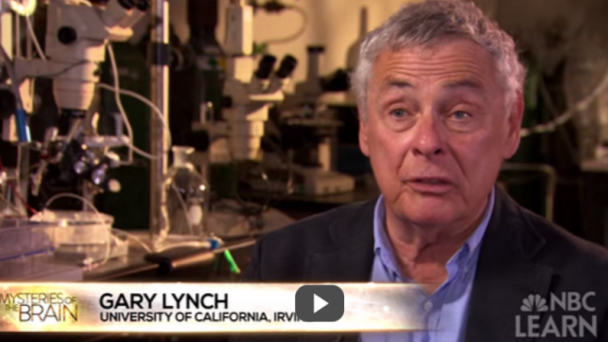
“Through neural connections, called synapses, the brain can process and store enormous amounts of information. Neuroscientist Gary Lynch at the University of California, Irvine explains how this incredibly complex communication process allows animals to learn and remember.”

“Mysteries of the Brain” is produced by NBC Learn in partnership with the NSF.

NSF BRAIN Initiative Published June 10, 2015

OnAir Post: Thinking Brain – Mysteries of the Brain

Perceiving Brain: Mysteries of the Brain

https://www.youtube.com/watch?v=_WPtDO6KXc8

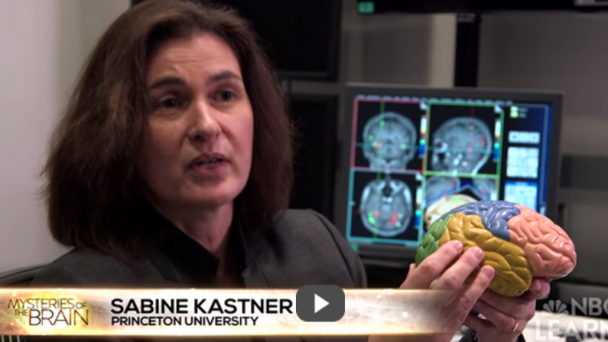
Sabine Kastner, a professor of neuroscience and psychology at Princeton University, is studying how the brain determines what information is most important in everyday scenes. Using functional magnetic resonance imaging, Kastner is able to peek inside the brain and see what areas are active when a person sees a face, place or object.

“Mysteries of the Brain” is produced by NBC Learn in partnership with the NSF.

NSF BRAIN Initiative Published June 9, 2015

OnAir Post: Perceiving Brain: Mysteries of the Brain

Brain-Computer Interface: Mysteries of the Brain

https://www.youtube.com/watch?v=7t84lGE5TXAVideo can’t be loaded because JavaScript is disabled: Brain-Computer Interface | Mysteries of the Brain (https://www.youtube.com/watch?v=7t84lGE5TXA)

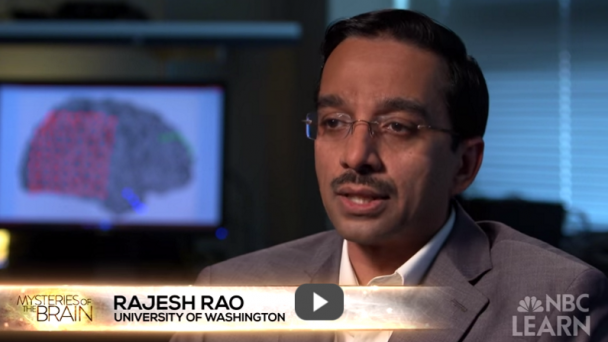
“Neuroengineer Rajesh Rao of the University of Washington is developing brain-computer interfaces, devices that can monitor and extract brain activity to enable a machine or computer to accomplish tasks, from playing video games to controlling a prosthetic arm.

“Mysteries of the Brain” is produced by NBC Learn in partnership with the NSF.”

NSF BRAIN Initiative Published June 17, 2015


OnAir Post: Brain-Computer Interface: Mysteries of the Brain

Brain States and Consciousness: Mysteries of the Brain

https://www.youtube.com/watch?v=rzZkaaavC28

“Neurobiologist Orie Shafer at the University of Michigan is trying to understand how the brain’s cells communicate in order to control sleep patterns. To help solve this mystery, Shafer is teaming up with mathematician Victoria Booth to study a tiny and very unlikely specimen: the fruit fly. “

Mysteries of the Brain” is produced by NBC Learn in partnership with the NSF.”

NSF BRAIN Initiative Published June 17, 2015

OnAir Post: Brain States and Consciousness: Mysteries of the Brain

Building A Brain: Mysteries of the Brain

https://www.youtube.com/watch?v=Cr9ivWrGYRs

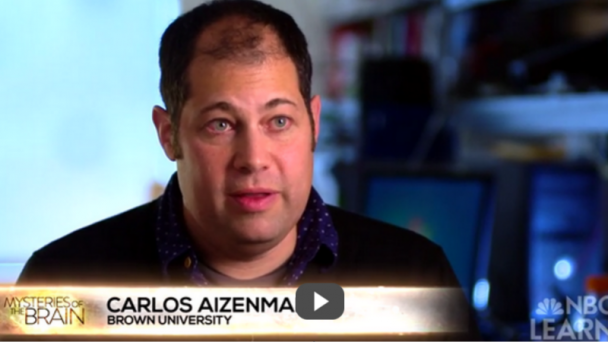
“Carlos Aizenman, a neuroscientist at Brown University, is studying the brains of tadpoles to understand how neural circuits develop and absorb information from the surrounding environment.

“Mysteries of the Brain” is produced by NBC Learn in partnership with the NSF.”

NSF BRAIN Initiative Published June 17, 2015

OnAir Post: Building A Brain: Mysteries of the Brain

Emotional Brain: Mysteries of the Brain

https://www.youtube.com/watch?v=lKSuud5zMBIVideo can’t be loaded because JavaScript is disabled: Emotional Brain | Mysteries of the Brain (https://www.youtube.com/watch?v=lKSuud5zMBI)

“For years, researchers have struggled to understand how emotions are formed and processed by the brain. Now, neuroscientist Kevin LaBar and his graduate students at Duke University are using a virtual reality room to study how the brain reacts to both negative and positive emotions.

“Mysteries of the Brain” is produced by NBC Learn in partnership with the NSF.”

NSF BRAIN Initiative Published June 10, 2015

OnAir Post: Emotional Brain: Mysteries of the Brain

Evolving Brain: Mysteries of the Brain

https://www.youtube.com/watch?v=BUzeEpcO238

Using amazing new technologies, evolutionary neuroscientist Melina Hale and her graduate students at the University of Chicago are discovering that the basic movements of one tiny fish can teach us big ideas about how the brain’s circuitry works.

“Mysteries of the Brain” is produced by NBC Learn in partnership with the NSF.


NSF BRAIN Initiative Published June 10, 2015

OnAir Post: Evolving Brain: Mysteries of the Brain

Skip to toolbar