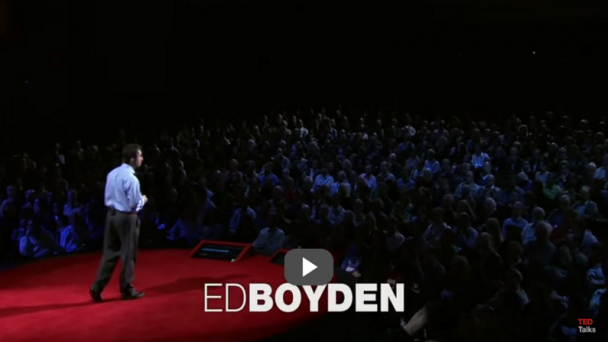
A light switch for neurons

https://www.youtube.com/watch?v=hupHAPF1fHYVideo can’t be loaded because JavaScript is disabled: Ed Boyden: A light switch for neurons (https://www.youtube.com/watch?v=hupHAPF1fHY)

Ed Boyden shows how, by inserting genes for light-sensitive proteins into brain cells, he can selectively activate or de-activate specific neurons with fiber-optic implants. With this unprecedented level of control, he’s managed to cure mice of analogs of PTSD and certain forms of blindness. On the horizon: neural prosthetics.

Filmed March 2011 at TED 2011 Uploaded to YouTube on May 17, 2011 by TED  

OnAir Post: A light switch for neurons
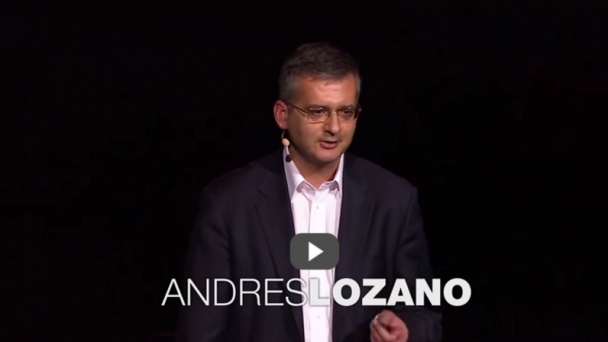
Turning off Parkinson’s and depression

https://www.youtube.com/watch?v=9wiHfHOPbyEVideo can’t be loaded because JavaScript is disabled: Parkinson’s, depression and the switch that might turn them off – Andres Lozano (https://www.youtube.com/watch?v=9wiHfHOPbyE)

Deep brain stimulation is becoming very precise. This technique allows surgeons to place electrodes in almost any area of the brain, and turn them up or down — like a radio dial or thermostat — to correct dysfunction. Andres Lozano offers a dramatic look at emerging techniques, in which a woman with Parkinson’s instantly stops shaking and brain areas eroded by Alzheimer’s are brought back to life.

Filmed January 2013 at TEDs Caltech 2013 Uploaded to YouTube on June 12,, 2013 by TED 

OnAir Post: Turning off Parkinson’s and depression

A mouse. A laser beam. A manipulated memory.

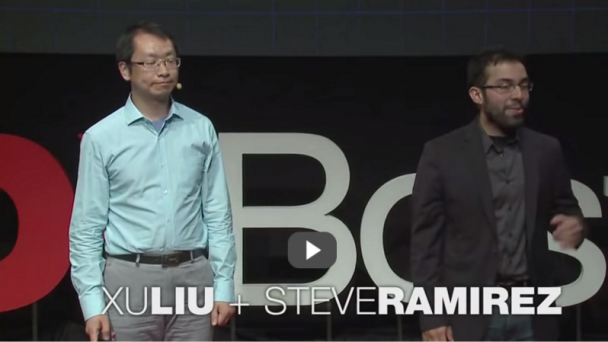
https://www.youtube.com/watch?v=EXo3qA9V3eIVideo can’t be loaded because JavaScript is disabled: Steve Ramirez and Xu Liu: A mouse. A laser beam. A manipulated memory. (https://www.youtube.com/watch?v=EXo3qA9V3eI)

“Can we edit the content of our memories? It’s a sci-fi-tinged question that Steve Ramirez and Xu Liu are asking in their lab at MIT. Essentially, the pair shoot a laser beam into the brain of a living mouse to activate and manipulate its memory. In this unexpectedly amusing talk they share not only how, but — more importantly — why they do this.”

Filmed June 2013 at TEDx Boston 2013 Uploaded to YouTube on August 15,, 2013 by TED 

OnAir Post: A mouse. A laser beam. A manipulated memory.

The paralyzed rat that walked

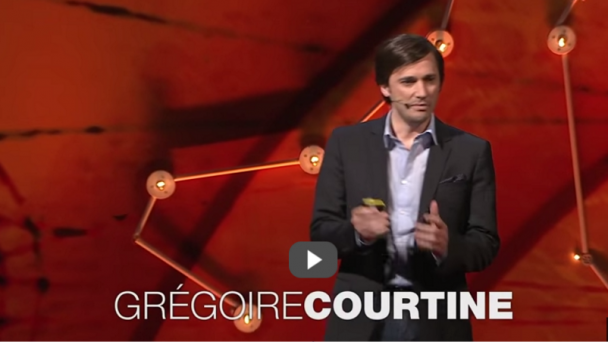
https://www.youtube.com/watch?v=X9FFzWUInyAVideo can’t be loaded because JavaScript is disabled: Grégoire Courtine: The paralyzed rat that walked (https://www.youtube.com/watch?v=X9FFzWUInyA)

“A spinal cord injury can sever the communication between your brain and your body, leading to paralysis. Fresh from his lab, Grégoire Courtine shows a new method — combining drugs, electrical stimulation and a robot — that could re-awaken the neural pathways and help the body learn again to move on its own. See how it works, as a paralyzed rat becomes able to run and navigate stairs.”

Filmed June 2013 at TED Global 2013 Uploaded to YouTube on November 6, 2013 by TED 

OnAir Post: The paralyzed rat that walked

How to control someone else’s arm with your brain

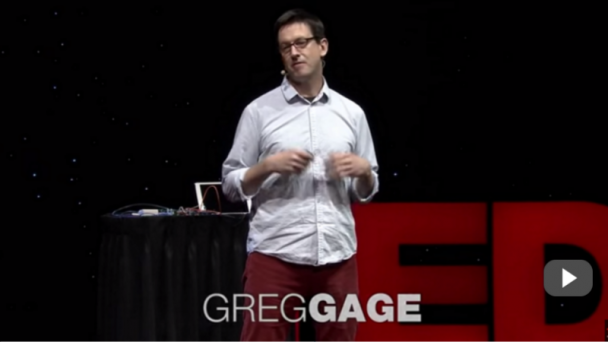
https://www.youtube.com/watch?v=rSQNi5sAwucVideo can’t be loaded because JavaScript is disabled: How to control someone else’s arm with your brain | Greg Gage (https://www.youtube.com/watch?v=rSQNi5sAwuc)

“Greg Gage is on a mission to make brain science accessible to all. In this fun, kind of creepy demo, the neuroscientist and TED Senior Fellow uses a simple, inexpensive DIY kit to take away the free will of an audience member. It’s not a parlor trick; it actually works. You have to see it to believe it.”

Filmed March 2015 at TED 2015 Uploaded to YouTube on April 28, 2015 by TED 

OnAir Post: How to control someone else’s arm with your brain

Can the damaged brain repair itself?

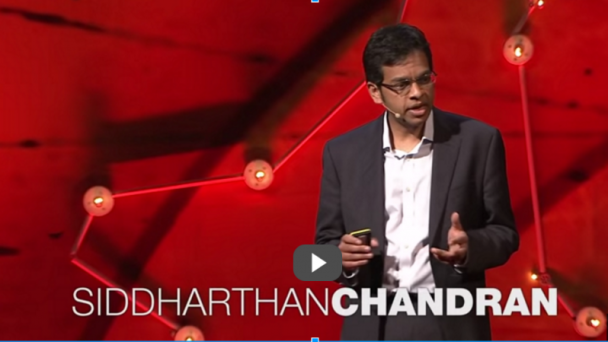
‘After a traumatic brain injury, it sometimes happens that the brain can repair itself, building new brain cells to replace damaged ones. But the repair doesn’t happen quickly enough to allow recovery from degenerative conditions like motor neuron disease (also known as Lou Gehrig’s disease or ALS). Siddharthan Chandran walks through some new techniques using special stem cells that could allow the damaged brain to rebuild faster.”

Filmed March 2014 at TED 2014 Uploaded to YouTube on February 24, 2014 by TED 

OnAir Post: Can the damaged brain repair itself?

Autism — what we know (and what we don’t know yet)

https://www.youtube.com/watch?v=wKlMcLTqRLsVideo can’t be loaded because JavaScript is disabled: Autism — what we know (and what we don’t know yet) | Wendy Chung (https://www.youtube.com/watch?v=wKlMcLTqRLs)

“In this calm and factual talk, geneticist Wendy Chung shares what we know about autism spectrum disorder — for example, that autism has multiple, perhaps interlocking, causes. Looking beyond the worry and concern that can surround a diagnosis, Chung and her team look at what we’ve learned through studies, treatments and careful listening.”

Filmed March 2014 at TED 2014 Uploaded to YouTube on April 28, 2014 by TED 

OnAir Post: Autism — what we know (and what we don’t know yet)

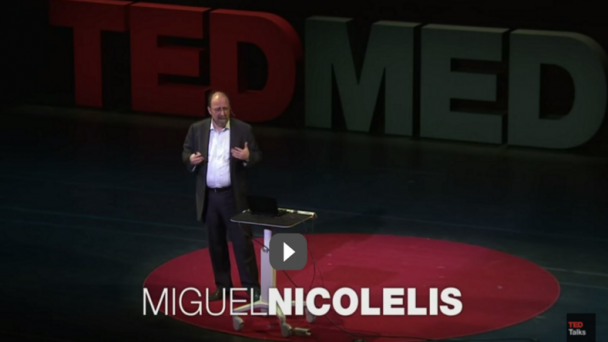
Monkey controls a robot with its thoughts

https://www.youtube.com/watch?v=CR_LBcZg_84Video can’t be loaded because JavaScript is disabled: Miguel Nicolelis: A monkey that controls a robot with its thoughts. No, really. (https://www.youtube.com/watch?v=CR_LBcZg_84)

“Can we use our brains to directly control machines — without requiring a body as the middleman? Miguel Nicolelis talks through an astonishing experiment, in which a clever monkey in the US learns to control a monkey avatar, and then a robot arm in Japan, purely with its thoughts. The research has big implications for quadraplegic people — and maybe for all of us.”

Filmed April 2012 at TEDMED 2012 Uploaded to YouTube on February 18, 2013 by TED  

TED Talks webpage

OnAir Post: Monkey controls a robot with its thoughts

Skip to toolbar