Mapping and Manipulating the Brain

“This TED Studies explores the human brain’s 100 billion neurons and 100 trillion connections among them, and learn how neuroscientists are using an array of techniques to chart — and in some cases, change — this amazing organ.”

TED Studies, created in collaboration with Wiley, are curated video collections — supplemented by rich educational materials. This post has snippets from the Introductory Essay and Summary Analysis and links to videos in this TED Studies.


Web Information

Website for this TED Studies: ted.com/read/ted-studies/neuroscience

Twitter:  @TedTalks  twitter.com/TEDTalks  

Synopsis and Links to videos 

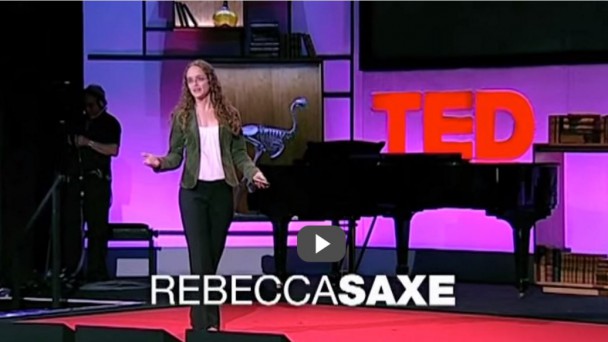
How we read each other’s minds 

“Sensing the motives and feelings of others is a natural talent for humans. But how do we do it? Here, Rebecca Saxe shares fascinating lab work that uncovers how the brain thinks about other peoples’ thoughts — and judges their actions.”

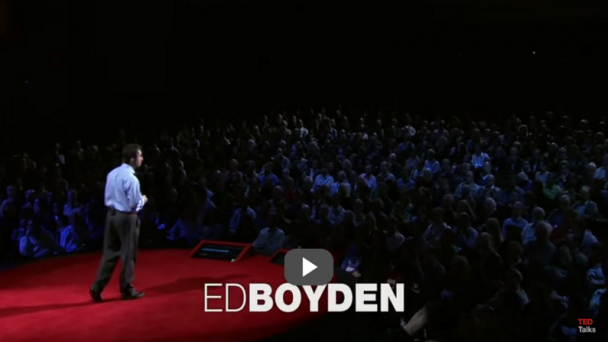
 A light switch for neurons

Ed Boyden shows how, by inserting genes for light-sensitive proteins into brain cells, he can selectively activate or de-activate specific neurons with fiber-optic implants. With this unprecedented level of control, he’s managed to cure mice of analogs of PTSD and certain forms of blindness. On the horizon: neural prosthetics.

 A look inside the brain in real time

“Neuroscientist and inventor ...

OnAir Post: Mapping and Manipulating the Brain
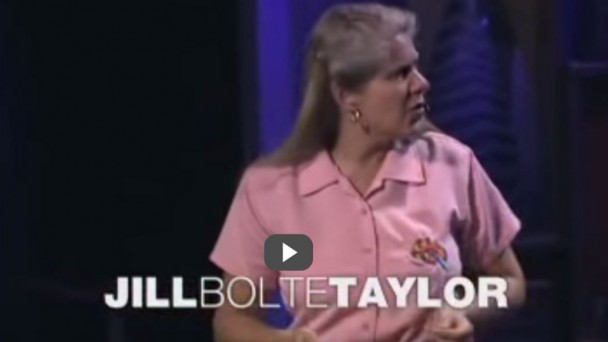
My stroke of insight

https://www.youtube.com/watch?v=UyyjU8fzEYUVideo can’t be loaded because JavaScript is disabled: My stroke of insight | Jill Bolte Taylor | TED (https://www.youtube.com/watch?v=UyyjU8fzEYU)

“Neuroanatomist Jill Bolte Taylor had an opportunity few brain scientists would wish for: One morning, she realized she was having a massive stroke. As it happened — as she felt her brain functions slip away one by one, speech, movement, understanding — she studied and remembered every moment. This is a powerful story about how our brains define us and connect us to the world and to one.”

Filmed February 2008 at TED 2008 Uploaded to YouTube on March 13, 2008 by TED  

TED Talks webpage

OnAir Post: My stroke of insight

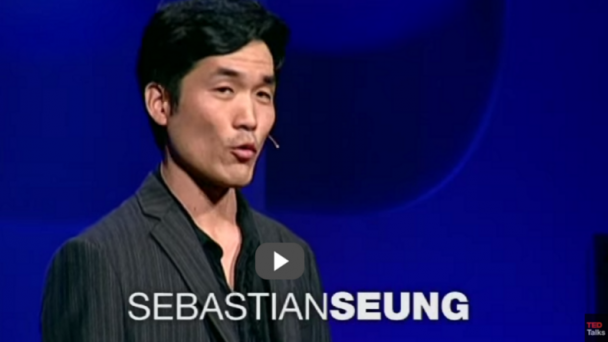
I am my connectome

https://www.youtube.com/watch?v=HA7GwKXfJB0Video can’t be loaded because JavaScript is disabled: Sebastian Seung: I am my connectome (https://www.youtube.com/watch?v=HA7GwKXfJB0)

Sebastian Seung is mapping a massively ambitious new model of the brain that focuses on the connections between each neuron. He calls it our “connectome,” and it’s as individual as our genome — and understanding it could open a new way to understand our brains and our minds.

Filmed July 2010 at TED Global 2010 Uploaded to YouTube on Sept. 28, 2010 by TED 

OnAir Post: I am my connectome

A light switch for neurons

https://www.youtube.com/watch?v=hupHAPF1fHYVideo can’t be loaded because JavaScript is disabled: Ed Boyden: A light switch for neurons (https://www.youtube.com/watch?v=hupHAPF1fHY)

Ed Boyden shows how, by inserting genes for light-sensitive proteins into brain cells, he can selectively activate or de-activate specific neurons with fiber-optic implants. With this unprecedented level of control, he’s managed to cure mice of analogs of PTSD and certain forms of blindness. On the horizon: neural prosthetics.

Filmed March 2011 at TED 2011 Uploaded to YouTube on May 17, 2011 by TED  

OnAir Post: A light switch for neurons

A look inside the brain in real time

The applications for real-time fMRIs start with chronic pain control and range into the realm of science fiction, but this technology is very real.

Filmed February 2008 at TED 2008
Uploaded to YouTube on March 27, 2008 by TED

TED Talks webpage

OnAir Post: A look inside the brain in real time

3 clues to understanding your brain


https://www.youtube.com/watch?v=Rl2LwnaUA-kVideo can’t be loaded because JavaScript is disabled: 3 clues to understanding your brain | VS Ramachandran (https://www.youtube.com/watch?v=Rl2LwnaUA-k)

“Vilayanur Ramachandran tells us what brain damage can reveal about the connection between celebral tissue and the mind, using three startling delusions as examples.”

Filmed march 2007 at TED 2007 Uploaded to YouTube on October 23, 2007 by TED  

TED Talks webpage

OnAir Post: 3 clues to understanding your brain

How we read each other’s minds

https://www.youtube.com/watch?v=GOCUH7TxHRIVideo can’t be loaded because JavaScript is disabled: How we read each other’s minds | Rebecca Saxe (https://www.youtube.com/watch?v=GOCUH7TxHRI)

Sensing the motives and feelings of others is a natural talent for humans. But how do we do it? Here, Rebecca Saxe shares fascinating lab work that uncovers how the brain thinks about other peoples’ thoughts — and judges their actions.

Filmed July 2009 at TED Global 2009 Uploaded to YouTube on Sep 11, 2009 by TED  

TED Talks webpage

OnAir Post: How we read each other’s minds

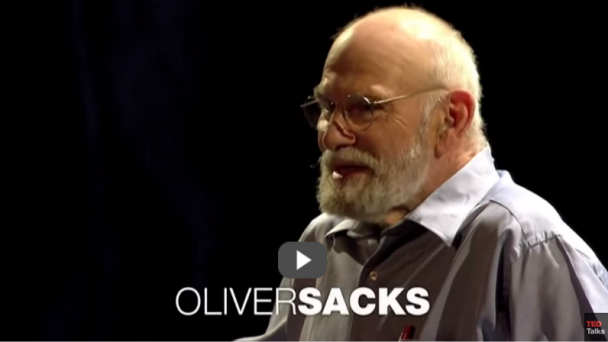
Videos by Oliver Sacks, a tribute

Oliver Sacks, M.D. is a physician, a best-selling author, and was a professor of neurology at the NYU School of Medicine. The New York Times has referred to him as “the poet laureate of medicine.”

He is best known for his collections of neurological case histories, including The Man who Mistook his Wife for a Hat, Musicophilia: Tales of Music and the Brain and An Anthropologist on Mars. Awakenings, his book about a group of patients who had survived the great encephalitis lethargica epidemic of the early twentieth century, inspired the 1990 Academy Award-nominated feature film starring Robert De Niro and Robin Williams.


Web Information

Website: http://www.oliversacks.com/

YouTube: https://www.youtube.com/user/OliverSacksMD

Wikipedia: https://en.wikipedia.org/wiki/Oliver_Sacks

Twitter: https://twitter.com/oliversacks

Facebookhttps://twitter.com/oliversacks

Videos

What hallucination reveals about our minds

Neurologist and author Oliver Sacks brings our attention to Charles Bonnett syndrome — when visually impaired people experience lucid hallucinations. He describes the experiences of his patients in heartwarming detail and walks us through the biology of this under-reported phenomenon.

Filmed February 2009 at TED 2009 Uploaded to YouTube on September 18, 2009 by TED

TED Talks webpage

OnAir Post: Videos by Oliver Sacks, a tribute

Skip to toolbar