My Inner Life with Asperger’s

https://www.youtube.com/watch?v=3yfFwDq4R5MVideo can’t be loaded because JavaScript is disabled: My Inner Life with Asperger’s | Alix Generous | TED Talks (https://www.youtube.com/watch?v=3yfFwDq4R5M)


Summary

Alix Generous is a young woman with a million and one ideas — she’s done award-winning science, helped develop new technology and tells a darn good joke (you’ll see). She has Asperger’s, a form of autistic spectrum disorder that can impair the basic social skills required for communication, and she’s worked hard for years to learn how to share her thoughts with the world. In this funny, personal talk, she shares her story — and her vision for tools to help more people communicate their big ideas.

Published Sep 8, 2015 | By TED


Profile

Alix Generous is a college student and biology researcher with Asperger syndrome. She stresses the importance of building accepting environments for all kinds of minds.  Alix Generous is a nationally acclaimed public speaker, published scientist, and mental health advocate. She ...

OnAir Post: My Inner Life with Asperger’s
How to look inside the brain

https://www.youtube.com/watch?v=sYhMAjfdxD8Video can’t be loaded because JavaScript is disabled: How to look inside the brain – Carl Schoonover (https://www.youtube.com/watch?v=sYhMAjfdxD8)

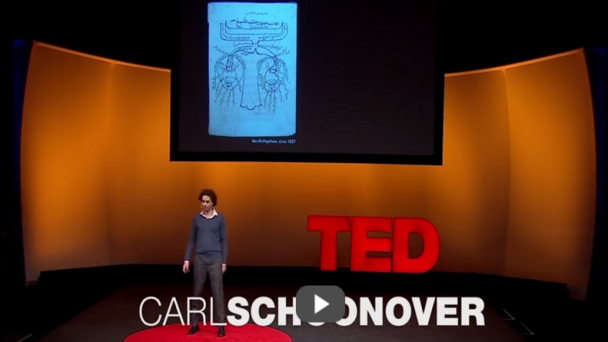
There have been remarkable advances in understanding the brain, but how do you actually study the neurons inside it? Using gorgeous imagery, neuroscientist and TED Fellow Carl Schoonover shows the tools that let us see inside our brains.

Filmed February 2012 at TED 2012 Uploaded to YouTube on July 12, 2013 by TED

OnAir Post: How to look inside the brain

How flies fly: Michael Dickinson

“An insect’s ability to fly is perhaps one of the greatest feats of evolution. Michael Dickinson looks at how a fruit fly takes flight with such delicate wings, thanks to a clever flapping motion and flight muscles that are both powerful and nimble. But the secret ingredient: the incredible fly brain.”

Video filmed Jan. 2013 at TEDx Caltech

Profile

Zarem Professor of Bioengineering, Caltech Neuroscience Director, Dickinson Lab

The aim of Dickinson’s research is to elucidate the means by which flies accomplish their aerodynamic feats. A rigorous mechanistic description of flight requires an integration of biology, engineering, fluid mechanics, and control theory. The long term goal, however, is not simply to understand the material basis of insect flight, but to develop its study into a model that can provide insight to the behavior and robustness of complex systems in general.


OnAir Post: How flies fly: Michael Dickinson

You Look Familiar: Unearthing the Face Within

https://www.youtube.com/watch?v=Hf8NtMhPSOAVideo can’t be loaded because JavaScript is disabled: You Look Familiar: Unearthing the Face Within: Doris Tsao at TEDxCaltech (https://www.youtube.com/watch?v=Hf8NtMhPSOA)

Doris Tsao is an assistant professor of biology and computation and neural systems at Caltech. She joined the Caltech faculty in 2009, and prior to that was head of an independent research group at the University of Bremen. She studied biology and mathematics at Caltech as an undergraduate and received her Ph.D. in neuroscience from Harvard in 2002. Her central interest is in understanding the neural mechanisms underlying vision.

She has received multiple honors including the Sofia Kovalevskaya Award, the Eppendorf and Science International Prize in Neurobiology, Technology Review TR35, Searle Scholar Award, Klingenstein Scholar Award, Merck Scholar Award, Alfred Sloan Fellowship, DARPA Young Faculty Award, McKnight Technological Innovations in Neuroscience Award, NSF CAREER Award, and the NIH Pioneer Award.

Video published on Feb. 1, 2013 by TEDx Talks at TEDxCaltech Jan 2013

Profile

Professor of biology and biological engineering at ...

OnAir Post: You Look Familiar: Unearthing the Face Within

Turning off Parkinson’s and depression

https://www.youtube.com/watch?v=9wiHfHOPbyEVideo can’t be loaded because JavaScript is disabled: Parkinson’s, depression and the switch that might turn them off – Andres Lozano (https://www.youtube.com/watch?v=9wiHfHOPbyE)

Deep brain stimulation is becoming very precise. This technique allows surgeons to place electrodes in almost any area of the brain, and turn them up or down — like a radio dial or thermostat — to correct dysfunction. Andres Lozano offers a dramatic look at emerging techniques, in which a woman with Parkinson’s instantly stops shaking and brain areas eroded by Alzheimer’s are brought back to life.

Filmed January 2013 at TEDs Caltech 2013 Uploaded to YouTube on June 12,, 2013 by TED 

OnAir Post: Turning off Parkinson’s and depression

A mouse. A laser beam. A manipulated memory.

https://www.youtube.com/watch?v=EXo3qA9V3eIVideo can’t be loaded because JavaScript is disabled: Steve Ramirez and Xu Liu: A mouse. A laser beam. A manipulated memory. (https://www.youtube.com/watch?v=EXo3qA9V3eI)

“Can we edit the content of our memories? It’s a sci-fi-tinged question that Steve Ramirez and Xu Liu are asking in their lab at MIT. Essentially, the pair shoot a laser beam into the brain of a living mouse to activate and manipulate its memory. In this unexpectedly amusing talk they share not only how, but — more importantly — why they do this.”

Filmed June 2013 at TEDx Boston 2013 Uploaded to YouTube on August 15,, 2013 by TED 

OnAir Post: A mouse. A laser beam. A manipulated memory.

A neural portrait of the human mind

https://www.youtube.com/watch?v=5Yj3nGv0kn8Video can’t be loaded because JavaScript is disabled: Nancy Kanwisher: A neural portrait of the human mind (https://www.youtube.com/watch?v=5Yj3nGv0kn8)

“Brain imaging pioneer Nancy Kanwisher, who uses fMRI scans to see activity in brain regions (often her own), shares what she and her colleagues have learned: The brain is made up of both highly specialized components and general-purpose “machinery.” Another surprise: There’s so much left to learn.”

Filmed March 2014 at TED 2014 Uploaded to YouTube on October 2, 2014 by TED 

OnAir Post: A neural portrait of the human mind

The paralyzed rat that walked

https://www.youtube.com/watch?v=X9FFzWUInyAVideo can’t be loaded because JavaScript is disabled: Grégoire Courtine: The paralyzed rat that walked (https://www.youtube.com/watch?v=X9FFzWUInyA)

“A spinal cord injury can sever the communication between your brain and your body, leading to paralysis. Fresh from his lab, Grégoire Courtine shows a new method — combining drugs, electrical stimulation and a robot — that could re-awaken the neural pathways and help the body learn again to move on its own. See how it works, as a paralyzed rat becomes able to run and navigate stairs.”

Filmed June 2013 at TED Global 2013 Uploaded to YouTube on November 6, 2013 by TED 

OnAir Post: The paralyzed rat that walked

Know thyself, with a brain scanner

https://www.youtube.com/watch?v=8rzlrItooG4Video can’t be loaded because JavaScript is disabled: Ariel Garten: Know thyself, with a brain scanner (https://www.youtube.com/watch?v=8rzlrItooG4)

“Imagine playing a video game controlled by your mind. Now imagine that game also teaches you about your own patterns of stress, relaxation and focus. Ariel Garten shows how looking at our own brain activity gives new meaning to the ancient dictum “know thyself.”

Filmed September 2011 at TEDx Toronto 2011 Uploaded to YouTube on January 26, 2012 by TED 

OnAir Post: Know thyself, with a brain scanner

What we’re learning from 5,000 brains

https://www.youtube.com/watch?v=ufUkAQOQaXUVideo can’t be loaded because JavaScript is disabled: Read Montague: What we’re learning from 5,000 brains (https://www.youtube.com/watch?v=ufUkAQOQaXU)

“Mice, bugs and hamsters are no longer the only way to study the brain. Functional MRI (fMRI) allows scientists to map brain activity in living, breathing, decision-making human beings. Read Montague gives an overview of how this technology is helping us understand the complicated ways in which we interact with each other.”

Filmed June 2012 at TED Global 2012 Uploaded to YouTube on September 24, 2012 by TED 

OnAir Post: What we’re learning from 5,000 brains

Hawkins: How brain science will change computing

https://www.youtube.com/watch?v=G6CVj5IQkzkVideo can’t be loaded because JavaScript is disabled: Jeff Hawkins: How brain science will change computing (https://www.youtube.com/watch?v=G6CVj5IQkzk)

Palm creator Jeff Hawkins urges us to take a new look at the brain — to see it not as a fast processor, but as a memory system that stores and plays back experiences to help us predict, intelligently, what will happen next.

Filmed Feb. 2003 at TED 2003TED Page TED Page


Transcript

0:11 I do two things: I design mobile computers and I study brains. And today’s talk is about brains and, yay, somewhere I have a brain fan out there. (Laughter) I’m going to, if I can have my first slide up here, and you’ll see the title of my talk and my two affiliations. So what I’m going to talk about is why we don’t have a good brain theory, why it is important that we should develop one and what we can do about it. And I’ll try to do all that in 20 minutes. I have ...

OnAir Post: Hawkins: How brain science will change computing

Ray Kurzweil: Get ready for hybrid thinking

“Two hundred million years ago, our mammal ancestors developed a new brain feature: the neocortex. This stamp-sized piece of tissue (wrapped around a brain the size of a walnut) is the key to what humanity has become.

Now, futurist Ray Kurzweil suggests, we should get ready for the next big leap in brain power, as we tap into the computing power in the cloud.”


Video

https://www.youtube.com/watch?v=PVXQUItNEDQVideo can’t be loaded because JavaScript is disabled: Ray Kurzweil: Get ready for hybrid thinking (https://www.youtube.com/watch?v=PVXQUItNEDQ)

YouTube Page  Published June 2, 2014

TED page   Filmed March 2014 at TED2014

Transcript

0:11

Let me tell you a story. It goes back 200 million years. It’s a story of the neocortex, which means “new rind.” So in these early mammals, because only mammals have a neocortex, rodent-like creatures. It was the size of a postage stamp and just as thin, and was a thin covering around their walnut-sized brain, but it was capable of a new type of thinking. Rather than the fixed behaviors that non-mammalian animals have, it could ...

OnAir Post: Ray Kurzweil: Get ready for hybrid thinking

Happiness and its surprises

https://www.youtube.com/watch?v=6W2dsnhC18QVideo can’t be loaded because JavaScript is disabled: Nancy Etcoff: Happiness and its surprises (https://www.youtube.com/watch?v=6W2dsnhC18Q)

“Cognitive researcher Nancy Etcoff looks at happiness — the ways we try to achieve and increase it, the way it’s untethered to our real circumstances, and its surprising effect on our bodies.”

Filmed February 2004 at TED 2004 Uploaded to YouTube on June 15, 2009 by TED 

TED Talks webpage

OnAir Post: Happiness and its surprises

The optimism bias

https://www.youtube.com/watch?v=B8rmi95pYL0Video can’t be loaded because JavaScript is disabled: The optimism bias | Tali Sharot (https://www.youtube.com/watch?v=B8rmi95pYL0)

“Are we born to be optimistic, rather than realistic? Tali Sharot shares new research that suggests our brains are wired to look on the bright side — and how that can be both dangerous and beneficial.”

Filmed February 2012 at TED 2012 Uploaded to YouTube on May 14, 2012 by TED

TED Talks webpage

OnAir Post: The optimism bias

Why do we sleep?

https://www.youtube.com/watch?v=LWULB9AoopcVideo can’t be loaded because JavaScript is disabled: Why do we sleep? | Russell Foster (https://www.youtube.com/watch?v=LWULB9Aoopc)

“Russell Foster is a circadian neuroscientist: He studies the sleep cycles of the brain. And he asks: What do we know about sleep? Not a lot, it turns out, for something we do with one-third of our lives. In this talk, Foster shares three popular theories about why we sleep, busts some myths about how much sleep we need at different ages — and hints at some bold new uses of sleep as a predictor of mental health.”

Filmed March 2014 at TED 2014 Uploaded to YouTube on August 14, 2013 by TED 

TED Talks webpage

OnAir Post: Why do we sleep?

The pursuit of ignorance

“What does real scientific work look like? As neuroscientist Stuart Firestein jokes: It looks a lot less like the scientific method and a lot more like “farting around … in the dark.” In this witty talk, Firestein gets to the heart of science as it is really practiced and suggests that we should value what we don’t know — or “high-quality ignorance” — just as much as what we know”

Filmed February 2013 at TED 2013 Uploaded to YouTube on September 24, 2013 by TED 


TED Talks webpage

https://www.youtube.com/watch?v=nq0_zGzSc8gVideo can’t be loaded because JavaScript is disabled: Stuart Firestein: The pursuit of ignorance (https://www.youtube.com/watch?v=nq0_zGzSc8g)

“What does real scientific work look like? As neuroscientist Stuart Firestein jokes: It looks a lot less like the scientific method and a lot more like “farting around … in the dark.” In this witty talk, Firestein gets to the heart of science as it is really practiced and suggests that we should value what we don’t know — or “high-quality ignorance” — just as much as what we know”.

Filmed February 2013 at TED 2013 Uploaded to YouTube on September ...

OnAir Post: The pursuit of ignorance

How to control someone else’s arm with your brain

https://www.youtube.com/watch?v=rSQNi5sAwucVideo can’t be loaded because JavaScript is disabled: How to control someone else’s arm with your brain | Greg Gage (https://www.youtube.com/watch?v=rSQNi5sAwuc)

“Greg Gage is on a mission to make brain science accessible to all. In this fun, kind of creepy demo, the neuroscientist and TED Senior Fellow uses a simple, inexpensive DIY kit to take away the free will of an audience member. It’s not a parlor trick; it actually works. You have to see it to believe it.”

Filmed March 2015 at TED 2015 Uploaded to YouTube on April 28, 2015 by TED 

OnAir Post: How to control someone else’s arm with your brain

Why dieting doesn’t usually work

https://www.youtube.com/watch?v=jn0Ygp7pMbAVideo can’t be loaded because JavaScript is disabled: Why dieting doesn’t usually work | Sandra Aamodt (https://www.youtube.com/watch?v=jn0Ygp7pMbA)

“In the US, 80% of girls have been on a diet by the time they’re 10 years old. In this honest, raw talk, neuroscientist Sandra Aamodt uses her personal story to frame an important lesson about how our brains manage our bodies, as she explores the science behind why dieting not only doesn’t work, but is likely to do more harm than good. She suggests ideas for how to live a less diet-obsessed life, intuitively.”

Filmed June 2013 at TEDGlobal 2013 Uploaded to YouTube on January 8, 2014 by TED 


TED Talks webpage

OnAir Post: Why dieting doesn’t usually work

Can the damaged brain repair itself?

‘After a traumatic brain injury, it sometimes happens that the brain can repair itself, building new brain cells to replace damaged ones. But the repair doesn’t happen quickly enough to allow recovery from degenerative conditions like motor neuron disease (also known as Lou Gehrig’s disease or ALS). Siddharthan Chandran walks through some new techniques using special stem cells that could allow the damaged brain to rebuild faster.”

Filmed March 2014 at TED 2014 Uploaded to YouTube on February 24, 2014 by TED 

OnAir Post: Can the damaged brain repair itself?

Autism — what we know (and what we don’t know yet)

https://www.youtube.com/watch?v=wKlMcLTqRLsVideo can’t be loaded because JavaScript is disabled: Autism — what we know (and what we don’t know yet) | Wendy Chung (https://www.youtube.com/watch?v=wKlMcLTqRLs)

“In this calm and factual talk, geneticist Wendy Chung shares what we know about autism spectrum disorder — for example, that autism has multiple, perhaps interlocking, causes. Looking beyond the worry and concern that can surround a diagnosis, Chung and her team look at what we’ve learned through studies, treatments and careful listening.”

Filmed March 2014 at TED 2014 Uploaded to YouTube on April 28, 2014 by TED 

OnAir Post: Autism — what we know (and what we don’t know yet)

One more reason to get a good night’s sleep

https://www.youtube.com/watch?v=MJK-dMlATmMVideo can’t be loaded because JavaScript is disabled: One more reason to get a good night’s sleep | Jeff Iliff (https://www.youtube.com/watch?v=MJK-dMlATmM)

“The brain uses a quarter of the body’s entire energy supply, yet only accounts for about two percent of the body’s mass. So how does this unique organ receive and, perhaps more importantly, rid itself of vital nutrients? New research suggests it has to do with sleep.”

Filmed September 2014 at TEDMED 2014 Uploaded to YouTube on October 13, 2014 by TED 

OnAir Post: One more reason to get a good night’s sleep

Why we laugh

https://www.youtube.com/watch?v=UxLRv0FEndMVideo can’t be loaded because JavaScript is disabled: Why we laugh | Sophie Scott (https://www.youtube.com/watch?v=UxLRv0FEndM)

“Did you know that you’re 13 times more likely to laugh if you’re with somebody else than if you’re alone? Cognitive neuroscientist Sophie Scott shares this and other surprising facts about laughter in this fast-paced, action-packed and, yes, hilarious dash through the science of the topic”.

Filmed March 2015 at TED 2015 Uploaded to YouTube on April 30, 2015 by TED 


TED Talks webpage

OnAir Post: Why we laugh

The quest to understand consciousness

https://www.youtube.com/watch?v=LMrzdk_YnYYVideo can’t be loaded because JavaScript is disabled: The quest to understand consciousness | Antonio Damasio (https://www.youtube.com/watch?v=LMrzdk_YnYY)

“Every morning we wake up and regain consciousness — that is a marvelous fact — but what exactly is it that we regain? Neuroscientist Antonio Damasio uses this simple question to give us a glimpse into how our brains create our sense of self.”

Filmed March 2011 at TED 2011 Uploaded to YouTube on December 18, 2011 by TED 

TED Talks webpage

OnAir Post: The quest to understand consciousness

How your brain tells you where you are

“How do you remember where you parked your car? How do you know if you’re moving in the right direction? Neuroscientist Neil Burgess studies the neural mechanisms that map the space around us, and how they link to memory and imagination.”

Filmed November 20111 at TEDSalon London 2011 Uploaded to YouTube on February 6, 2012 by TED 


TED Talks webpage

https://www.youtube.com/watch?v=Zd71719_G8YVideo can’t be loaded because JavaScript is disabled: Neil Burgess: How your brain tells you where you are (https://www.youtube.com/watch?v=Zd71719_G8Y)

“How do you remember where you parked your car? How do you know if you’re moving in the right direction? Neuroscientist Neil Burgess studies the neural mechanisms that map the space around us, and how they link to memory and imagination.”

Filmed November 20111 at TEDSalon London 2011 Uploaded to YouTube on February 6, 2012 by TED 

TED Talks webpage

OnAir Post: How your brain tells you where you are

The mysterious workings of the adolescent brain

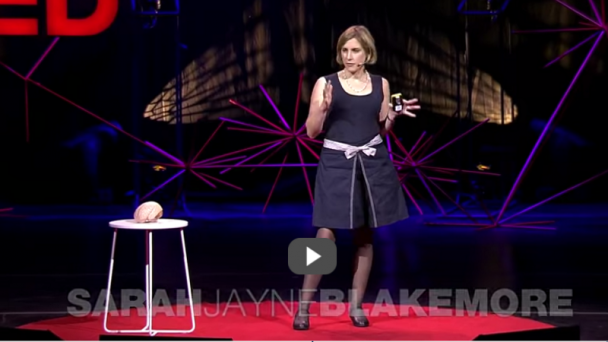
https://www.youtube.com/watch?v=6zVS8HIPUngVideo can’t be loaded because JavaScript is disabled: Sarah-Jayne Blakemore: The mysterious workings of the adolescent brain (https://www.youtube.com/watch?v=6zVS8HIPUng)

“Why do teenagers seem so much more impulsive, so much less self-aware than grown-ups? Cognitive neuroscientist Sarah-Jayne Blakemore compares the prefrontal cortex in adolescents to that of adults, to show us how typically “teenage” behavior is caused by the growing and developing brain.”

Filmed June 2012 at TED Global 2012 Uploaded to YouTube on July 14, 2014 by TED 


TED Talks webpage

OnAir Post: The mysterious workings of the adolescent brain

Beware neuro-bunk

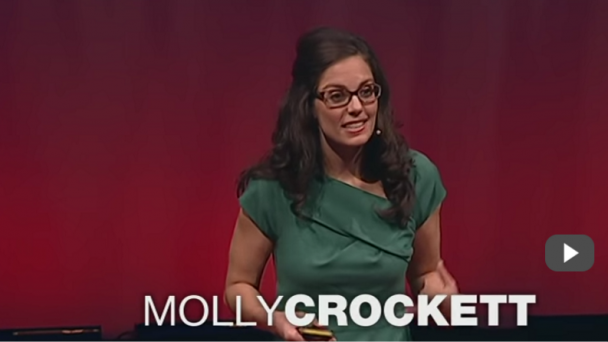
https://www.youtube.com/watch?v=b64qvG2JgroVideo can’t be loaded because JavaScript is disabled: Molly Crockett: Beware neuro-bunk (https://www.youtube.com/watch?v=b64qvG2Jgro)

“Brains are ubiquitous in modern marketing: Headlines proclaim cheese sandwiches help with decision-making, while a “neuro” drink claims to reduce stress. There’s just one problem, says neuroscientist Molly Crockett: The benefits of these “neuro-enhancements” are not proven scientifically. In this to-the-point talk, Crockett explains the limits of interpreting neuroscientific data, and why we should all be aware of them.”

Filmed November 2012 at TEDSalon Londno 2012 Uploaded to YouTube on December 18, 2012 by TED 


TED Talks webpage

OnAir Post: Beware neuro-bunk

Your brain is more than a bag of chemicals


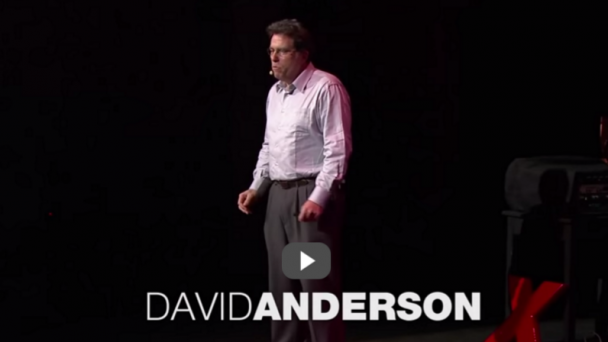
https://www.youtube.com/watch?v=D9xJl4S6NsMVideo can’t be loaded because JavaScript is disabled: David Anderson: Your brain is more than a bag of chemicals (https://www.youtube.com/watch?v=D9xJl4S6NsM)

“Modern psychiatric drugs treat the chemistry of the whole brain, but neurobiologist David Anderson believes in a more nuanced view of how the brain functions. He illuminates new research that could lead to targeted psychiatric medications — that work better and avoid side effects. How’s he doing it? For a start, by making a bunch of fruit flies angry”.

Filmed January 2013 at TEDx Caltech 2013 Uploaded to YouTube on March 12, 2013 by TED

TED Talks webpage

OnAir Post: Your brain is more than a bag of chemicals

What is so special about the human brain?

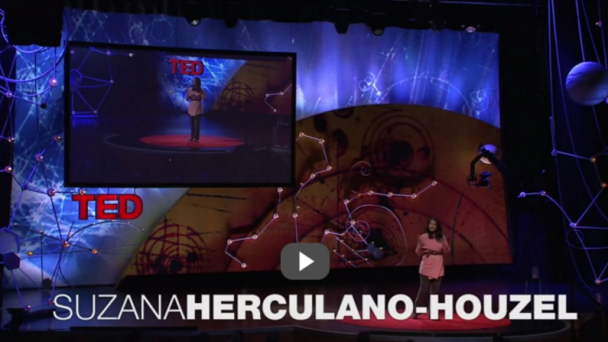
https://www.youtube.com/watch?v=_7_XH1CBzGwVideo can’t be loaded because JavaScript is disabled: What is so special about the human brain? | Suzana Herculano-Houzel (https://www.youtube.com/watch?v=_7_XH1CBzGw)

“The human brain is puzzling — it is curiously large given the size of our bodies, uses a tremendous amount of energy for its weight and has a bizarrely dense cerebral cortex. But: why? Neuroscientist Suzana Herculano-Houzel puts on her detective’s cap and leads us through this mystery. By making “brain soup,” she arrives at a startling conclusion.”

Filmed June 2013 at TEDGlobal 2013 Uploaded to YouTube on November 26, 2013 by TED 

TED Talks webpage

OnAir Post: What is so special about the human brain?

Could future devices read images from our brains?

“As an expert on cutting-edge digital displays, Mary Lou Jepsen studies how to show our most creative ideas on screens. And as a brain surgery patient herself, she is driven to know more about the neural activity that underlies invention, creativity, thought. She meshes these two passions in a rather mind-blowing talk on two cutting-edge brain studies that might point to a new frontier in understanding how (and what) we think.”

Filmed March 2013 at TED 2013 Uploaded to YouTube on March 3, 2013 by TED 

TED Talks webpage

https://www.youtube.com/watch?v=vNDhu2uqfdoVideo can’t be loaded because JavaScript is disabled: Mary Lou Jepsen: Could future devices read images from our brains? (https://www.youtube.com/watch?v=vNDhu2uqfdo)

OnAir Post: Could future devices read images from our brains?

How do you explain consciousness?

https://www.youtube.com/watch?v=uhRhtFFhNzQVideo can’t be loaded because JavaScript is disabled: How do you explain consciousness? | David Chalmers (https://www.youtube.com/watch?v=uhRhtFFhNzQ)

“Our consciousness is a fundamental aspect of our existence, says philosopher David Chalmers: “There’s nothing we know about more directly…. but at the same time it’s the most mysterious phenomenon in the universe.” He shares some ways to think about the movie playing in our heads.”

Filmed March 2014 at TED 2014 Uploaded to YouTube on July 14, 2014 by TED 

TED Talks webpage

OnAir Post: How do you explain consciousness?

3 clues to understanding your brain


https://www.youtube.com/watch?v=Rl2LwnaUA-kVideo can’t be loaded because JavaScript is disabled: 3 clues to understanding your brain | VS Ramachandran (https://www.youtube.com/watch?v=Rl2LwnaUA-k)

“Vilayanur Ramachandran tells us what brain damage can reveal about the connection between celebral tissue and the mind, using three startling delusions as examples.”

Filmed march 2007 at TED 2007 Uploaded to YouTube on October 23, 2007 by TED  

TED Talks webpage

OnAir Post: 3 clues to understanding your brain

Videos by Oliver Sacks, a tribute

Oliver Sacks, M.D. is a physician, a best-selling author, and was a professor of neurology at the NYU School of Medicine. The New York Times has referred to him as “the poet laureate of medicine.”

He is best known for his collections of neurological case histories, including The Man who Mistook his Wife for a Hat, Musicophilia: Tales of Music and the Brain and An Anthropologist on Mars. Awakenings, his book about a group of patients who had survived the great encephalitis lethargica epidemic of the early twentieth century, inspired the 1990 Academy Award-nominated feature film starring Robert De Niro and Robin Williams.


Web Information

Website: http://www.oliversacks.com/

YouTube: https://www.youtube.com/user/OliverSacksMD

Wikipedia: https://en.wikipedia.org/wiki/Oliver_Sacks

Twitter: https://twitter.com/oliversacks

Facebookhttps://twitter.com/oliversacks

Videos

What hallucination reveals about our minds

Neurologist and author Oliver Sacks brings our attention to Charles Bonnett syndrome — when visually impaired people experience lucid hallucinations. He describes the experiences of his patients in heartwarming detail and walks us through the biology of this under-reported phenomenon.

Filmed February 2009 at TED 2009 Uploaded to YouTube on September 18, 2009 by TED

TED Talks webpage

OnAir Post: Videos by Oliver Sacks, a tribute

Skip to toolbar