Harvard Neuroscience

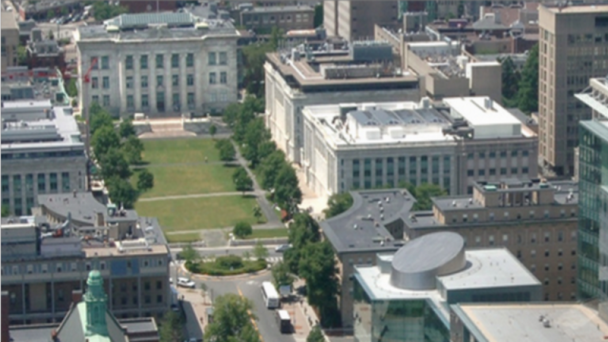
The Program in Neuroscience draws together neuroscientists from across Harvard. The physical home base of the program is located at the Longwood Campus of Harvard Medical School, in the Department of Neurobiology.

Research sites include the Longwood Medical Area, Cambridge Campus, Massachusetts General Hospital, and the McLean Hospital. The Center for Brain Science unites many neuroscience labs and houses in the newly established Swartz Program in Theoretical Neuroscience.

Web Information

Website: dms.hms.harvard.edu/neuroscience/prospective/AboutPIN Research Sites: dms.hms.harvard.edu/neuroscience/prospective/ResearchSites Brain Initiative Grant – “Comprehensive Classification Of Neuronal Subtypes By Single Cell Transcriptomics” BRAIN Initiative Grant– “Magnetic Particle Imaging (MPI) for Functional Brain Imaging in Humans” BRAIN Initiative Grant– “Mapping neuronal chloride microdomains” Brain Initiative Grant– “Neural circuits in zebrafish: form, function and plasticity”

Contact Information

Email: karen_harmin@hms.harvard.edu Phone: (617) 432-0912 Address: Program in Neuroscience Harvard Medical School 220 Longwood Avenue Goldenson 129 Boston, MA 02115

About the Program in Neuroscience

Mission Statement: We are an inter-departmental Ph.D. program for training in neuroscience. Our mission is to provide students with the instruction, research experience, and mentoring they need to become leaders in research and education.

Who we are: The Program in Neuroscience draws together neuroscientists from across Harvard. The physical home base of the program is located at the Longwood Campus of Harvard Medical School, in the Department of Neurobiology. Most coursework occurs at this campus, ...

OnAir Post: Harvard Neuroscience
MIT Neuroscience

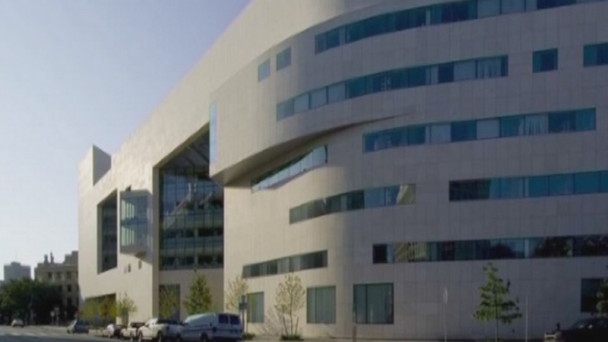
MIT has numerous academic and research programs related to neuroscience. Key institutions include the Department of Brain, and Cognitive Sciences, Department of Biological Engineering, and the MIT Media Lab.

Important neuroscience related centers include: Center for Neurobiological Engineering (CNBE); McGovern Institute Neurotechnology (MINT) program; Simons Center for the Social Brain (SCSB); Synthetic Biology Center;Picower Center for Learning and Memory; and the Martinos Imaging Center at MIT.

Grant Information

Brain Initiative Grant – “Advancing MRI & MRS Technologies for Studying Human Brain Function and Energetics” Brain Initiative Grant – “Novel technologies for nontoxic transsynaptic tracing”“Novel technologies for nontoxic transsynaptic tracing” Brain Initiative Grant – “Ultra-Multiplexed Nanoscale In Situ Proteomics for Understanding Synapse Types” Brain Initiative Grant – “Calcium sensors for molecular fMRI” Brain Initiative Grant – “Next generation high-throughput random access imaging, in vivo” Brain Initiative Grant – “Cortical circuits and information flow during memory-guided perceptual decisions”

Department of Brain and Cognitive Sciences

Undergraduate program

Graduate program

Postdoctoral Program

Open Courseware

People

48 faculty members,over 200 graduate & undergraduate students, 180 researchers and post-docs and 36 staff

Department Head: James Dicarlo, PhD

Department of Biological Engineering

Academic Programs

Faculty

MIT Media Lab

Research

People

Research Centers 

Center for Neurobiological Engineering (CNBE)

OnAir Post: MIT Neuroscience

UCSD Neuroscience


Summary

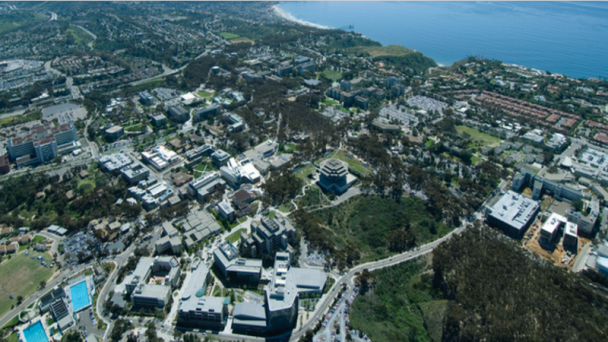
The University of California at San Diego (UCSD) leads the nation as the top neurosciences department in National Institutes of Health (NIH) funding.

With about 120 faculty members, UC San Diego’s Neuroscience department is among the nation’s largest. The program’s labs, medical centers and clinics are located in the heart of the San Diego life sciences district. There are many research centers at UCSD including Kavli Institute for Brain and Mind; Swartz Center for Computational Neuroscience; and Research in Neuroscience at UC San Diego School of Medicine.


Information

Website: ucsd.edu/ Kavli Institute for Brain and Mind: kavlifoundation.org/university-california-san-diego Swartz Center for Computational Neuroscience: http://sccn.ucsd.edu/index.html Research in Neuroscience at UC San Diego School of Medicine: neurosciences.ucsd.edu/research/Pages/default.aspx Wikipedia Entry: wiki/University_of_California,_San_Diego BRAIN Initiative Grant – “Revealing the connectivity and functionality of brain stem circuits” Brain Initiative Grant– “Classifying Cortical Neurons by Correlating Transcriptome with Function” BRAIN Initiative Grant Optogenetic mapping of synaptic activity and control of intracellular signaling”


Research in Neuroscience at UC San Diego School of Medicine

UC San Diego leads the nation as the top neurosciences department in National Institutes of Health (NIH) funding.

With about 120 faculty members, UC San Diego’s Neuroscience department is among the nation’s largest. The program’s labs, medical centers and clinics are located in the heart of the ...

OnAir Post: UCSD Neuroscience

Yale Neuroscience


Summary

Yale University’s neuroscience research and academic programs are located in the Faculty of Arts and Science and the School of Medicine. 

The interdisciplinary research programs of Yale neuroscience faculty are central to Yale’s Interdepartmental Neuroscience Program (INP). Other major groups are the Kavli Institute for Neuroscience which awards grants to Yale faculty to support new research initiatives and the Center for Neuroscience and Regenerative Research which is dedicated to molecular and cell-based discoveries.

Information

Interdepartmental Neuroscience Program website: medicine.yale.edu/neuroscience Kavli Institute for Neuroscience website:  kavli.yale.edu/research Center for Neuroscience and Regenerative Research website: medicine.yale.edu/cnrr/ BRAIN Initiative Grant– “Development of Protein-based Voltage Probes” BRAIN Initiative Grant – “A Novel Approach for Cell-Type Classification and Connectivity in the Human Brain” BRAIN Initiative Grant – Three Dimensional Holography for Parallel Multi-target Optogenetic Circuit Manipulation”


Interdepartmental Neuroscience Program

The interdisciplinary research programs of Yale neuroscience faculty are central to Yale’s Interdepartmental Neuroscience Program (INP). This unique, broad-based training program can best be described as a “department without walls,” with the primary purpose of providing students with a maximum of diversity and depth in the most important areas of neuroscience research.


Academics

The interdisciplinary research programs of Yale neuroscience faculty are central to Yale’s Interdepartmental Neuroscience Program (INP). This unique, broad-based training program can best be described as ...

OnAir Post: Yale Neuroscience

UCSF Neuroscience

University of California at San Francisco (UCSF) has one of the largest neuroscience complexes in the world including the Sandler Neurosciences Center and Rock Hall. UCSF is ranked by NIH as the #1 department of neurology at US medical schools.

Research is done by the faculty in the Neuroscience Graduate Program and many centers including the UCSF Memory and Aging Center and the Center for Integrative Neuroscience. Affiliated centers include research at San Francisco Medical Centers and the Gladstone Institute of Neurological Disorders.

Web Information

Department of Neurology Website: neurology.ucsf.edu/ UCSF Memory and Aging Center:  memory.ucsf.edu/ Center for Integrative Neuroscience: cin.ucsf.edu/index.html UCSF Neuroscience Graduate Program: neuroscience.ucsf.edu/neurograd BRAIN Initiative Grant – ” Modular systems for measuring and manipulating brain activity” BRAIN Initiative Grant   “Mapping the Developing Human Neocortex by Massively Parallel Single Cell Analysis” BRAIN Initiative Grant – “Identification of enhancers whose activity defines cortical interneuron types”

Contact Information

Address: Sandler Neurosciences Center 675 Nelson Rising Lane, Suite 190 San Francisco, California

Sandler Neurosciences Center

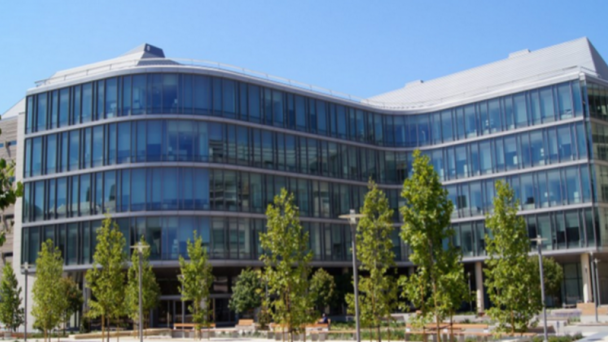
In honor of Herbert and Marion Sandler’s extraordinary commitment to neurological disease research at UCSF, our new neurosciences building at Mission Bay has been named the Sandler Neurosciences Center. This 237,000 square foot facility has laboratories headed by principal investigators from the UCSF Department of Neurology, the Institute for Neurodegenerative Diseases ...

OnAir Post: UCSF Neuroscience

Human Connectome Project

The project was launched in July 2009 as the first of three Grand Challenges of the NIH's Blueprint for Neuroscience Research.

The goal of the Human Connectome Project is to build a "network map" that will shed light on the anatomical and functional connectivity within the healthy human brain, as well as to produce a body of data that will facilitate research into brain disorders.

OnAir Post: Human Connectome Project

Helen Wills Neuroscience Institute

The Helen Wills Neuroscience Institute (HWNI) at UC Berkeley is an active, collaborative research community that investigates fundamental questions about how the brain functions.

Using approaches from many disciplines (including biophysics, chemistry, cognitive science, computer science, genetics, mathematics, molecular and cell biology, physics, and physiology), HWNI seeks to understand how the brain generates behavior and cognition, and to better understand, diagnose and treat neurological disorders.

Web Information

Website:  http://neuroscience.berkeley.edu/ Partnership with Zeiss: UC Berkeley-Zeiss BrainMIC Twitter:  https://twitter.com/UCBerkeleyNeuro Wikipedia Entry: http://en.wikipedia.org/wiki/Helen_Wills_Neuroscience_Institute BRAIN Grant – “Classification of Cortical Neurons by Single Cell Transcriptomics” BRAIN Grant – “MRI Corticography (MRCoG): Micro-scale Human Cortical Imaging” BRAIN Grant – ”Optical control of synaptic transmission for in vivo analysis of brain circuits and behavior”

Contact Information

Phone: 510.642.2593 Address:UC Berkeley 175 Li Ka Shing Center, MC#3370 Berkeley, CA 94720

DirectorEhud Isacoff Admin & Staff

Research & Technology Centers

Advances in understanding brain function and brain disorders are often enabled by cutting-edge technology. The Helen Wills Neuroscience Institute fosters technological advances by sponsoring Technology Centers. These centers bring together physical scientists (e.g., from physics, chemistry, computer science, and engineering) and neuroscientists to develop tools for neuroscience research, and apply these tools to advance our understanding of the brain.

Center for Neural Engineering and Prostheses (CNEP)

Deep ...

OnAir Post: Helen Wills Neuroscience Institute

Cold Spring Harbor Laboratory

Summary

Cold Spring Harbor Laboratory (CSHL) is a private, not-for-profit research and education institution at the forefront of molecular biology and genetics.

CSHL research generates knowledge that will yield better diagnostics and treatments for cancer, neurological diseases and other major diseases, and that will lead to improved and more diverse food resources and more efficient biofuels. The Watson School of Biological Sciences trains the next generation of scientists through an innovative Ph.D. program and other educational offerings.


Information

Website:  http://www.cshl.edu/ Wikipedia Entry: wikipedia.org/wiki/Cold_Spring_Harbor_Laboratory BRAIN Grant – “Towards quantitative cell type-based mapping of the whole mouse brain” BRAIN Grant – “An optogenetic toolkit for the interrogation and control of single cells.”

Email:  contact info Phone: 516-367-8800 Address: One Bungtown Road Cold Spring Harbor, NY 11724

President and Chief Executive Officer:  Bruce W. Stillman Leadership


Neuroscience

CSHL neuroscientists focus on understanding how neural activity and neural circuitry underlie behavior, and how disruptions in these circuits lead to neurological and neuropsychiatric disorders such as Alzheimer’s disease, autism, schizophrenia and depression. These questions are addressed in two model systems—rodents and Drosophila—using molecular, cellular, genetic, developmental, theoretical, physiological and behavioral approaches.

Neuroscience research at CSHL is highly collaborative, and can be divided into three broad themes: sensory processing, cognition, and cognitive disorders.  The sensory processing group addresses basic questions about sensory representations (auditory, olfactory ...

OnAir Post: Cold Spring Harbor Laboratory

UCLA Neuroscience

UCLA is the home of an outstanding and vibrant neuroscience community, including laboratories in diverse departments in the David Geffen School of Medicine, the College and the Samueli School of Engineering.

UCLA offers graduate training in Neuroscience through the Interdepartmental PhD Program for Neuroscience (NS-IDP). The program includes about 150 laboratories in diverse areas spanning the field from molecular analysis to genetics and behavior. Students learn modern problem solving skills and use state of the art approaches to explore a deeper understanding of how the brain processes information.


Web Information

Website: neuroscience.ucla.edu/ BRAIN Initiative Grant– “Defining cell types, lineage, and connectivity in developing human fetal cortex” BRAIN Initiative Grant– “Novel Genetic Strategy for Sparse Labeling and Manipulation of Mammalian Neurons”

Contact Information

Email: felixs@ucla.edu Phone: ext. 4-5733 AddressUCLA Brain Research Institute 1506 Gonda (Goldschmied) Neuroscience and Genetics Research Center 695 Charles Young Drive South, Los Angeles, CA 90095

Organization

Chair: Felix E. Schweizer, Neurobiology Vice-Chair: Tom O’Dell, Physiology

Graduate Program

The Interdepartmental PhD Program in Neuroscience (NSIDP) is one of eighteenGraduate Programs in Biosciences at UCLA. The NSIDP has an independent admissions process and an independent curriculum, but all programs share some of the administrative structures.

Neuroscience research at UCLA is not restricted to an individual department. In fact ...

OnAir Post: UCLA Neuroscience

UMD Neuroscience and Cognitive Science

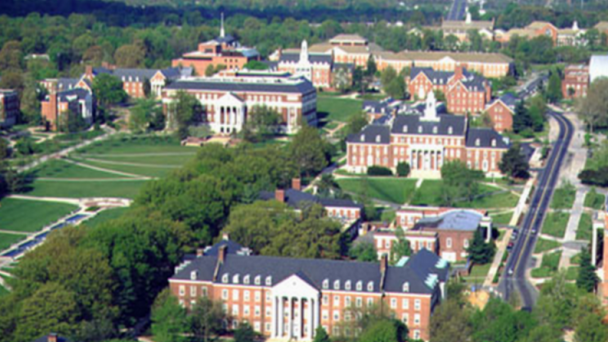
The Neuroscience and Cognitive Science (NACS) Graduate Program offer cutting-edge interdisciplinary training in several areas: Cellular and Molecular Neuroscience; Cognitive Neuroscience; Cognitive Science; Computational Neuroscience; and Systems Neuroscience.

These research activities are carried out in laboratories housed in six colleges and 17 different departments on the University of Maryland, College Park campus. Through our official partnership with the National Institutes of Health and active collaboration with Children’s National Medical Center, NACS graduate students may also receive research training.

Web Information

Website: nacs.umd.edu/ BRAIN Initiative Grant – “Crowd coding in the brain: 3D imaging and control of collective neuronal dynamics”

Contact Information

Email: NACS@umd.edu Phone:  301-405-8910 Address:2131 Biology-Psychology Bldg, University of Maryland, College Park, MD 20742

Organization

Director: Jens Herberholz

About the Program

Overall Philosophy

The Neuroscience and Cognitive Science (NACS) Program strives to educate exceptional scientists whose integrative training will form the basis for significant scientific contributions.  This is a research doctoral program designed on an apprenticeship model:  students train to become professional scientists by doing independent research and participating in all aspects of the profession under the guidance of a mentor.

Graduate Program

Students receive their doctorates from NACS. Support is available from training grants, research and teaching assistantships, and university fellowships and includes tuition and health benefits. Students have extensive opportunities for interaction through classes, seminars, special programs, and ...

OnAir Post: UMD Neuroscience and Cognitive Science

Skip to toolbar