Shedding Light on Biology of Human Consciousness

Columbia scientists have identified the brain’s ‘aha!’ moment, that flash in time when you suddenly become aware of information, such as knowing the answer to a difficult question. Today’s findings in humans, combined with previous research, provide compelling evidence that this moment, this feeling of having decided pierces consciousness when information being collected by the brain reaches a critical level.

The results of this study further suggest that this piercing of consciousness shares the same underlying brain mechanisms known to be involved in making far simpler decisions. Importantly, this study offers hope that the biological foundations of consciousness may well be within our grasp.

OnAir Post: Shedding Light on Biology of Human Consciousness
Consciousness Overview

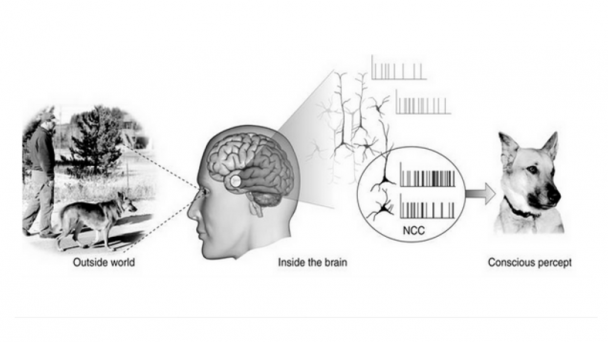
At one time consciousness was viewed with skepticism by many scientists, but in recent years it has become a significant topic of research in psychology, neuropsychology and neuroscience. The primary focus is on understanding what it means biologically and psychologically for information to be present in consciousness—that is, on determining the neural and psychological correlates of consciousness.

OnAir Post: Consciousness Overview

Network Theory and Consciousness

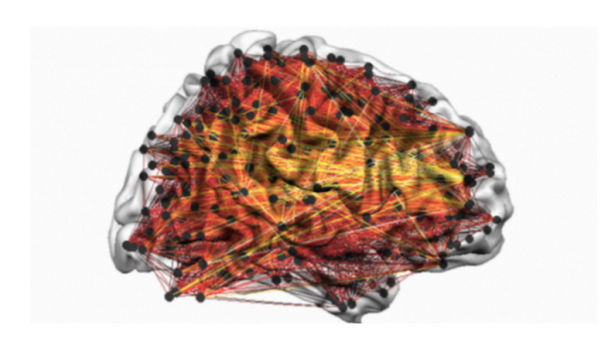
Using graph theory, a branch of mathematics concerned with explaining the interactive links between members of a complex network, such as social networks or flight routes, the researchers aimed to characterize how connections between the various parts of the brain were related to awareness.
Proceedings of the National Academy of Sciences 3/9/15

OnAir Post: Network Theory and Consciousness

Basal neurons & consciousness

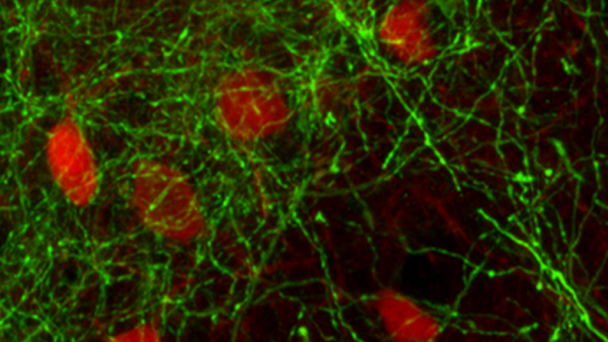
New research led by Harvard Medical School researchers has identified a specific class of neurons—basal forebrain GABA parvalbumin neurons, or PV neurons—that trigger these waves, acting as neurological conductors that trigger the cortex to “hum” rhythmically and in tune. PNAS 3/2/15

OnAir Post: Basal neurons & consciousness

The Global Brainweb

Global Workspace theory suggests a fleeting memory capacity that enables access between brain functions that are otherwise separate.This makes sense in a brain that is a brainweb, viewed as amassive parallel distributed system of highly specialized processors.

OnAir Post: The Global Brainweb

Skip to toolbar