Memory Overview

Encoding or registration: receiving, processing and combining of received information
Storage: creation of a permanent record of the encoded information in short term or long term memory
Retrieval, recall or recollection: calling back the stored information in response to some cue for use in a process or activity
The loss of memory is described as forgetfulness.

OnAir Post: Memory Overview
Neural representation of visual memory

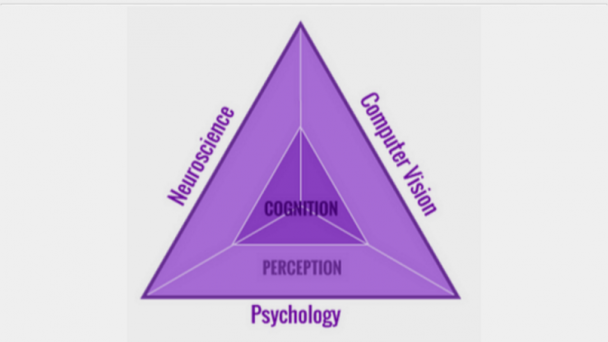
We propose to combine three technologies to predict what makes an image memorable or forgettable: neuro-imaging technologies recording where encoding happens in the human brain (spatial scale), when it happens (temporal scale), and what types of computation are performed at the different stages of storage (computational scale.

OnAir Post: Neural representation of visual memory

Support Cells in the Brain Offer a New Strategy to Boost Memory

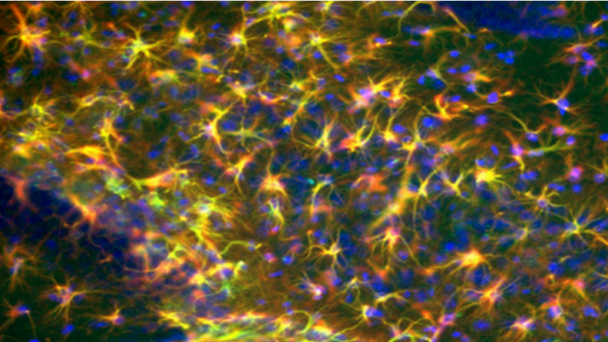
The findings suggest that astrocytes–star-shaped cells that are abundant in the brain and support neuronal function–are important regulators of information storage, and their dysfunction might lead to memory decline in disease.

Nature Neuroscience 1/26/15

OnAir Post: Support Cells in the Brain Offer a New Strategy to Boost Memory

Resveratrol May Help Prevent Memory Loss

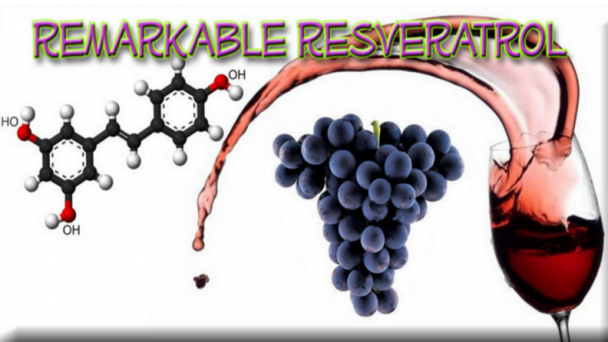
In a study published online Jan. 28 in Scientific Reports, Ashkok Shetty and his researchers atTexas A&M College of Medicine reported that treatment with resveratrol had apparent benefits in terms of learning, memory and mood function in aged rats.

OnAir Post: Resveratrol May Help Prevent Memory Loss

Neural Encoding for Learning

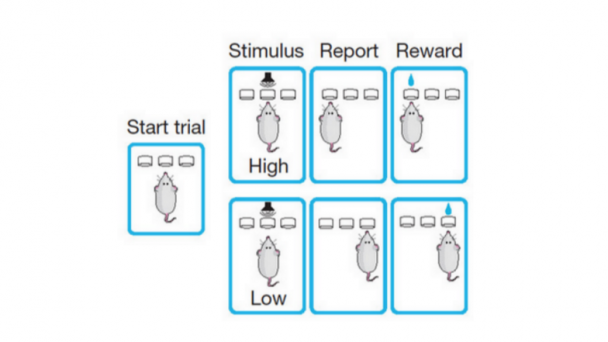
Researchers at Cold Spring Harbor Laboratory (CSHL) describe how postmortem brain slices can be “read” to determine how a rat was trained to behave in response to specific sounds. The work provides one of the first examples of how changes in the activity of individual neurons encode learning and memory in the brain. Nature 3/2/15

OnAir Post: Neural Encoding for Learning

How Curiosity Changes the Brain to Enhance Learning

New research publishing online October 2 in the Cell Press journal Neuron provides insights into what happens in our brains when curiosity is piqued. The findings could help scientists find ways to enhance overall learning and memory in both healthy individuals and those with neurological conditions.

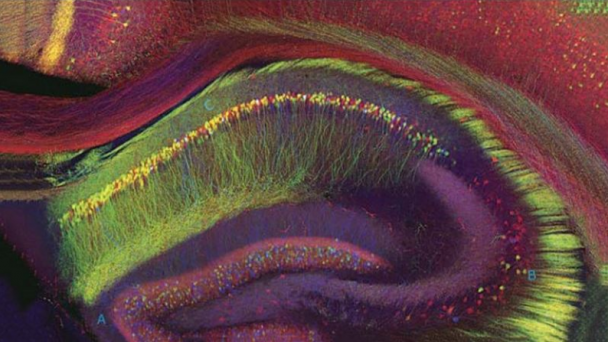
Researchers reported increased activity in the hippocampus, as well as increased interactions between the hippocampus and reward circuit.

OnAir Post: How Curiosity Changes the Brain to Enhance Learning

Genomewide Screen of Learning in Zebrafish

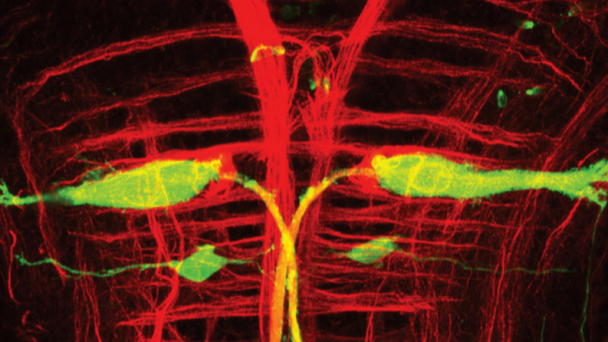
“At first we didn’t think it was important in learning, but we found that pappaa is expressed by startle-circuit neurons,” explains Granato, Penn professor of cell and development biology. The team verified the involvement of the IGF pathway by rescuing mutant behavior to normal by adding an activator of downstream molecules that interact with the IGF receptor. Neuron 3/18/15

OnAir Post: Genomewide Screen of Learning in Zebrafish

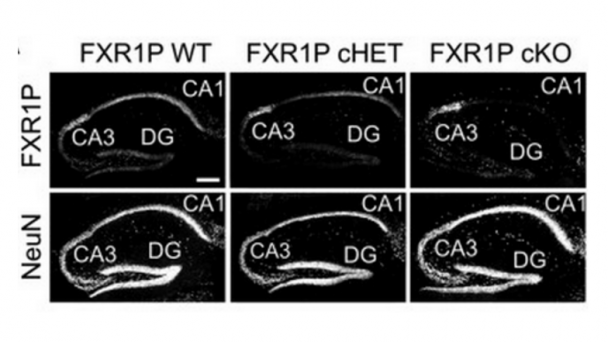
Suppressing FXR1P increases long-term memory

The removal of FXR1P from the forebrain of postnatal mice selectively enhances long-term storage of spatial memories, hippocampal late-phase long-term potentiation

OnAir Post: Suppressing FXR1P increases long-term memory

New learning mechanism for individual nerve cells

However, this has been challenged by new research findings. These indicate that there is also a third mechanism — a kind of clock function that gives individual nerve cells the ability to time their reactions.

OnAir Post: New learning mechanism for individual nerve cells

Research into brain’s GPS earns three neuroscientists Nobel Prize

"This year's Nobel Laureates have discovered a positioning system, an 'inner GPS' in the brain that makes it possible to orient ourselves in space, demonstrating a cellular basis for higher cognitive function.”

OnAir Post: Research into brain’s GPS earns three neuroscientists Nobel Prize

Skip to toolbar