
Neurons Shaping Memories of Smells

Discovery has implications for understanding epilepsy.

In a study that helps to deconstruct how olfaction is encoded in the brain, neuroscientists at University of California, San Diego School of Medicine have identified a type of neuron that appears to help tune, amplify and dampen neuronal responses to chemosensory inputs from the nasal cavity and has applications to understanding the root cause of epileptic seizures

Nature Neuroscience 3/9/15


Press Release

Understanding How Neurons Shape Memories of Smells

UC San Diego News 3//9/15 by Christina Johnson and Scott LaFee

In a study that helps to deconstruct how olfaction is encoded in the brain, neuroscientists at University of California, San Diego School of Medicine have identified a type of neuron that appears to help tune, amplify and dampen neuronal responses to chemosensory inputs from the nasal cavity.

The study, published March 9 in Nature Neuroscience, has applications to understanding the root cause of epileptic seizures, which are frequently centered in the olfactory cortex, the part of the brain that processes the sense of smell.

“Our sense of smell is complex and involves many overlapping and interconnected neuronal circuits,” said lead author James Sturgill, PhD, a postdoctoral researcher with the Center for Neural Circuits and Behavior in the Department ...

OnAir Post: Neurons Shaping Memories of Smells
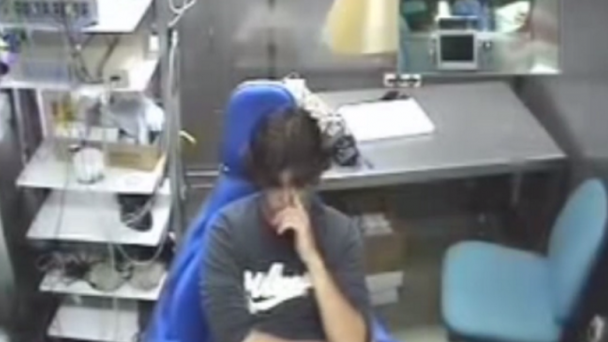
Handshakes May Engage Our Sense of Smell

People sniff their hands twice as much after a handshake, according to a Weizmann Institute study.

Why do people shake hands? A new Weizmann Institute study suggests one of the reasons for this ancient custom may be to check out each other’s odors. Even if we are not consciously aware of this, handshaking may provide people with a socially acceptable way of communicating via the sense of smell. eLife 3/3/15 (cc)

Press Release

Weizmann Institute of Science 3/3/15

Why do people shake hands? A new Weizmann Institute study suggests one of the reasons for this ancient custom may be to check out each other’s odors. Even if we are not consciously aware of this, handshaking may provide people with a socially acceptable way of communicating via the sense of smell.

Illustration: Lee Zakai
Not only do people often sniff their own hands, but they do so for a much longer time after shaking someone else’s hand, the study has found. As reported today in the journal eLife, the number of seconds the subjects spent sniffing their own right hand more than doubled after an  experimenter greeted them with a handshake. “Our findings suggest that people are not just passively exposed to socially-significant chemical signals, but actively seek them ...

OnAir Post: Handshakes May Engage Our Sense of Smell

Skip to toolbar