Inscopix and Miniature Microscopes

Inscopix is a discovery-phase neuroscience company in Palo Alto, CA, that develops integrated solutions for understanding the brain in action. Inscopix serves its clients in over a hundred academic and neuropharmaceutical research laboratories through its flagship brain imaging product, nVista, data analytics suite, Mosaic, and training workshops.

We have assembled here a number of videos about Inscopix: its products, people, and researchers.

Research

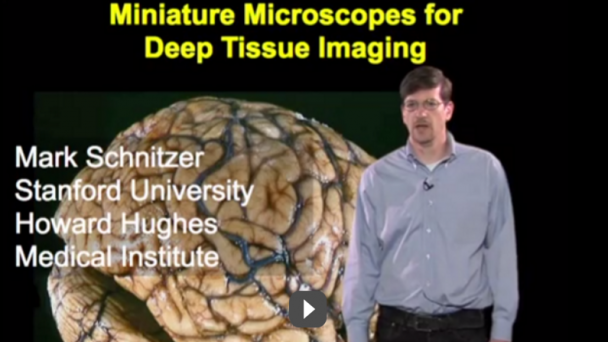
Miniature Microscopes for Deep Tissue Imaging

Published on Nov 11, 2013 iBioEducation

This lecture describes recent work on developing small microscopes for deep tissue imaging that can surgically implementing into living and awake animals. Exciting applications are described for imaging the activity and long term shape changes of single neurons in the brain.

https://www.youtube.com/watch?v=C1HO3ot0K00Video can’t be loaded because JavaScript is disabled: Microscopy: Miniature Microscopes for Deep Tissue Imaging (Mark Schnitzer) (https://www.youtube.com/watch?v=C1HO3ot0K00)

Neocortex (Somatosensory)

Published on Jun 3, 2015  by Inscopix

OnAir Post: Inscopix and Miniature Microscopes
NIH Neuroscience Challenges


NIH Data Science Distinguished Seminar Series: BRAIN/BD2K Seminar Towards Solutions to Experimental and Computational Challenges in Neuroscience Air date: Friday, August 14, 2015, 11:00:00 AM

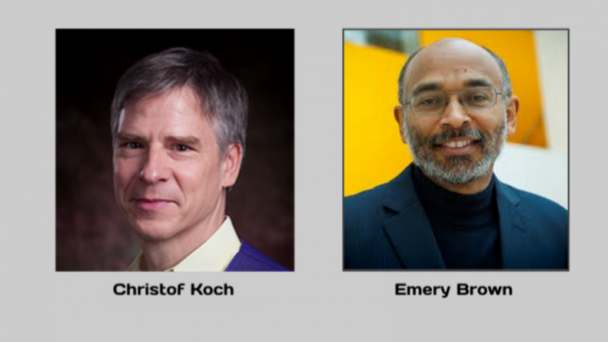
Drs. Christof Koch and Emery Brown will describe the computational or experimental challenges associated with Big Data in their respective domains of neuroscience. From the basic to applied realms, science is being transformed by the collection of data on increasingly finer resolutions, both spatially and temporally. Storing, accessing, and analyzing these data create numerous challenges as well as opportunities.

Videocast

browser does not support iframe

Attending the seminar

This is a public event at the National Institutes of Health. All individuals interested in the seminar may attend. If this will be your first time visiting the NIH we strongly encourage you to review the visitor information at http://www.nih.gov/about/visitor/index.htm and allow extra time for security and transit. Individuals with disabilities who need Sign Language Interpreters and/or reasonable accommodation to participate in this event should contact Sonynka Ngosso, at (301) 402-9816. Requests should be made at least 5 business days in advance of the event.

Christof Koch, Ph.D.

Christof Koch, Ph.D is the President and Chief Scientific Officer of the Allen Institute for Brain Science. His research interests include elucidating the biophysical mechanisms underlying neural computation, understanding the mechanisms ...

OnAir Post: NIH Neuroscience Challenges

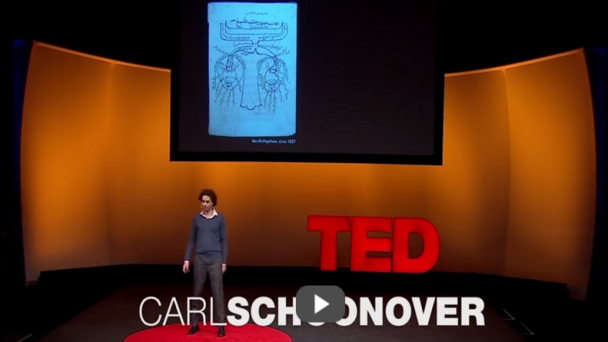
How to look inside the brain

https://www.youtube.com/watch?v=sYhMAjfdxD8Video can’t be loaded because JavaScript is disabled: How to look inside the brain – Carl Schoonover (https://www.youtube.com/watch?v=sYhMAjfdxD8)

There have been remarkable advances in understanding the brain, but how do you actually study the neurons inside it? Using gorgeous imagery, neuroscientist and TED Fellow Carl Schoonover shows the tools that let us see inside our brains.

Filmed February 2012 at TED 2012 Uploaded to YouTube on July 12, 2013 by TED

OnAir Post: How to look inside the brain

Mind Reading Computer System

https://www.youtube.com/watch?v=FKu75kiqoSoVideo can’t be loaded because JavaScript is disabled: Mind Reading Computer System May Help People with Locked-in Syndrome – Science Nation (https://www.youtube.com/watch?v=FKu75kiqoSo)

“Mind Reading Computer System May Help People with Locked-in Syndrome”

Boston University neuroscientist Frank Guenther works with the National Science Foundation’s Center of Excellence for Learning in Education, Science and Technology (CELEST), which is made up of eight private and public institutions. Its purpose is to synthesize the experimental modeling and technological approaches to research in order to understand how the brain learns as a whole system.

NSF BRAIN Initiative Science Nation – October 13, 2011

Description

Imagine living a life in which you are aware of the world around you but you’re prevented from engaging in it because you are completely paralyzed. Even speaking is impossible. For an estimated 50,000 Americans this is a harsh reality. It’s called locked-in syndrome, a condition in which people with normal cognitive brain activity suffer severe paralysis, often from injuries ...

OnAir Post: Mind Reading Computer System

Big Think Interview With Vincent Pieribone

https://www.youtube.com/watch?v=zgZMyY27tfgVideo can’t be loaded because JavaScript is disabled: Big Think Interview With Vincent Pieribone | Big Think (https://www.youtube.com/watch?v=zgZMyY27tfg)

Vincent Pieribone Profile

Professor of Cellular and Molecular Physiology and of Neurobiology, Yale University Fellow, John B. Pierce Laboratory

Dr Pieribone is developing genetically encoded fluorescent probes of membrane electrical potential. These probes allow one to use optical instruments (microscopes) to monitor the electrical activity of neurons. He has also engineered miniature imaging systems that can be head mounted on mammels and allow mobile recording of neuronal activity.

Video published on April 23, 2012 by Big Think

OnAir Post: Big Think Interview With Vincent Pieribone

Miniature Microscopes for Deep Tissue Imaging
https://www.youtube.com/watch?v=C1HO3ot0K00Video can’t be loaded because JavaScript is disabled: Microscopy: Miniature Microscopes for Deep Tissue Imaging (Mark Schnitzer) (https://www.youtube.com/watch?v=C1HO3ot0K00)
This lecture describes recent work on developing small microscopes for deep tissue imaging that can surgically implementing into living and awake animals. Exciting applications are described for imaging the activity and long term shape changes of single neurons in the brain.

Video published on Nov. 11, 2013 by iBioEducation

Mark Schnitzer Profile

Associate Professor of Biology and Applied Physics, Stanford HHMI Investigator Principal Investigator, Schnizer Group

Dr. Schnitzer has longstanding interests in neural circuit dynamics and optical imaging focusing on: the development and application of fiber-optic, micro-optic, and nanophotonic imaging techniques for studies of learning and memory; in vivo fluorescence imaging and behavioral studies of hippocampal-dependent cognition and learning; and development of high-throughput, massively parallel imaging techniques for studying brain function in Drosophila.

OnAir Post: Miniature Microscopes for Deep Tissue Imaging
Neurotech 1: Multi-Photon Microscopy

https://www.youtube.com/watch?v=lHLSFhp5HawVideo can’t be loaded because JavaScript is disabled: Neurotech 1: Multi-Photon Microscopy (https://www.youtube.com/watch?v=lHLSFhp5Haw)

“How do we see neurons, the brain’s principal functional units? Discover new views made possible by Multi-photon microscopy.”

Part 1 of 12 featuring MIT Professors Elly Nedivi and Peter So.

Video published on Sept. 24, 2014 by EyeWire

Profile of Elly Nedivi

Professor of Brain & Cognitive Sciences and Biology, MIT Neuroscience Principal Investigator, Nedivi Lab

The Nedivi lab, part of the Picower Institute for Learning and Memory, studies the cellular mechanisms that underlie activity-dependent plasticity in the developing and adult brain through studies of neuronal structural dynamics, identification of the participating genes, and characterization of the proteins they encode.

OnAir Post: Neurotech 1: Multi-Photon Microscopy

Early Cancer Detection with Photoacoustic Tomography

His laboratory invented or discovered functional photoacoustic tomography, 3D photoacoustic microscopy (PAM). PAM broke through the long-standing diffusion limit to the penetration of conventional optical microscopy and reached super-depths for noninvasive biochemical, functional, and molecular imaging in living tissue at high resolution.

Video published on June 29, 2012 by SPIETV

OnAir Post: Early Cancer Detection with Photoacoustic Tomography

Alan Jasanoff: McGovern Institute Investigator


https://www.youtube.com/watch?v=zfZjOHcOHqQVideo can’t be loaded because JavaScript is disabled: Alan Jasanoff: McGovern Institute Investigator (https://www.youtube.com/watch?v=zfZjOHcOHqQ)

Functional magnetic resonance imaging (fMRI) has revolutionized our understanding of the human brain, but the method is now approaching the limit of its capabilities. Alan Jasanoff hopes to break through this limit and to develop new technologies for imaging the molecular and cellular phenomena that underlie brain function.

Video published on Mar 9, 2010 by mittechtv

Profile

Associate Professor of Biological Engineering with appointments in Brain and Cognitive Sciences and Nuclear Science and Engineering, MIT Neuroscience Associate member of the McGovern Institute Principal Investigator, Jasanoff Lab

Functional magnetic resonance imaging (fMRI) has revolutionized our understanding of the human brain, but the method is now approaching the limit of its capabilities. Alan Jasanoff hopes to break through this limit and to develop new technologies for imaging the molecular and cellular phenomena that underlie brain function.

OnAir Post: Alan Jasanoff: McGovern Institute Investigator

Molecular Probes for Noninvasive Neuroimaging

https://www.youtube.com/watch?v=YtRZJLF2MmUVideo can’t be loaded because JavaScript is disabled: Alan Jasanoff: Molecular Probes for Noninvasive Neuroimaging (https://www.youtube.com/watch?v=YtRZJLF2MmU)

“The B.R.A.I.N. Initiative faces a major technological barrier in obtaining high resolution, real-time recordings of brain activity over large areas of the brain. Leading researchers will explore available and promising approaches to surmounting that barrier, exploring current work and future possibilities for the detection and recording of the range of relevant electrical and chemical signals in the nervous system.”

Presentation by Alan Jasanoff of Jasnoff Lab research Published on June 16, 2014 by Calit2ube

Lab Profile

Principal Investigator, Alan Jasanoff MIT Neuroscience

Jasanoff Lab is developing a new generation of functional magnetic resonance imaging (fMRI) methods to study the neural mechanisms of behavior.The Lab’s focus is on the design and application of new contrast agents that may help define spatiotemporal patterns of neural activity with far better precision and resolution than current techniques allow. Experiments using the new agents will combine the specificity of cellular neuroimaging with the whole brain coverage and noninvasiveness of conventional fMRI.


OnAir Post: Molecular Probes for Noninvasive Neuroimaging

Single molecules, cells, and super-resolution optics

https://www.youtube.com/watch?v=M2MOGnYe2lAVideo can’t be loaded because JavaScript is disabled: Single molecules, cells, and super-resolution optics (https://www.youtube.com/watch?v=M2MOGnYe2lA)

Nobel Laureate in Chemistry 2014: Eric Betzig, Janelia Research Campus, Howard Hughes Medical Institute, Ashburn, VA, USA.

From: The Nobel Lectures 2014, 2014-12-08.

Published on Jan. 8, 2015 by Vetenskapsakademien

OnAir Post: Single molecules, cells, and super-resolution optics

Imaging Life at High Spatiotemporal Resolution


https://www.youtube.com/watch?v=2R2ll9SRCeoVideo can’t be loaded because JavaScript is disabled: Eric Betzig: Imaging Life at High Spatiotemporal Resolution (https://www.youtube.com/watch?v=2R2ll9SRCeo)

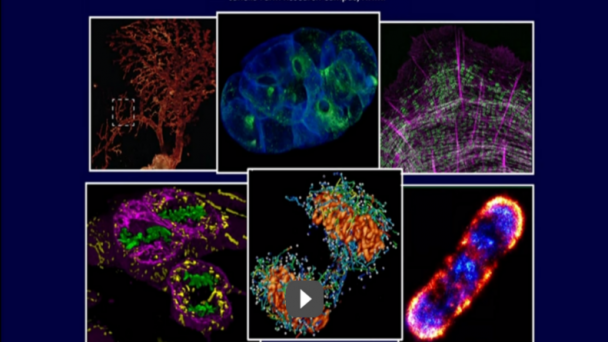
In this lecture, held on 3/9/15 at UC Berkeley, Nobel Laureate Eric Betzig, describes three areas focused on addressing the challenges of high resolution imaging: super-resolution microscopy; plane illumination microscopy using non-diffracting beams; and adaptive optics to recover optimal images from within optically heterogeneous specimens.

Published on March 15, 2015 by UC Berkeley Events

OnAir Post: Imaging Life at High Spatiotemporal Resolution

Betzig and Hess: Developing PALM Microscopy


https://www.youtube.com/watch?v=GcQ24khZzvUVideo can’t be loaded because JavaScript is disabled: Eric Betzig and Harald Hess (Janelia Farm/HHMI): Developing PALM Microscopy (https://www.youtube.com/watch?v=GcQ24khZzvU)

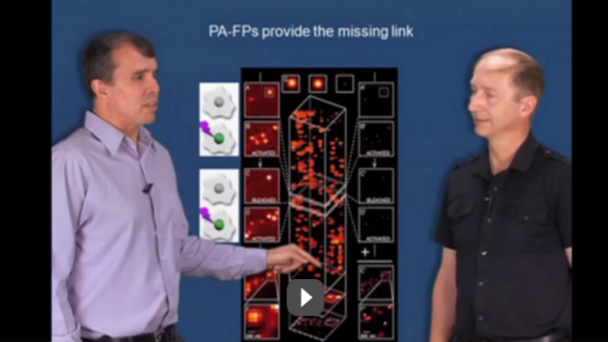
During their 20-year friendship, Eric Betzig and Harald Hess, now at Janelia Farm/HHMI, worked together and separately, in academia and industry, before eventually joining forces to develop the first super-high-resolution PALM microscope.

They tell us the story of this journey and emphasize how their unusual and varied backgrounds provided the skills to complete the project.

Uploaded on Jan. 8, 2011 by iBioMagazine

OnAir Post: Betzig and Hess: Developing PALM Microscopy

Resolving Everything: Harald Hess

https://www.youtube.com/watch?v=esC6cr6qfs8Video can’t be loaded because JavaScript is disabled: Resolving Everything (https://www.youtube.com/watch?v=esC6cr6qfs8)

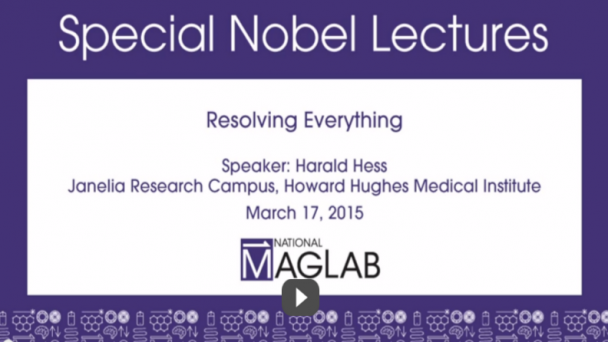
Harald Hess of the Janelia Research Campus of the Howard Hughes Medical Institute describes his path in basic physics, industry and biology and how the challenge of resolution in microscopy has guided and inspired his research.

Published April 1, 2015 by the National High Magnetic Field Laboratory

OnAir Post: Resolving Everything: Harald Hess

Inside the Lab: Karel Svoboda

https://www.youtube.com/watch?v=1jQIHrrbms8Video can’t be loaded because JavaScript is disabled: Inside the Lab: Karel Svoboda, Janelia Research Campus (https://www.youtube.com/watch?v=1jQIHrrbms8)

“An Exploration of Brain Dynamics”

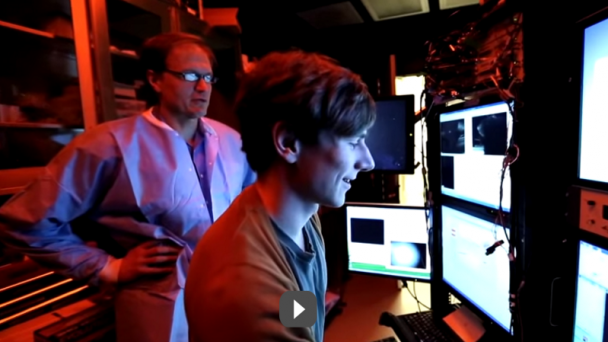
Get a behind-the-scenes look at a day in the lab of neuroscientist Karel Svoboda as his group at the Howard Hughes Medical Institute’s Janelia Research Campus pushes to build a new type of microscope and uses a virtual reality system to learn how mice explore the world.

Published on July 28, 2014 by zincfinger23


OnAir Post: Inside the Lab: Karel Svoboda

Tools for studying neurons: Loren Looger

https://www.youtube.com/watch?v=C7NUYgdzZ4YVideo can’t be loaded because JavaScript is disabled: CSHL Keynote Series; Dr. Loren Looger, HHMI Janelia Farm (https://www.youtube.com/watch?v=C7NUYgdzZ4Y)

“Tools for studying neurons, the only important cells in the brain” from the Glia in Health & Disease 7/19/2014

Presented by Dr. Loren Looger, HHMI Janelia Farm Part of Cold Springs Harbor Laboratory Keynote lecture series

Pulbished on July 21, 2014 by  CSHL Leading Strand

OnAir Post: Tools for studying neurons: Loren Looger

Electron Microscopy Imaging

https://www.youtube.com/watch?v=WAkaLEM0gTQVideo can’t be loaded because JavaScript is disabled: Virtual Tour: Electron Microscopy Imaging (https://www.youtube.com/watch?v=WAkaLEM0gTQ)

A virtual journey through the Allen Institute for Brain Science’s Electron Microscopy (EM) imaging program

Published on April 9, 2014 by Allen Institute for Brain Science

OnAir Post: Electron Microscopy Imaging

Jack L. Gallant: 2012 Allen Symposium


https://www.youtube.com/watch?t=294&v=s4FP0F7AKtQVideo can’t be loaded because JavaScript is disabled: Jack L. Gallant: 2012 Allen Institute for Brain Science Symposium (https://www.youtube.com/watch?t=294&v=s4FP0F7AKtQ)

Functional magnetic resonance imaging (fMRI) detects the location of functions in the brain better than any other method we have today. While localization is necessary, it is not sufficient for understanding how the brain works. Dr. Gallant suggests the reverse approach – to search for functional maps. That is, he uses brain activity to determine or reconstruct what a subject was looking at. To this end the Gallant lab has constructed the WordNet model, which is able to predict what an observer is seeing from 2,000 nouns and verbs. The process uses brain activity in fMRI to predict from semantic models while an observer watches a video, and the results are remarkably accurate. Dr. Gallant explains how encoding models, decoding models, and functional maps of the brain are all closely related. “Once you have encoding, you get decoding for free,” he proclaims.

Published on November 13, ...

OnAir Post: Jack L. Gallant: 2012 Allen Symposium

A neural portrait of the human mind

https://www.youtube.com/watch?v=5Yj3nGv0kn8Video can’t be loaded because JavaScript is disabled: Nancy Kanwisher: A neural portrait of the human mind (https://www.youtube.com/watch?v=5Yj3nGv0kn8)

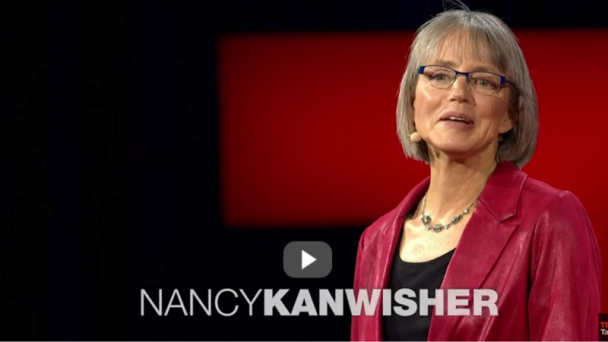
“Brain imaging pioneer Nancy Kanwisher, who uses fMRI scans to see activity in brain regions (often her own), shares what she and her colleagues have learned: The brain is made up of both highly specialized components and general-purpose “machinery.” Another surprise: There’s so much left to learn.”

Filmed March 2014 at TED 2014 Uploaded to YouTube on October 2, 2014 by TED 

OnAir Post: A neural portrait of the human mind

Optogenetics research changes brain research

https://www.youtube.com/watch?v=_bZHG-wo6_IVideo can’t be loaded because JavaScript is disabled: Optogenetics research changes brain research (https://www.youtube.com/watch?v=_bZHG-wo6_I)

How two unlikely microbes (that don’t even have brains) led to the development of one of today’s most promising brain research techniques–which is being used to study many diseases including schizophrenia and Parkinson’s.

For more information about the BRAIN Initiative visit: nsf.gov/brain

NSF BRAIN Initiative Published APRIL 18, 2014

OnAir Post: Optogenetics research changes brain research

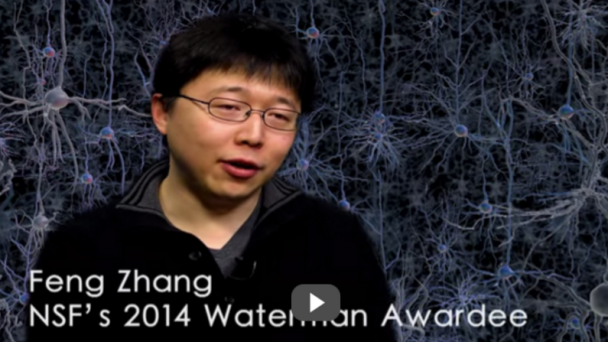
Zhang uses optogenetics to understand the brain

https://www.youtube.com/watch?v=a9wGACshiV4Video can’t be loaded because JavaScript is disabled: 2014 Waterman Awardee Feng Zhang uses optogenetics to understand the brain (https://www.youtube.com/watch?v=a9wGACshiV4)

Feng Zhang, an investigator at the McGovern Institute for Brain Research at MIT and a core member of the Broad Institute of MIT and Harvard, discusses the work of his research team on the brain and its relationship to the President’s Brain Initiative. He spoke with NSF’s Lisa-Joy Zgorski during his visit to NSF in May of 2014 to receive NSF’s most prestigious award for young investigators, the Alan T. Waterman Award, with which he was awarded $1 million to further his research.

NSF BRAIN Initiative Published May 2, 2014

OnAir Post: Zhang uses optogenetics to understand the brain

Flexible materials for innovative brain research

https://www.youtube.com/watch?v=o8B-RSAFkGAVideo can’t be loaded because JavaScript is disabled: How will flexible materials be used for innovative brain research? (https://www.youtube.com/watch?v=o8B-RSAFkGA)

Research within the BRAIN Initiative is using flexible materials to transform the way we study the brain. Researcher Todd Coleman discusses his research on flexible materials and how it’s being used to monitor everything from cognitive impairment to brain injuries.

For more information about the BRAIN Initiative visit: nsf.gov/brain

NSF BRAIN Initiative Published APRIL 2, 2014

OnAir Post: Flexible materials for innovative brain research

Perceiving Brain: Mysteries of the Brain

https://www.youtube.com/watch?v=_WPtDO6KXc8

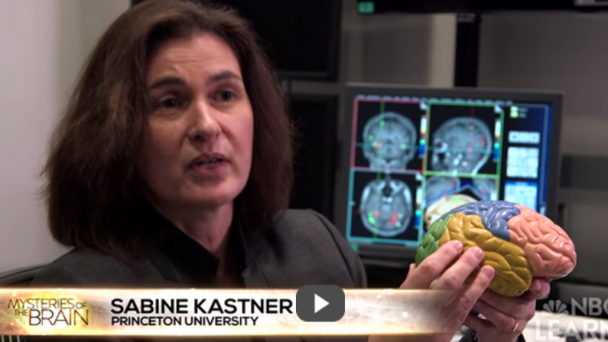
Sabine Kastner, a professor of neuroscience and psychology at Princeton University, is studying how the brain determines what information is most important in everyday scenes. Using functional magnetic resonance imaging, Kastner is able to peek inside the brain and see what areas are active when a person sees a face, place or object.

“Mysteries of the Brain” is produced by NBC Learn in partnership with the NSF.

NSF BRAIN Initiative Published June 9, 2015

OnAir Post: Perceiving Brain: Mysteries of the Brain

Picturing the Brain – Paul Thompson

https://www.youtube.com/watch?v=qkYEfWazIfcVideo can’t be loaded because JavaScript is disabled: Picturing the Brain (https://www.youtube.com/watch?v=qkYEfWazIfc)

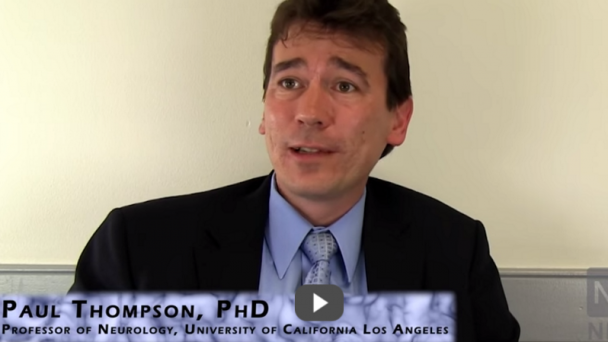
Dr. Paul Thompson talks about the work that he does at the Lab of Neuro Imaging (LONI) at UCLA.

He discusses brain health, the latest brain imaging technology and projects like ENIGMA, which involves a world-wide effort to create a brain database.

Published on July 13m 2013 by NIBIBgov

OnAir Post: Picturing the Brain – Paul Thompson

Skip to toolbar