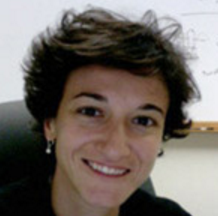
Steven Schiff

Categories: Penn State Neuroscience, NIH BRAIN Researchers, Neural Engineering, Neuroethics people, Neuromodulation researchers, Mason Neuroscience Alumni

Research interests include neural engineering, neurosurgery, epilepsy, Parkinson's Disease, wave mechanics, brain machine interfaces, EEG, electrical fields, and control theory.

OnAir Post: Steven Schiff

Steven E. Hyman, MD – Harvard

Director of the Stanley Center for Psychiatric Research at Broad Institute of MIT and Harvard University Distinguished Service Professor of Stem Cell and Regenerative Biology Current President of the Society for Neuroscience

The Stanley Center’s primary focus is on severe psychiatric disorders such as schizophrenia, bipolar disorder, autism, and ADHD. Dr. Hyman was founder and first President of the International Neurethics Society and still active in the society.

Web Information

Broad Institute webpage:  http://www.broadinstitute.org/steven-hyman 

Steve Hyman Wikipediahttps://en.wikipedia.org/wiki/Steven_Hyman#cite_note-3

Stanley Center website:  broadinstitute.org/psychiatric-disease/stanley-center-psychiatric-research/

Stanley Center Wikipedia: https://en.wikipedia.org/wiki/Stanley_Center

INS (BRAIN 2015) profile:  http://brain2015.onair.cc/international-neuroethics-society-ins/

SfN page: http://www.sfn.org/about/volunteer-leadership

Contact Information

Stanley Center Emailstanleyadmin@broadinstitute.org

Phone: 617) 714-8400

Address: Broad Institute 415 Main St. Cambridge, Mas. 02142

Biography

From 2001 to 2011, Hyman served as provost of Harvard University, the university’s chief academic officer. As provost, he had a special focus on the development of collaborative initiatives in the sciences and engineering spanning multiple disciplines and institutions. From 1996 to 2001, he served as director of the U.S. National Institute of Mental Health (NIMH), where he emphasized investment in neuroscience and emerging genetic technologies. He also initiated a series of large practical clinical trials, including an emphasis on children, a population about which little was known.

Hyman is the editor of the Annual Review ...

OnAir Post: Steven E. Hyman, MD – Harvard

Martha Farah, PhD – UPenn

Walter H. Annenberg Professor of Natural Sciences at University of Pennsylvania Director, Center for Neuroscience & Society

Dr. Farah is a cognitive neuroscientist who works on problems at the interface of neuroscience and society.  These include: the effects of childhood poverty on brain development, the expanding use of neuropsychiatric medications by healthy people for brain enhancement, novel uses of brain imaging, in e.g. legal, diagnostic and educational contexts, and the many ways in which neuroscience is changing the way we think of ourselves as physical, mental, moral and spiritual beings.

Web Information

Department webpagehttp://www.psych.upenn.edu/~mfarah/index.html

Center for Neuroscience & Society websitehttp://neuroethics.upenn.edu/

Wikipedia entry: https://en.wikipedia.org/wiki/Martha_Farah

Contact Information

Email: mfarah@neuroethics.upenn.edu

Phone: (215) 573-3531

Address: 3720 Walnut Street Philadelphia, PA 19104

Biography

Education

Massachusetts Institute of Technology S.B., 1977, Metallurgy and Materials Science S.B., 1977, Philosophy

Harvard University Ph.D., 1983, Experimental Psychology

MIT and Boston University School of Medicine Postdoctoral studies, 1983-1985, Neuropsychology

Professional History

Carnegie Mellon University Assistant Professor, Associate Professor and Professor of Psychology, 1985-1992

University of Pennsylvania Walter H. Annenberg Professor in Natural Sciences, 2006-present Professor of Psychology, 1992-present Secondary appointments in Neurology (1992-present) and Graduate School of Education (2012-present) Director, Center for Cognitive Neuroscience, 1999-2010 Director, Center for Neuroscience & Society, 2009-present

Selected Honors

Science Educator Award, Society for Neuroscience (2013) Fellow, American Academy of Arts and Sciences (2010) William James Fellow (Lifetime Achievement Award), Association for Psychological ...

OnAir Post: Martha Farah, PhD – UPenn

Judy Illes, PhD – UBC

Professor of Neurology and Canada Research Chair in Neuroethics at University of British Columbia Director of the National Core for Neuroethics at UBC

Dr. Illes is a co-Founder and Member of the Governing Board of the International Neuroethics Society. As a pioneer and eminent scholar in the field of Neuroethics, she has made ground-making contributions to ethical, social, and policy challenges at the intersection of biomedical ethics and neuroscience, including advances in stem cells, neuroimaging, neuroscience and the law, and the commercialization of health care.

Web Information

Department webpagehttp://www.ubcneurology.com/Staff

National Core for Neuroethics websitehttp://neuroethics.med.ubc.ca/

National Core for Neuroethics Blog: https://neuroethicscanada.wordpress.com/

Wikipedia entry: https://en.wikipedia.org/wiki/Judy_Illes

Contact Information

Email: jilles@mail.ubc.ca

Phone: (604) 822-0746

Address: 2211 Wesbrook Mall National Core for Neuroethics Koerner S124 Vancouver BC Canada V6T 2B5

Biography

Professional Training

1981: Brandeis University

1983: McGill University

1987: Stanford University

2001: Department of Medical History and Ethics, University of Washington

Academic positions

2008 – present: Adjunct Professor, School of Population and Public Health (University of British Columbia)

2007 – present: Professor of Neurology and Canada Research Chair in Neuroethics, Department of Medicine, Division of Neurology (University of British Columbia)

2007 – present: Faculty Associate, Brain Research Centre (University of British Columbia)

2006 – 2007: Associate Professor, ...

OnAir Post: Judy Illes, PhD – UBC

Karen Rommelfanger, PhD – Emory

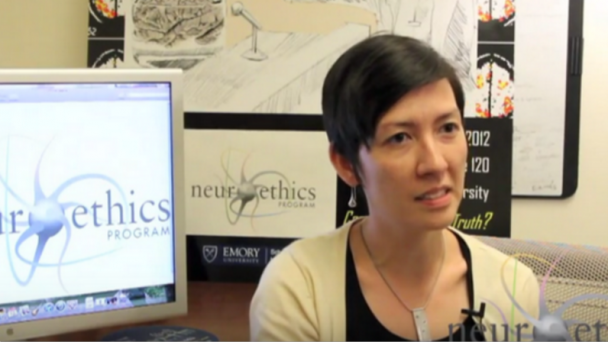
Assistant Professor, Department of Neurology  at Emory University Secondary appointment, Department of Psychiatry Program Director, Emory’s  Neuroethics Program 

Dr. Rommelfanger’s current research explores the nature and utility of placebo using Psychogenic Movement Disorders as a therapeutic model. She is also the Neuroscience Editor-in-Residence for the American Journal of Bioethics Neuroscience.


Web Information

Emory web page: http://ethics.emory.edu/people/Faculty/Karen_Rommelfanger.html

Personal websitehttp://karenrommelfanger.com/

Neuroethics Bloghttp://www.theneuroethicsblog.com/

NEW Leaders website: http://neuroethicswomenleaders.com/

Contact Information

Email: krommel@emory.edu

Phone: (404) 727-1150

Address: 1531 Dickey Drive Atlanta, Georgia 30322

Biosketch

Karen Rommelfanger is the Neuroethics ProgramDirector at the Center for Ethics and an Assistant Professor in the Department of Neurology with a secondary appointment in the Department of Psychiatry and Behavioral Sciences. Dr. Rommelfanger received her PhD in Neuroscience from Emory University, her research focused on movement disorders. Her current research explores the nature and utility of placebo using Psychogenic Movement Disorders as a therapeutic model. She is also the Neuroscience Editor-in-Residence for the American Journal of Bioethics Neuroscience.

Dr. Rommelfanger has been a neuroscience researcher for over 10 years and her work has been published in high-impact peer-reviewed journals such as the Proceedings of the National Academy of Sciences, and the Journal of Neuroscience; her research on Parkinson Disease has been featured in the popular media including Scientific American. She has presented ...

OnAir Post: Karen Rommelfanger, PhD – Emory

Nadine Kabbani

Summary

Associate Professor, Molecular Neuroscience Department, Krasnow Institute of Advanced Studies Director, GMU Program in Neuroethics

Dr. Kabbani’s research focuses on the cellular and molecular mechanisms of nicotinic receptor drug actions in the brain and immune system.


Biography

Nadine Kabbani is a faculty member at the Krasnow Institute for Advanced Study and an Associate Professor in the Department of Molecular Neuroscience with joint appointment in the School of Systems Biology. Her research focuses on the cellular and molecular mechanisms of nicotinic receptor drug actions in the brain and immune system. She is a member of the Society for Neuroscience, the Protein Society, the Society for Pharmacology and Experimental Therapeutics, and the VA Youth Tobacco Project. Dr. Kabbani serves on the editorial board for Amino Acids, Proteomics Insights, and the Children’s Medical Safety Research Institute. She has been the recipient of awards by the National Institute for Neurological Disorders and Stroke, the Philip Morris Corporation, the Foundation for Medical Research, and the International Brain Research Organization. Her research is currently funded by the VA Foundation for health youth and the Wings for Life Spinal Cord Research Foundation. She is an author on 40+ published scientific articles and several book chapters. Dr. Kabbani pursued postdoctoral ...

OnAir Post: Nadine Kabbani

Amy Gutmann, PhD – UPenn

President of the University of Pennsylvania Professor of Political Science in the School of Arts and Sciences and Professor of Communication in the Annenberg School for Communication Chair, Presidential Commission for the Study of Bioethical Issues

Since becoming president in 2004, she has been an outspoken advocate for increased access to higher education, and has led Penn to become the largest university to establish an all-grant policy for all undergraduate students who qualify for financial aid.

Web Information

UPenn webpagehttp://www.upenn.edu/president/meet-president/biography

Presidential Commission for the Study of Bioethical Issues websitehttp://bioethics.gov/

Gray Matters Reports (BRAIN 2015): http://brain2015.onair.cc/neuroscience-ethics-and-society/

Wikipedia Entryhttps://en.wikipedia.org/wiki/Amy_Gutmann

Contact Information

Email: presweb@pobox.upenn.edu

Phone: (215) 898-8721

Address: Office of the President University of Pennsylvania 1 College Hall, Room 100 Philadelphia, PA 19104-6380

Biography

Higher Education

Harvard University, Ph.D., Political Science, 1976

London School of Economics, M.Sc., Political Science, 1972

Harvard-Radcliffe College, B.A., magna cum laude, 1971

See CV for more information

Presidential Commission for the Study of Bioethical Issues

The Presidential Commission for the Study of Bioethical Issues (the Bioethics Commission) is an advisory panel of the nation’s leaders in medicine, science, ethics, religion, law, and engineering. The Bioethics Commission advises the President on bioethical issues arising from advances in biomedicine and related areas of science and technology. The Bioethics Commission seeks to identify and promote policies and practices that ...

OnAir Post: Amy Gutmann, PhD – UPenn

Henry T. Greely, JD – Stanford

Professor of Law, Stanford University Director, Center for Law and the Biosciences Director, Stanford Program in Neuroscience and Society (SPINS) At large member, BRAIN Initiative Multi-Council Working Group

Henry Greely specializes in the ethical, legal, and social implications of new biomedical technologies, particularly those related to neuroscience, genetics, or stem cell research.

Web Information

Stanford Webpage:  www.law.stanford.edu/profile/henry-t-greely

SPINS website: https://law.stanford.edu/stanford-program-neuroscience-society/

Stanford Center for Law and the Biosciences (CLB) website: https://law.stanford.edu/center-for-law-and-the-biosciences/

International Neuroethics Society founders: http://www.neuroethicssociety.org/who-are-we

Blog:  blogs.law.stanford.edu/lawandbiosciences/

Twitter: @HankGreelyLSJU

Contact Information

Email: hgreely@stanford.edu

Phone:  650 723.2517

Address: Neukom Building Room N361

BRAIN Blog posts

Turn right at the cerebellum: President Obama maps the brain

Feb. 21, 2013 by Amanda Rubin

This week, the New York Times reported on a new Obama initiative that, in comparison to gun control or the economy, might seem a little frivolous. It’s called the “Brain Activity Map.”

Three Billion Dollars

The name of the project says it all: The goal is to map the connections in the brain in the same way the Human Genome Project mapped out the genes in human DNA. It’s expected to cost about $3 billion dollars over ten years.

If that seems like a pretty heavy price tag for the American people to take on, especially now, just to let scientist go ...

OnAir Post: Henry T. Greely, JD – Stanford

James Olds

Information

Web: Schar  School page  NSF Announcement  LinkedIn page Krasnow Institute Website    Decade of the Mind

Email:  jolds@gmu.edu Phone: Address

NSF Press Release

Press Release 14-110

September 3, 2014

The National Science Foundation (NSF) has selected George Mason University’s James L. Olds to serve as assistant director for the Directorate for Biological Sciences (BIO). BIO’s mission is to enable discoveries for understanding life. BIO-supported research advances the frontiers of biological knowledge, increases our understanding of complex systems, and provides a theoretical basis for original research in many other scientific disciplines.

Olds is a director and chief academic unit officer at the Krasnow Institute for Advanced Study, a position he has held for 15 years. He is also the Shelley Krasnow University Professor of Molecular Neuroscience. The international Decade of the Mind project was begun under his leadership at Krasnow, which helped shape President Obama’s BRAIN Initiative.

“Dr. Olds has a strong record of academic leadership with an institution that has grown its global presence during his tenure,” said NSF Director France A. Córdova. “In addition to his leadership, his commitment to interdisciplinary research at Krasnow and his experience with developing scientific policy will be of great benefit to NSF and ...

OnAir Post: James Olds

Christine Grady, RN/PhD – NIH

Chief of the Department of Bioethics at the National Institutes of Health Clinical Center.  Co-chair of Neuroethics Committee, MCWG – BRAIN Inititative

Dr. Grady’s research focuses on the ethics of clinical research, especially subject recruitment, incentives, vulnerability, informed consent, and international research ethics. She is currently a member of the Presidential Commission for the Study of Bioethical Issues; and also a senior research fellow at the Kennedy Institute of Ethics and an elected fellow at the American Academy of Nursing and at the Hastings Center.

Web Information

NIH Webpagebioethics.nih.gov/people/grady-bio

Presidential Commision page:  bioethics.gov/christine-grady

NIH Clinical Center pageclinicalcenter.nih.gov/about/SeniorStaff/christine_grady

Contact Information

Email:  cgrady@cc.nih.gov

Phone:  301-496-2429

Address: 10 Center Drive Bethesda, MD 20892

Biosketch

Dr. Christine Grady is chief of the Clinical Center’s Department of Bioethics. Her research focuses on research subject recruitment, incentives, vulnerability, and international research ethics. Dr. Grady has written widely in books and scholarly journals on topics in bioethics, HIV disease, and nursing.

Dr. Grady received a bachelor’s degree in nursing and biology from Georgetown University, a master’s degree in community health nursing from Boston College, and a doctoral degree in philosophy and bioethics from Georgetown University.

She is currently a member of President Obama’s Commission for the Study of Bioethical Issues. She is a senior research fellow at the Kennedy Institute ...

OnAir Post: Christine Grady, RN/PhD – NIH

Khara Ramos, PhD – NINDS

Senior Science Policy Analyst, NINDS

Dr. Ramos supports the coordination and oversight of three main NINDS efforts: the NIH BRAIN Initiative; the work of NINDS’s Office of Scientific Liaison communicating information on the basic and translational research funded by NINDS to diverse scientific audiences; and the work of the Office of Pain Policy. She also serves as Executive Secretary and NIH liaison for the Neuroethics Workgroup of the BRAIN Multi-Council Working Group.

Web Information

LinkedIn web page: https://www.linkedin.com/pub/khara-ramos-ph-d/58/b6b/8b2

Twitter handle: @KharaRamos

Contact Information

Email: Khara.Ramos@nih.gov

Phone: 301.594.2614

Address: 31 Center Drive, Building 31 room 8a311 Bethesday, 20892


Biosketch

Stanford University Bachelor of Science (BS), Symbolic Systems 1997 – 2001

University of California, San Diego Doctor of Philosophy (Ph.D.), Neurosciences 2002 – 2007

University of Colorado at Boulder Postdoctoral Fellow September 2007June 2012(4 years 10 months)

Studied the role of central nervous system (CNS) endothelial cells in mediating chronic pain states and opioid-induced CNS inflammation

Selected Publications

From Google Scholar

Activation of adult rat CNS endothelial cells by opioid-induced toll-like receptor 4 (TLR4) signaling induces proinflammatory, biochemical, morphological, and behavioral sequelae PM Grace, KM Ramos, KM Rodgers, X Wang, MR Hutchinson, MT Lewis, … Neuroscience 280, 299-317   (2014)

Morphine activates neuroinflammation in a manner parallel to endotoxin X Wang, LC Loram, K Ramos, AJ ...

OnAir Post: Khara Ramos, PhD – NINDS

James Giordano, PhD – Georgetown


Chief of the Neuroethics Studies Program in the Pellegrino Center for Clinical Bioethics Professor, Department of Neurology, and Department of  Biochemistry Senior Science Advisory Fellow, DOD

Dr. Giordano’s ongoing research focuses upon the use of advanced neurotechnologies to explore the neurobiology of pain and other neuropsychiatric spectrum disorders; the neuroscience of moral decision-making, and the neuroethical issues arising from the use of neuroscience and neurotechnology in research, clinical medicine, public life, international relations and policy, and national security and defense.

Web Information

Georgetown web page: explore.georgetown.edu/people/jg353/

Center for Clinical Bioethicsclinicalbioethics.georgetown.edu/about

CCNELSI websiteccnelsi.com/index.html

Neuroethics Studies Program web page: clinicalbioethics.georgetown.edu/neuroethicsprogram 

Neuroethics Studies Program (BRAIN 2015 profile): brain2015.onair.cc/neuroethics-studies-program

Neurobioethics.org website: neurobioethics.org/

NeuroBioEthics Blog: neurobioethics.wordpress.com/

Twitter handle: twitter.com/NeuroBioEthics?lang=en

Amazon author’s pageamazon.com/James-Giordano/

Journal of Philosophy, Ethics and Humanities in Medicine website: peh-med.com/

Contact Information

Email: james.giordano@georgetown.edu

Phone: 202-687-1160

Biosketch

Dr. James Giordano is Chief of the Neuroethics Studies Program in the Pellegrino Center for Clinical Bioethics, and Professor in the Department of Neurology and Department of Biochemistry, and Co-director of the O’Neill-Pellegrino Program in Brain Science and Global Health Law and Policy at Georgetown University Medical Center, Washington, DC, USA. He is Clark Faculty Fellow of Neurosciences and Ethics at the Human Science Center of Ludwig Maximilians Universität, Munich, Germany, where he previously ...

OnAir Post: James Giordano, PhD – Georgetown

Skip to toolbar