Implantable Brain MEMS-MAGSS


Summary

Principal Investigator(s): Steven J. Schiff and Srinivas Tadigadapa Title: Implantable brain microelectromechanical magnetic sensing and stimulation (MEMS-MAGSS) Category: Large-Scale Recording and Modulation Project Number: 1R21EY026438-01     NIH webpage Lab:  Center for Neural Engineering   University: Penn State Neuroscience

We seek to offer proof-of-concept testing and development of a novel class of MEMS-MAGSS technology. This project would produce a ‘first-of-kind’ technology capable of 1) cellular resolution detection of spiking activity in neurons, 2) cellular level modulation of neuronal firing, 3) adaptve noise cancellation enabling use outside of magnetically shielded environments, 4) room-temperature operation enabling packaging for long-term implantation within with biological tissue for animal or human use, and 5) a clear translational pathway for long-term human implantation across a person’s life-span.

Categories: Penn State Neuroscience, NIH 2015-16 grants, and Research (Neuromodulation)


Project Description

This NIH BRAIN Initiative R21 will initiate development of a completely Implantable Brain Microelectromechanical Magnetic Sensing and Stimulation (MEMS-MAGSS) technology. Significance: We seek to offer proof-of-concept testing and development of a novel class of MEMS-MAGSS technology, to address the NIH BRAIN Initiative: New Concepts and Early-Stage Research for Large-Scale Recording and Modulation in the Nervous System (R21). The current state of the art for large-scale recording of neuronal activity does not have cellular resolution for sensing and ...

OnAir Post: Implantable Brain MEMS-MAGSS

Neuroscape Lab & Glass Brain

The Neuroscape Lab is using newly emerging technology with the primary goal of driving rapid translation of neuroscience to real-world solutions. The Glass Brain visualization is one of the lab's projects.

It is being developed as a core research facility at the UCSF Neuroscience Imaging Center (NIC) under the direction of Dr. Adam Gazzaley.

OnAir Post: Neuroscape Lab & Glass Brain

Decoding and Modulation of Human Language

Principal Investigators: Behnaam Aazhang, PhD – Rice and Nitin Tandon, MD – UT Health Title: Micro-scale Real-time Decoding and Closed-loop Modulation of Human Language BRAIN Category: Neuroengineering and Brain-inspired concepts and design

The engineering objective is to develop biocompatible microchips to vastly enhance our insight into language and other cognitive processes and learning. Miniaturized microchips in silicon technology will be developed that can record neural signals, digitize them, and transmit the signals to an in vitro receiver wirelessly.

Abstract

Award Number: #1533688

Humans produce language, which is a defining characteristic of our species and our civilization. We can select words precisely out of a large lexicon with remarkably low error rates. It is perhaps not surprising that this complex speech production system is easily affected by disease. Brain damage induced language disorders affect millions of Americans, and there is little hope of remediation. Research on the anatomical, physiological, and computational bases of speech production has made important strides in recent years but this has been limited by a glaring lack of information on the dynamics of the process. This limitation results from the low spatio-temporal resolution of the available tools to collect data and the effectiveness of the current tools for analysis. Our driving vision ...

OnAir Post: Decoding and Modulation of Human Language

qEEG in freely behaving people

Principal Investigator: Jose Luis Contreras-Vidal, University of Houston Neuroscience Title:  Assaying neural individuality and variation in freely behaving people based on qEEG BRAIN Category: Individuality and Variation

The goals of this research are to uncover neural signals associated with the passive and interactive perception/production of art and to assess the long-term stability of neural activity acquired via quantitative electroencephalography (or qEEG).

Abstract

Award Number:#1533691

This project will deploy noninvasive Mobile Brain-body Imaging devices (MoBI) in a public museum with the goal of assaying individuality and variation in neural activity as it occurs (e.g., “in action and context”) in a large and diverse group of people, including children, experiencing fixed and interactive art exhibits. A natural setting such as an art museum attracts thousands of people with rich demographic factors such as age, sex, education level, occupation, and other factors such as health, medication and neurological status, thereby providing a unique opportunity to study the population distribution, accuracy and stability of neural activity and advance understanding of the dynamics of complex neural and cognitive systems in natural environments. The broader impacts of this research include integrating the arts, science and engineering to advance brain science; advancing the regulatory science of biomedical devices by uncovering biometric neural data ...

OnAir Post: qEEG in freely behaving people

Nanomagnetic Stimulation Capability

Principal Investigators: Sydney Cash, MD/PhD – Mass General and Nian X. Sun, PhD – Northeastern Title: Nanomagnetic Stimulation Capability for Neural Investigation and Control BRAIN Category: Neuroengineering and Brain-inspired concepts and design

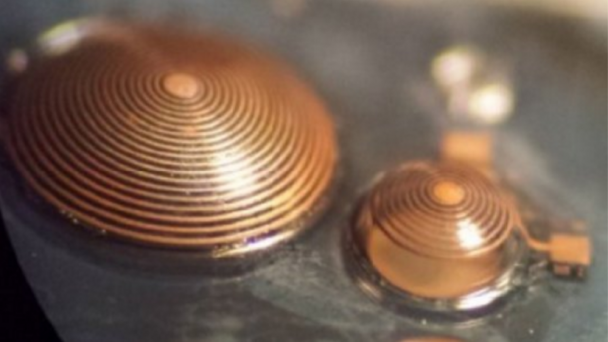
Image from Cortical Physiology Lab – Single Neural Channel

Abstract

Award Number: ##1533484

Abstract not available

NSF Project Information

NSF webpage:  nsf.gov/awardsearch/showAward?AWD_ID=1533484&HistoricalAwards

NSF Org: ECCS   Div Of Electrical, Commun & Cyber Sys
Start Date:  September 1, 2015      End Date: August 31, 2019 (Estimated)

Awarded Amount to Date: $363,640.00

Investigator(s): Nian Sun nian@ece.neu.edu

NSF Program(s): BIOMEDICAL ENGINEERING, IntgStrat Undst Neurl&Cogn Sys

Program Reference Code(s): 8089, 8091, 8551

Sponsor: Northeastern University 360 HUNTINGTON AVE BOSTON, MA 02115-5005 (617)373-2508

NSF Project Information

NSF webpage:  nsf.gov/awardsearch/showAward?AWD_ID=1533484&HistoricalAwards

NSF Org: ECCS   Div Of Electrical, Commun & Cyber Sys

Start Date:  September 1, 2015      End Date: August 31, 2019 (Estimated)

Awarded Amount to Date: $456,364.00

Investigator(s): Sydney Cash SCASH@PARTNERS.ORG

NSF Program(s): BIOMEDICAL ENGINEERING, IntgStrat Undst Neurl&Cogn Sys

Program Reference Code(s): 8089, ...

OnAir Post: Nanomagnetic Stimulation Capability

Integrating neural interfaces & machine intelligence for prosthetics

Principal Investigators: Charles Liu, PhD – USC; Kapil Katyal, PhD – JHU; Richard Andersen, PhD – Caltech Title: Integrating neural interfaces and machine intelligence for advanced neural prosthetics BRAIN Category: Neuroengineering and Brain-inspired concepts and design 

This collaborative project will decode high-level cognitive actions from neural signals recorded in the parietal cortex of a tetraplegic human, then carry out those intents using a smart robotic prosthesis. Experimental results will be used to construct BMI control algorithms optimized to decode these cognitive signals.

Abstract

Brain-machine interfaces (BMI) read signals directly from the brain to control external devices such as robotic limbs. While this technology has great potential to benefit people who are paralyzed, BMIs often have poor performance because they use noisy, low-level signals to simultaneously control many aspects of the robotic limb’s movements. In contrast, this project will address this shortcoming by reading high-level intents from the brain in order to control an intelligent robotic system. These changes reflect cutting-edge advances in neuroscience and machine intelligence and will require close cooperation between scientists, engineers, and physicians. The project aims to leverage expertise across these diverse fields in order to generate significant improvements in BMI technology to advance the national health, increase scientific understanding of the brain, and lead to dramatic ...

OnAir Post: Integrating neural interfaces & machine intelligence for prosthetics

Optogenetics captures neuronal transmission

EPFL scientists,Aurélie Pala and Carl Petersen, have observed and measured synaptic transmission in a live animal for the first time, using “Optogenetics” that combines genetics with the physics of light.

Using these approaches, the researchers looked at how the light-sensitive neurons connected to some of their neighbors: small, connector neurons called “interneurons”. In the brain, interneurons are usually inhibitory.

Neuron 1/15

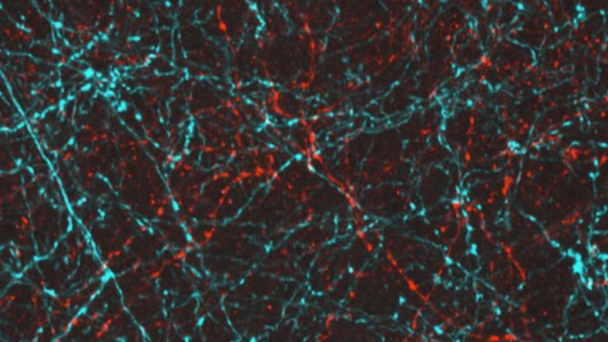
A reconstruction of a pair of synaptically connected neurons (credit: Aurélie Pala/EPFL)

Press Release

from Ecole Polytechnique Federale de Lausanne in Eureka Alert, AAAS

Optogenetics captures neuronal transmission in live mammalian brain

Neurons, the cells of the nervous system, communicate by transmitting chemical signals to each other through junctions called synapses. This “synaptic transmission” is critical for the brain and the spinal cord to quickly process the huge amount of incoming stimuli and generate outgoing signals. However, studying synaptic transmission in living animals is very difficult, and researchers have to use artificial conditions that don’t capture the real-life environment of neurons. Now, EPFL scientists have observed and measured synaptic transmission in a live animal for the first time, using a new approach that combines genetics with the physics of light. Their breakthrough work is published in ...

OnAir Post: Optogenetics captures neuronal transmission

Enhancers define cortical interneuron types

Principal Investigator: John L. R. Rubenstein UCSF Neuroscience Title: “Identification of enhancers whose activity defines cortical interneuron types” BRAIN Category: Tools for Cells and Circuits (RFA MH-14-216)

Dr. Rubenstein and colleagues plan to identify enhancer molecules specific to particular types of interneurons – that relay neural signals – and use this information to profile distinct cell types and new ways to manipulate genes.

NIH Webpages

Cortical Circuits: Projection Neurons and Interneurons

Project Description

Molecular definitions of neural cell types largely depend on the expression of RNAs or proteins as assessed by in situ hybridization, RNA array and sequencing, and immunohistochemistry. However, recent studies are demonstrating that gene regulatory elements, such as enhancers, can have highly specific spatial and temporal activity patterns in the developing brain. Thus, enhancer activity can be used to define neural cell types, and importantly, also have other broad applications. First, they can be used as tools to drive gene expression in specific cell types, which can then be used to visualize and/or purify the cells (GFP), modify gene expression in the cells (Cre), modify electrical activity (channel rhodopsin), and visualize electrical activity in the cells (GCaMP). Secondly, knowledge about the nature and position of enhancers enables geneticists ...

OnAir Post: Enhancers define cortical interneuron types

Remote regulation of neural activity

The Stanley team will focus on the development of tools to instantly and precisely target cell activity deep in the brain using radio waves, nanoparticles and genetically modified viruses.

NIH Webpages

OnAir Post: Remote regulation of neural activity

Optogenetic toolkit for control of cells

PI: Gregory Hannon,  Hannon Lab Institution: Cold Spring Harbor Laboratory Title: “An optogenetic toolkit for the interrogation and control of single cells.” BRAIN Category: Tools for Cells and Circuits (RFA MH-14-216)

Dr. Hannon’s group will develop optogenetic techniques that use pulses of light to control genes and isolate proteins in specific cell types in the brain for molecular studies.

Project Description

Our understanding of brain function at the cellular and circuit level is critically dependent on the ability to interrogate and alter neural cells withhigh specificity. The use of light, either through single-photon or multi- photon excitation, is the onl method that provides sufficient resolution to probe the brain at the cellular and subcellular levels. While light-activated molecules, like optogenetic proteins or photocaged compounds, have allowed many key insights in neuroscience, their use is still limited to those processes that can be affected by membrane channels. We propose to develop a toolkit allowing the interrogation, regulation, and modification of genetic information in brain cells using light. We wll build on a technology we have recently developed, “LaserTag”, based on the light-dependent interaction between protein tags (i.e. SNAP-tag or HALO-tag) and caged chemical ligands. Such interaction can be either use to recover molecules through affinity purification or to force the ...

OnAir Post: Optogenetic toolkit for control of cells

Dreadd2.0: A Chemogenetic Toolkit

Principal Investigator: Bryan L Roth UNC Neuroscience Title: ” Dreadd2.0: An Enhanced Chemogenetic Toolkit” BRAIN Category: Tools for Cells and Circuits (RFA MH-14-216)

Dr. Roth and colleagues will build second generation technology that uses artificial neurotransmitters and receptors to manipulate brain activity simultaneously across select cells and pathways to understand their functions and potentially treat brain disorders.

NIH Webpages

Roth’s Lab has pioneered the use of directed molecular evolution to create GPCRs which are suitable for remotely controlling cellular signaling. Using a variety of mouse genetic approaches (e.g. Cre-mediated recombination. they are able to control neuronal firing and non-neuronal signaling in real-time in awake, freely moving animals.Ongoing projects are to use this technology to deconstruct the neuronal requirements for simple and complex behaviors, particularly as they relate to schizophrenia and drug abuse

Project Description

The Brain Research through Advancing Innovative Neurotechnologies (BRAIN) Initiative has the ambitious goal of elucidating how neuronal ensembles interactively encode higher brain processes. To accomplish this goal, new and improved methods for both recording and manipulating neuronal activity will be needed. In this application, we focus on technologies for manipulating neuronal activity. The major significance of this application is that we will provide an enhanced chemogenetic toolbox that ...

OnAir Post: Dreadd2.0: A Chemogenetic Toolkit

Monkey controls a robot with its thoughts

https://www.youtube.com/watch?v=CR_LBcZg_84Video can’t be loaded because JavaScript is disabled: Miguel Nicolelis: A monkey that controls a robot with its thoughts. No, really. (https://www.youtube.com/watch?v=CR_LBcZg_84)

“Can we use our brains to directly control machines — without requiring a body as the middleman? Miguel Nicolelis talks through an astonishing experiment, in which a clever monkey in the US learns to control a monkey avatar, and then a robot arm in Japan, purely with its thoughts. The research has big implications for quadraplegic people — and maybe for all of us.”

Filmed April 2012 at TEDMED 2012 Uploaded to YouTube on February 18, 2013 by TED  

TED Talks webpage

OnAir Post: Monkey controls a robot with its thoughts

Taking genetics out of optogenetics

Light can be used to activate normal, non-genetically modified neurons through the use of targeted gold nanoparticles—a new technique that could hold promise for treating diseases such as macular degeneration.

“Many optogenetic experimental designs can now be applied to completely normal tissues or animals, greatly extending the scope of these research tools and possibly allowing for new therapies involving neuronal photostimulation.”

Neuron 2015.02.033

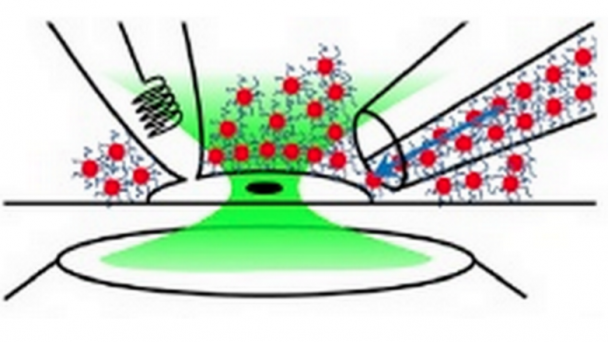
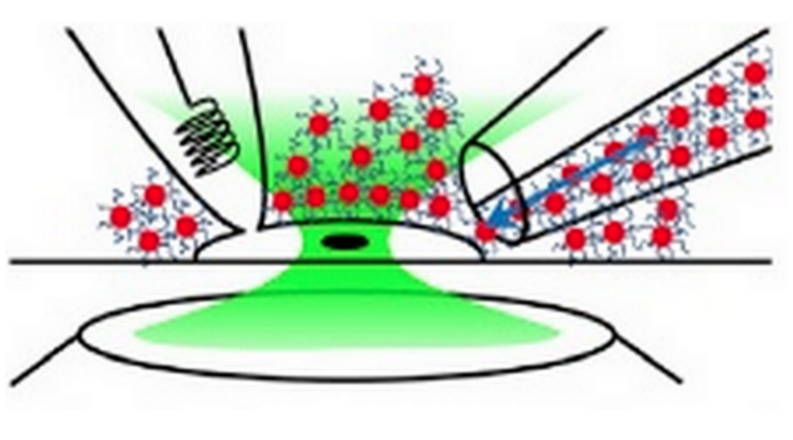
Funtionalized heated gold nanoparticles are not washed away, allowing them to serve a neural stimulators (credit: Joa˜ o L. Carvalho-de-Souza/Neuron)

Press Release

From University of Chicago News 3/12/15 by Kevin Jiang

New technique uses light to take genetics out of optogenetics

Gold nanoparticles enable stimulation of non-genetically modified neurons

Light can be used to activate normal, non-genetically modified neurons through the use of targeted gold nanoparticles—a new technique that could hold promise for treating diseases such as macular degeneration, scientists from the University of Chicago and the University of Illinois at Chicago report March 12 in the journal Neuron. This technique represents a significant technological advance with potential advantages over current optogenetic methods.

“This is effectively optogenetics without genetics,” said study senior author Francisco Bezanilla, the Lillian Eichelberger Cannon Professor of Biochemistry and Molecular Biology at ...

OnAir Post: Taking genetics out of optogenetics

Bioelectricity can Control Brain Development

Bioelectrical signals among cells control and instruct embryonic brain development and manipulating these signals can repair genetic defects and induce development of healthy brain tissue in locations where it would not ordinarily grow.

These bioelectric signals are implemented by changes in the voltage difference across cell membranes – called the cellular resting potential — and the patterns of differential voltages across anatomical regions.

Journal of Neuroscience 3/11/15

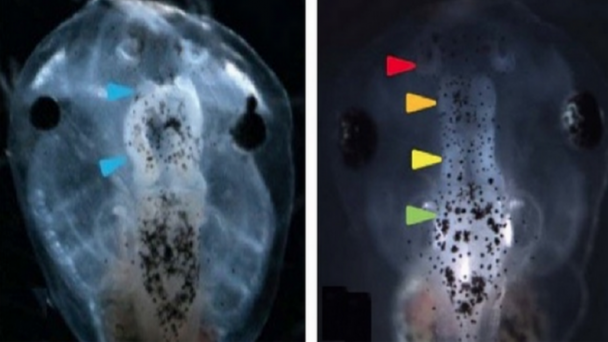
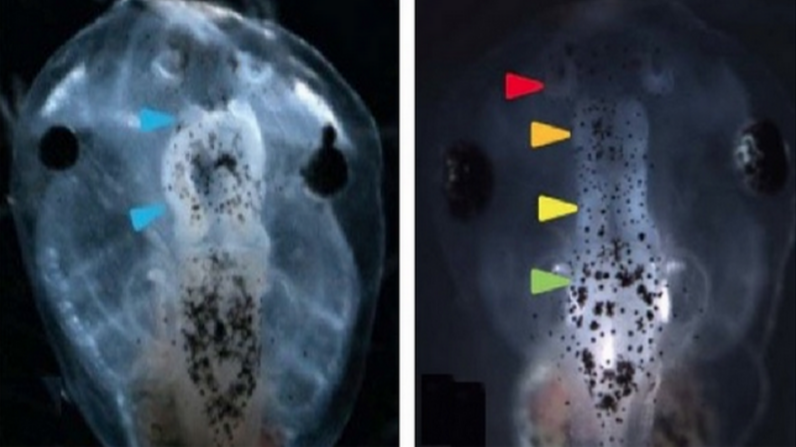
Left: normal tadpole brain. Center: injections with a suppressor of neural induction (Notch) caused a significantly elevated incidence of malformed brain in tadpole embryos, including near complete loss of forebrain/olfactory bulbs, and malformed midbrain and eyes. The embryos also exhibited loss of the normal voltage pattern. Right: Restoring hyperpolarization (normal voltage pattern) restored normal brain morphology, with well-formed forebrain/olfactory bulb, midbrain, and hindbrain. (credit: Vaibhav P. Pai et al./ The Journal of Neuroscience)

Press Release

Tufts University Now 3/11/15

Bioelectricity Plays Key Role in Brain Development & Repair

More than on/off switch, electric signals tell cells where & how to grow

MEDFORD/SOMERVILLE, Mass.—  Research reported today by Tufts University biologists shows for the first time that bioelectrical signals among cells control and instruct embryonic brain development and manipulating these ...

OnAir Post: Bioelectricity can Control Brain Development

Patterned activity and codes for behavior

Principal Investigator: John Maunsell Neuroscience at University of Chicago Title: “The role of patterned activity in neuronal codes for behavior” BRAIN Category: Understanding Neural Circuits (RFA NS-14-009)

Dr. Maunsell’s team will explore how large populations of neurons process visual information, using a newly developed light stimulation technique to induce brain cell activity in the visual cortex of mice.

NIH Webpages

Project Description

A key aspect of brain function is how the activity of neuronal populations encodes information that is used to guide behavior. A longstanding model system to understand population coding is the visual cerebral cortex, because its structure and anatomy are well understood, and because visual stimuli can be presented to subjects with high levels of temporal and spatial control. Thousands or more neurons fire action potentials in response to a single visual stimulus, and an important open question is how this population response carries information – how the detailed timing and pattern of these spikes across neurons is decoded to guide behavior. Because it is known that genetics controls the identity and morphology of neurons, and influences which other neurons they form synaptic partners with, it appears likely that the precise details of which neurons in a population fire spikes is vitally important for behavior. But ...

OnAir Post: Patterned activity and codes for behavior

Crowd coding in the brain

Principal Investigator: Patrick Kanold UMD Neuroscience and Cognitive Science Title: “Crowd coding in the brain: 3D imaging and control of collective neuronal dynamics” BRAIN Category: Understanding Neural Circuits (RFA NS-14-009)

Dr. Kanold and his team propose cutting edge methods to stimulate neurons at different depths in the auditory cortex, and will use new computational methods to understand complex interactions between neurons in mice while testing their ability to hear different sounds.

NIH Webpages

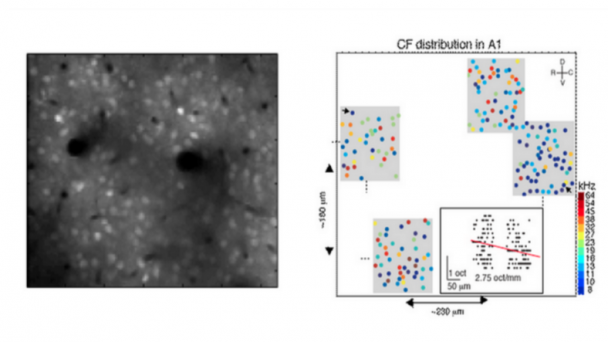
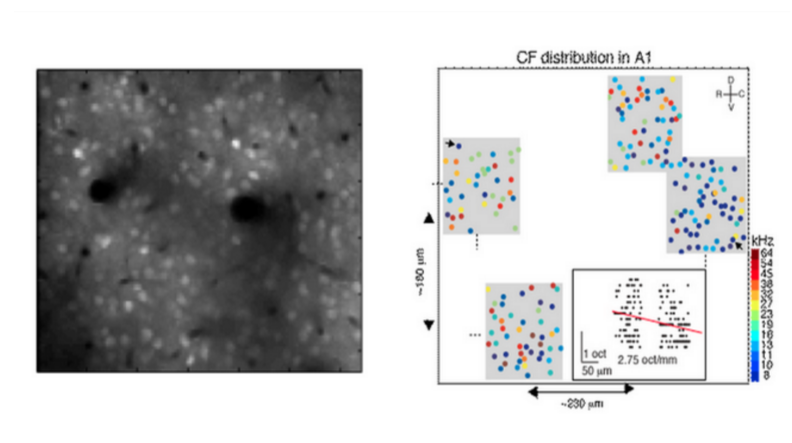
To overcome this we extensively use in vivo 2-photon imaging which can detects the activity of many single neurons in the brain of a living animal. the image below on the left shows many neurons in the brain loaded with a Ca-indicator dye which reports neuronal activity.

Project Description

The cortex is a laminated structure that is thought to underlie sequential information processing. Sensory input enters layer 4 (L4) from which activity quickly spreads to superficial layers 2/3 (L2/3) and deep layers 5/6 (L5/6) and other cortical areas eventually leading to appropriate motor responses. Sensory responses themselves depend on ongoing, i.e. spontaneous cortical activity, usually in the form of reverberating activit from within or distant cortical regions, as well as the state and behavioral context of the animal. Receptive ...

OnAir Post: Crowd coding in the brain

3D Holography for Optogenetic Manipulation

Principal Investigator: Serge Picaud Pierre and Marie Curie University Title: “Three Dimensional Holography for Parallel Multi-target Optogenetic Circuit Manipulation” BRAIN Category: Large-Scale Recording-Modulation – Optimization (RFA NS-14-008)

Dr. Picaud’s team will continue its development of holographic imaging to use lasers to induce the natural electrical activity of neurons and test theories of how circuits produce behaviors in a range of animal models.

NIH Webpages

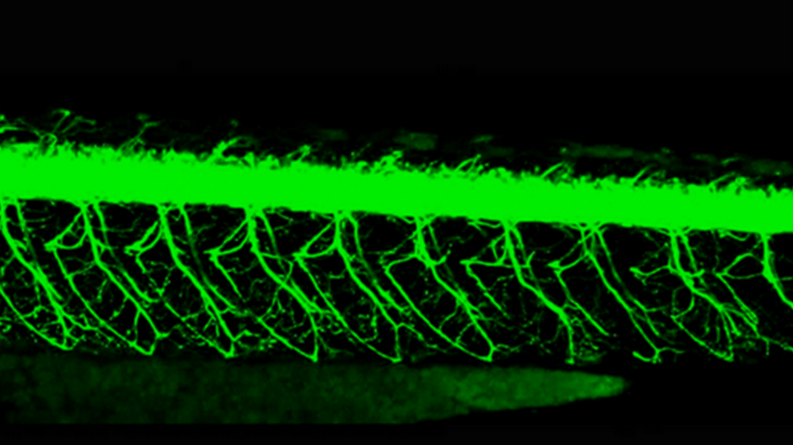
Zebrafish motoneurons visible thanks to a green fluorescent molecule, the GFP (Green Fluorescent Protein)© Inserm/Leclerc, Philippe

Project Description

Understanding communication between neurons, who is talking to whom, and what language they are speaking, is essential for discovering how brain circuits underlie brain function and dysfunction. Over the past decades, Neuroscience has made exponential progress toward recording and imaging communication between neurons. In addition, geneticists have recently developed the capability to manipulate neurons with light through the expression of light-activated microbial proteins called “opsins.” Now, neuroscientists can drive neural circuits in order to determine how they give rise to sensation, perception, and cognitive function. In order to take full advantage of “optogenetic” tools, we are developing holographic methods to deliver patterned light into brain tissue, to enable simultaneous activation of multiple neurons, independently controlling the strength and ...

OnAir Post: 3D Holography for Optogenetic Manipulation

Optical control of synaptic transmission

Principal Investigator: Richard  Kramer UC Berkeley Helen Wills Neuroscience Institute Title: ” Optical control of synaptic transmission for in vivo analysis of brain circuits and behavior” BRAIN Category: Large-Scale Recording-Modulation – Optimization (RFA NS-14-008)

Dr. Kramer’s team will develop light-triggered chemical compounds that selectively activate or inhibit neurotransmitter receptors on neurons, to precisely control the signals sent between brain cells in behaving animals.

NIH Webpages

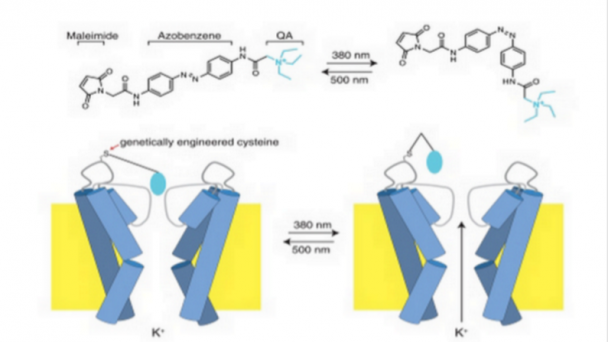
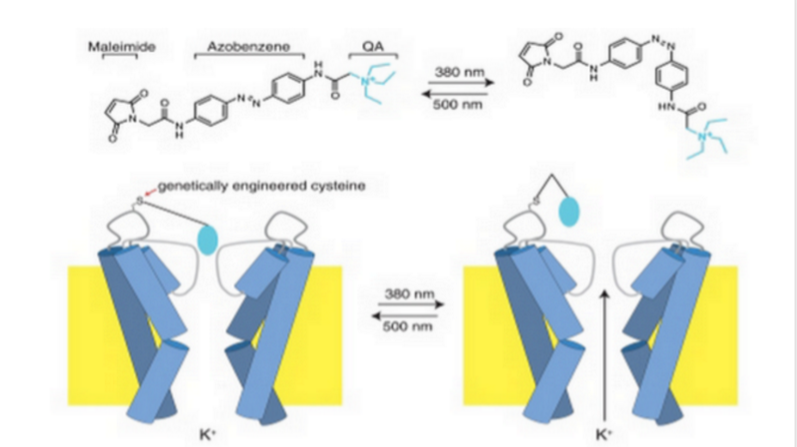
Targeting Specific Channels and Receptors for Photocontrol – We have developed a strategy for photocontrol of particular ion channels and receptors with “photoswitchable tethered ligands” (PTLs).

Project Description

Optogenetics has revolutionized neuroscience by making it possible to use heterologously expressed light-gated ion channels and pumps to stimulate or inhibit action potential firing of genetically selected neurons in order to define ther roles in brain circuits and behavior. Since the flow of information through neural circuits depends on synaptic transmission between cells, an important next technological step is to bring optogenetic control to the neurotransmitter receptors of the synapse. The Optogenetic Pharmacology that we propose makes this possible. In this approach genetically-engineered neurotransmitter receptor channels and G protein coupled receptors (GCPRs) from synapse are derivatized with synthetic Photoswitched Tethered Ligands (PTLs) and thereby made controllable by light. ...

OnAir Post: Optical control of synaptic transmission

Electrophysiological Recording and Control

Principal Investigator: Baldwin Goodell Graymatter Research Title: “Large-Scale Electrophysiological Recording and Optogenetic Control System” BRAIN Category: Large-Scale Recording-Modulation – Optimization (RFA NS-14-008)

Dr. Goodell and his colleagues aim to develop optrodes, which are implantable columns of lights and wires for simultaneous electrical recording of neurons and delivery of light flashes to multiple brain areas.

NIH Webpages

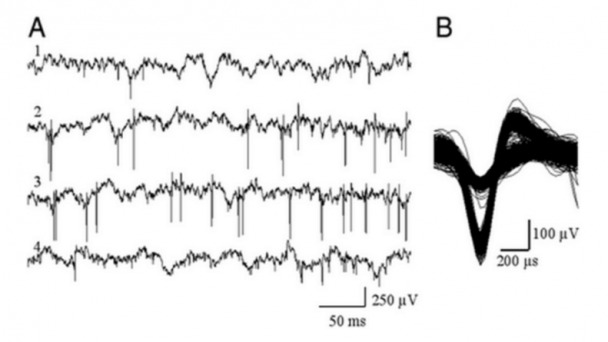
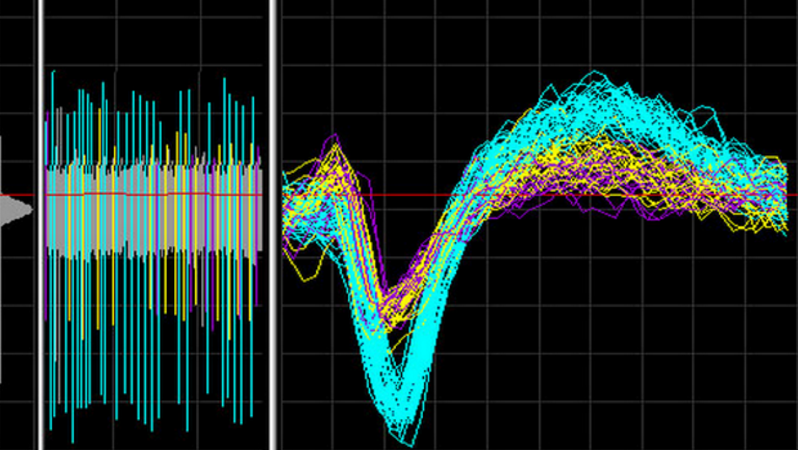
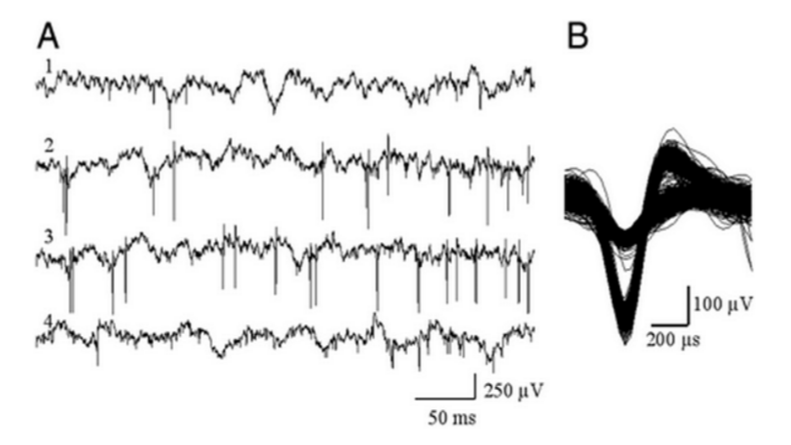
Example data collected from 4 electrodes during a single recording session. A: short epoch of raw data sampled from 4 electrodes in area 7a of the posterior parietal cortex of an alert monkey. The signals are broadband (1 Hz to 10 kHz). Extracellular action potentials are visible as negative going spikes in the signals. B: plot of 1,000 superimposed waveforms extracted from the high-pass filtered signal on channel 3. The high-amplitude waveforms reveal a single unit that is well separated from the lower amplitude multiunit activity.

Project Description

In order to gain a greater understanding of the neural mechanisms that mediate human cognitive function new approaches and technologies are needed to dramatically expand the ability to record and manipulate the activity of large numbers of neurons throughout widespread areas of the primate brain. Over the past 5-10 years, our groups have made two major ...

OnAir Post: Electrophysiological Recording and Control

Optogenetic mapping of synaptic activity

Principal Investigator: John Yu-Luen Lin Neuroscience at UCSD Title: “Optogenetic mapping of synaptic activity and control of intracellular signaling” BRAIN Category: Large-Scale Recording-Modulation – New Technologies (RFA NS-14-007)

Dr. Lin’s team will create molecules that, when they are triggered by a pulse of light, allow scientists to test for communication between neurons in specific circuits of the brain.

NIH Webpages

Project Description

This proposal aims to develop new molecular techniques to map activities of neurons, manipulate the strength of communication between neurons and disrupt intracellular signaling. These ‘optogenetic’ approaches will be used to further our understandings of brain function on behavior and have important implications in our understandings of neurological conditions and neurodegenerative diseases. The first goal is to develop a technique where the researchers can use optical approach to identify synaptic connections that were active during the performance of a behavior task. This reporter system can be turned on with light, which defines the window of activity reporting, and fluorescence signal can be detected if there is significant activity between two defined cell groups. Many existing approaches can only be used to map excitatory connections, whereas the proposed approach can be used to identify activities between synapses utilizing any neurotransmitters. The approach will utilize ...

OnAir Post: Optogenetic mapping of synaptic activity

Modular systems measuring brain activity

Principal Investigator: Loren Frank UCSF Neuroscience Title: ” Modular systems for measuring and manipulating brain activity” BRAIN Category: Large-Scale Recording-Modulation – New Technologies (RFA NS-14-007)

Dr. Frank and his colleagues will engineer a next-generation, all-in-one neural recording and stimulating system, which can simultaneously monitor thousands of neurons in the brain for several months while also delivering drugs, light or electrical pulses.

NIH Webpages

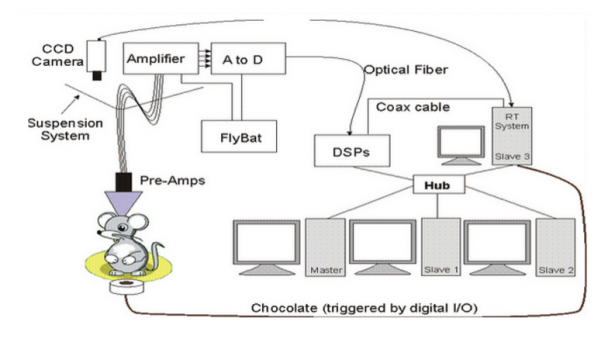
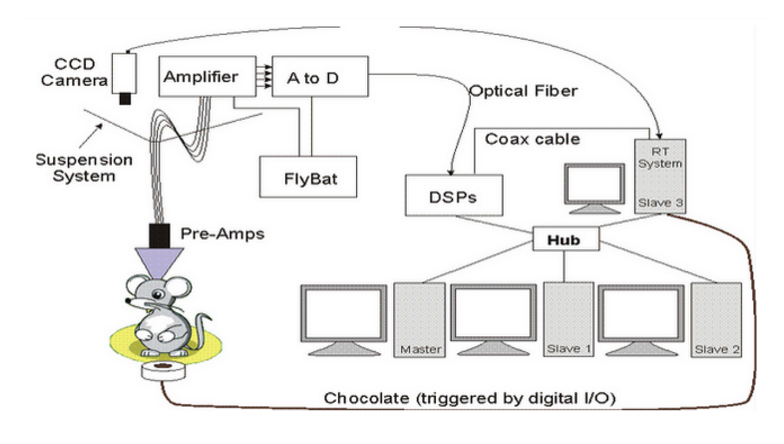
NSpike Instructions – The diagram shows the overall organization of the data acquisition system as it is used in the Frank lab,

Project Description

The brain is a massively interconnected network of specialized circuits. Even primary sensory areas, once thought to support relatively simple, feed-forward processing, are now known to be parts of complex feedback circuits. All brain functions depend on millisecond timescale interactions across these brain networks, but current approaches cannot measure or manipulate these interactions with sufficient resolution to resolve them. We need the capacity to measure and manipulate the activity large ensembles of neurons distributed across anatomically or functionally connected circuits. That technology does not yet exist, a lack that motivates our efforts to develop a new system for large scale, multisite recording and manipulation that takes integrates biocompatible polymer electrodes, new headstage ...

OnAir Post: Modular systems measuring brain activity

Optoelectrodes for Local Circuit Analysis

Principal Investigator: Euisik  Yoon University of Michigan Neuroscience  Title: ” Modular High-Density Optoelectrodes for Local Circuit Analysis” BRAIN Category: Large-Scale Recording-Modulation – New Technologies (RFA NS-14-007)

In this project, Dr. Yoon’s team will make devices for optogenetics, a technique that enables scientists to turn neurons on and off with flashes of light, more precise and diverse by integrating multiple light sources in such a way as to enable the control of specific neuronal circuits.

NIH Webpages

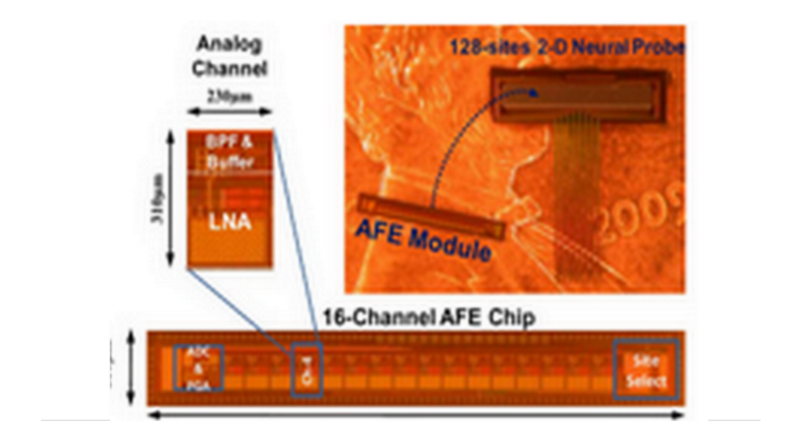
Analog Front-End Module With Moderate Inversion and Power-Scalable Sampling Operation for 3-D Neural MicrosystemsWe report an analog front-end prototype designed in 0.25 CMOS process for hybrid integration into 3-D neural recording microsystems. For scaling towards massive parallel neural recording, the prototype has investigated some critical circuit challenges in power, area, interface, and modularity.

Project Description

A number of scientific questions, especially in local circuit analysis, require manipulating neurons in vivo at multiple sites independently at high spatial and temporal resolutions by perturbing a controlled number and simultaneously recorded neurons. Optogenetic stimulation is cell-type specific which has proven to be the most powerful means of circuit control. Several laboratories have developed solutions to deliver optical stimulation to deep brain structures whilst simultaneously recording neurons. However, stimulation ...

OnAir Post: Optoelectrodes for Local Circuit Analysis

Time-Reversal Optical Focusing

Principal Investigator: Changhuei Yang Caltech Neuroscience Title: Time-Reversal Optical Focusing for Noninvasive Optogenetics BRAIN Category:  Large-Scale Recording-Modulation – New Technologies (RFA NS-14-007)

Dr. Yang’s team plans to develop a light and sound system that will noninvasively shine lasers on individual cells deep within the brain and activate light-sensitive molecules to precisely guide neuronal firing.

NIH Webpages

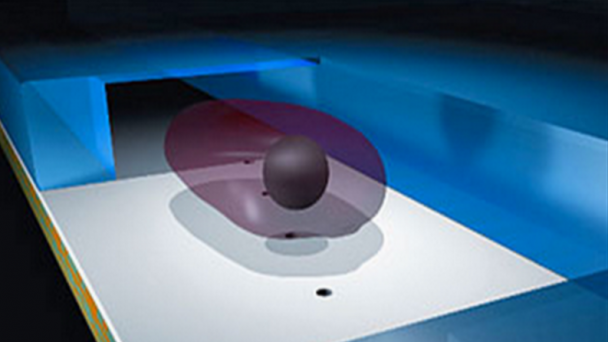
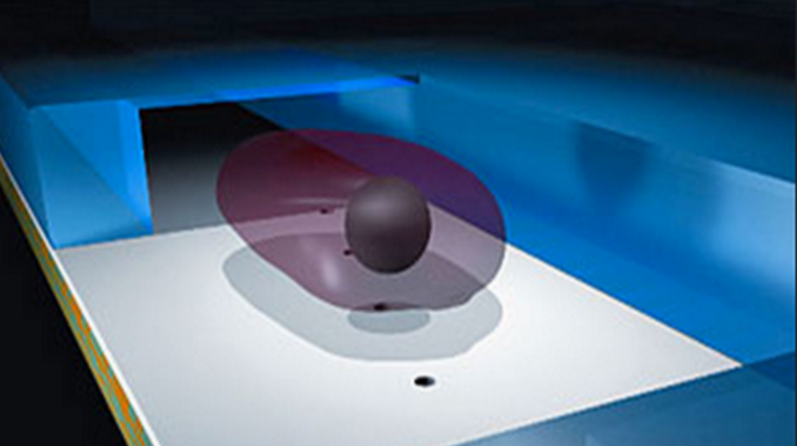
Optofluidic microscopy (OFM) is a new compact and lensless microscopic imaging technique invented in our lab. It abandons the conventional microscope design, which requires expensive lenses and large space to magnify images, and instead utilizes microfluidic flow to deliver specimens across array(s) of micrometer-size apertures defined on a metal-coated CMOS sensor to generate direct projection images. The size of our OFM prototype device is as small as a US quarter, and yet can render images comparable in quality to those of a microscope with 20X objective.

Project Description

Our bodies appear optically opaque because biological tissue scatters light strongly. Although advances such as multiphoton excitation have enabled deeper access for optical imaging by gating out scattered light, these strategies are still fundamentally limited to superficial depths (~ 1 mm). Yang’s group at Caltech has pioneered time-reversal symmetry of optical scattering as a direct strategy ...

OnAir Post: Time-Reversal Optical Focusing

Drivers for neuron gene expression

Principal Investigator: Oliver Hobert Columbia Neurosciencez Title: “Developing drivers for neuron type-specific gene expression” BRAIN Category: (RFA MH-14-216) 

Dr. Hobert and colleagues will create a highly selective technology for experimentally manipulating genes in neurons, by tapping into the regulatory machinery of individual cell types.

NIH Webpages


Project Description

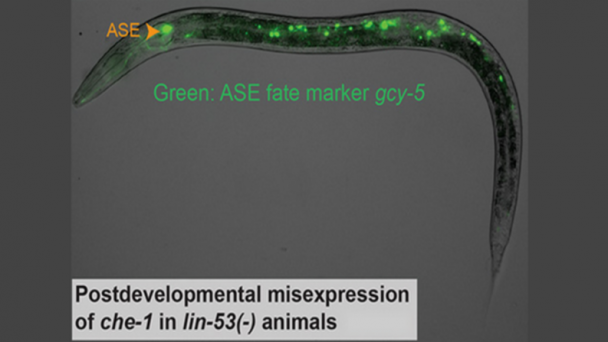
Driver lines that direct Cre protein to specific neuron types have proven to be invaluable tools to not only visualize specific neuron types but also to manipulate their activity through the Cre- mediated activation of optogenetic probes or to assess gene function by Cre-mediated gene knockout. Most Cre driver lines, such as BAC-based Cre drivers or knock-ins of Cre into specific loci, monitor the complete expression pattern of entire genetic loci. However, very few genes are exclusively expressed in very small populations of specific neuron types and this lack of cellular specificity limits the use of these driver lines. W propose here to develop transgenic mouse driver lines that direct Cre expression to very restricted numbers of neuronal cell types in different regions of the mouse brain, thereby providing tools to precisely map their function and molecular composition. To achieve this aim, we aim to test the hypothesis – built from our past work in the nematode C.elegans – that ...

OnAir Post: Drivers for neuron gene expression

Genetic Sparse Labeling Mammalian Neuron

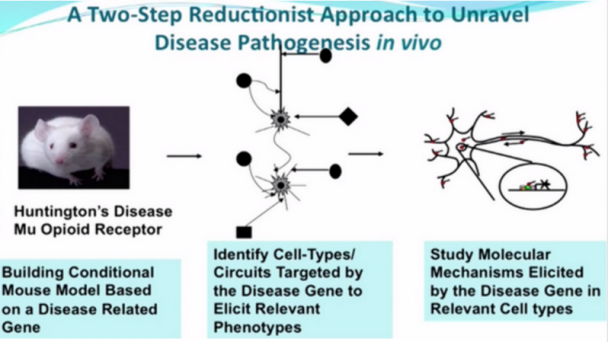
Principal Investigator: X. William Yang UCLA Neuroscience Title: “Novel Genetic Strategy for Sparse Labeling and Manipulation of Mammalian Neurons” BRAIN Category: Tools for Cells and Circuits (RFA MH-14-216)

Dr. Yang’s team will develop a new way to genetically target specific neurons, incorporating streamlined imaging and mapping methods that will enable the detection of sparse populations of cells that often elude existing methods.


NIH Webpages

Project Description

Cajal revolutionized the study of the brain through the use of the Golgi stain to label cells sparsely and stochastically in a fashion that revealed a neuron’s morphology in its entirety. Although genetic tools for sparse and stochastic labeling and manipulation of single neurons in Drosophila have been used extensively over the past 15 years, they have only recently become available for mammalian systems, but the latter tools are limited to only a few systems for which cell-type specific reagents (e.g. enhancers) are available or otherwise involve cumbersome manipulations. Thus, there is an important need in the field to develop robust reagents for analysis of neurons at the level of single cells. Indeed, analysis of neurons at the single identified cellular level provides critical information on the control of neuronal morphology, connectivity, physiology and plasticity. This application is in response to BRAIN ...

OnAir Post: Genetic Sparse Labeling Mammalian Neuron

Skip to toolbar