Summary
Neuroscience has begun to tease out the neural underpinnings of prejudice in the human brain.
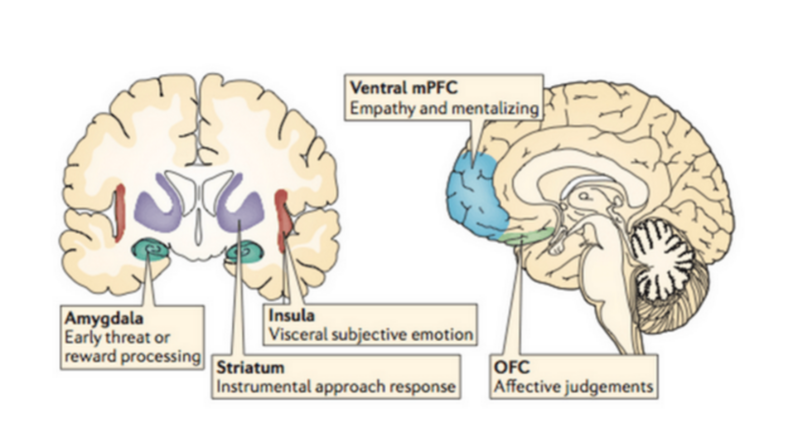
We now know that prejudiced behavior is controlled through a complex neural pathway consisting of cortical and sub-cortical regions. The vast majority of brain research has focused on the amygdala and the cortical regions that influence it.
Author’s Bio
Caitlin Millett is a blogger and neuroscience graduate student at Penn State College of Medicine.
Caitlin’s thesis research delves into the role of zinc signaling in hippocampal atrophy- a hallmark of progressed depression and bipolar disorder.
Experience
PhD graduate student in Neural and Behavioral Science, Pennsylvania State University –present
Education
Simmons College, BS, 2012
More information on Millet’s The Conversation page
The Conversation 2/4/15
Humans are wired for prejudice but that doesn’t have to be the end of the story
All people have prejudices, but learning more about them could help keep them in check. Crowd image via www.shutterstock.com.
Humans are highly social creatures. Our brains have evolved to allow us to survive and thrive in complex social environments. Accordingly, the behaviors and emotions that help us navigate our social sphere are entrenched in networks …