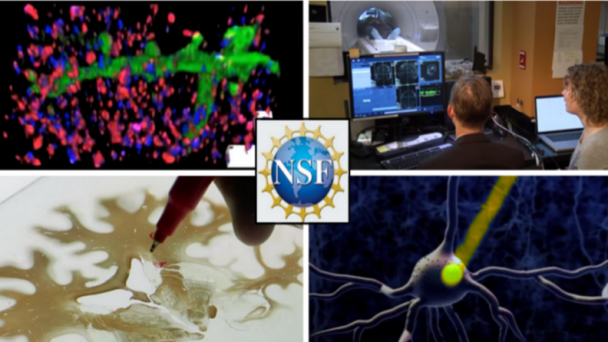
To support potentially transformative research in neural and cognitive systems, the National Science Foundation (NSF) has awarded 16 grants to multidisciplinary teams from across the United States.
Each award brings together scientists and engineers from diverse fields to investigate brain-related mysteries. The awards fall within two themes: neuroengineering and brain-inspired concepts and designs, and individuality and variation. Each provides up to $1 million over two to four years.
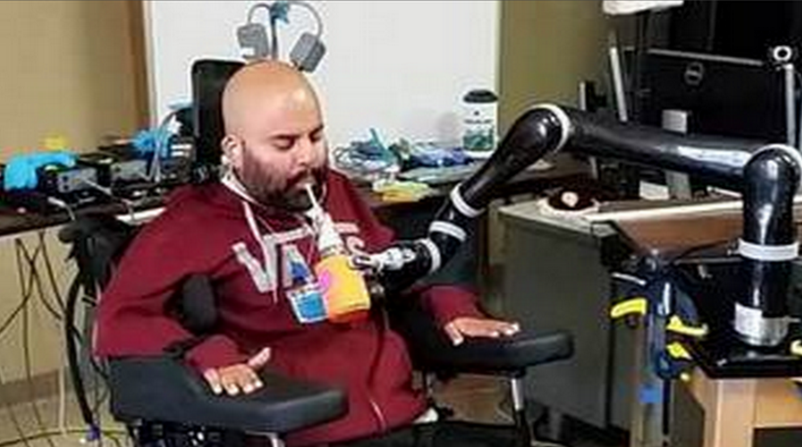
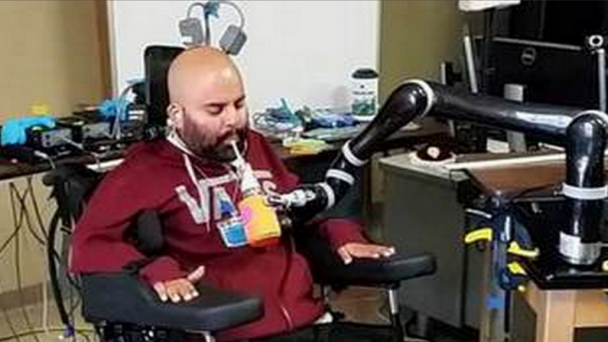
Brain-machine interfaces read signals directly from the brain to control external devices such as robotic limbs. While this technology has great potential to benefit people who are paralyzed, the interfaces often have poor performance because they use low-level signals to simultaneously control many aspects of the robotic limb’s movements. New NSF-funded research will leverage expertise across diverse fields to generate significant improvements in brain-machine interface technology. Shown here is Erik Sorto using a brain-controlled robotic arm to take a drink.Credit: Spencer Kellis and Christian Klaes
NSF Press Release
Bold new brain research in neuroengineering, brain-inspired design, and individuality
August 12, 2015
$13.1 million for 16 new awards part of NSF’s support for integrative, fundamental brain research and the BRAIN Initiative
One project will develop a theory of how single ...OnAir Post: NSF 2015 BRAIN Initiative awards